Choosing the right PDRN skincare manufacturer is one of the most important decisions a brand can make when developing a private label PDRN product line.
PDRN is a strong skincare trend, especially in K-beauty inspired repair care, skin booster concepts, hydrating serums, barrier creams, ampoules, and premium skincare sets. But a good PDRN product is not created by simply adding a trendy ingredient into a formula.
In my experience working with private label skincare development, the difference between a weak PDRN product and a strong one often comes down to the manufacturer. A reliable OEM/ODM skincare manufacturer should help you think through formula direction, skin feel, packaging, sample testing, quality control, cosmetic claims, export documents, and long-term product line planning.
For brands, the question is not only: “Can this factory produce PDRN skincare?”
The better question is: “Can this manufacturer help me develop a PDRN skincare product that fits my target market, brand positioning, formula story, and launch plan?”

When choosing a PDRN skincare manufacturer, brands should look for product development capability, formula experience, sample adjustment support, packaging matching, quality control, export documentation support, and an understanding of cosmetic claim limitations.
A good private label PDRN skincare manufacturer should be able to support:
For a brand, the right manufacturer should not only produce the product. It should help turn a PDRN skincare idea into a marketable, stable, and brand-ready product.
PDRN skincare is a premium and trend-driven category. Because of that, brands often expect the finished product to look modern, feel elegant, and communicate a more advanced repair-care story.
However, PDRN skincare development can go wrong if the manufacturer does not understand the full product strategy.
Some common problems include:
This is why choosing a PDRN skincare manufacturer should not be based only on the lowest price.
A low-cost formula may look attractive at the beginning, but if the texture, packaging, stability, and claims are weak, the product may be difficult to sell. For a premium ingredient like PDRN, brands need a manufacturer that understands both formulation and brand positioning.

The first thing I would check is whether the manufacturer can support more than one type of PDRN product.
A strong PDRN skincare manufacturer should not only make one serum formula. It should understand how different PDRN products work within a skincare routine.
| Product Capability | Why It Matters for Brands |
| PDRN Serum Development | Serum is often the hero product and the easiest format to market around PDRN |
| PDRN Cream Manufacturing | Cream supports moisture, barrier care, and repeat purchase value |
| PDRN Ampoule Development | Ampoules fit K-beauty inspired skin booster and premium treatment-style routines |
| PDRN Sheet Mask Production | Masks are useful for hydration, comfort, e-commerce bundles, and salon use |
| PDRN Eye Care Development | Eye serum or eye cream helps extend the line into premium age-care positioning |
| PDRN Skincare Set Development | Sets help brands build a complete routine and increase perceived value |
This is especially important if your brand wants to develop a complete private label PDRN skincare line. A manufacturer that only understands one product format may not be able to help you build serum, cream, mask, and set products with a consistent formula story.
For example, a PDRN serum may focus on hydration and glow, while a PDRN cream may focus on moisture and barrier support. A PDRN mask may be designed for instant comfort and dewy-looking skin. Each product has a different role, so the manufacturer needs to understand product line planning.
PDRN itself is only one part of the formula story. A good PDRN skincare product also needs supporting ingredients that match the product positioning.
A reliable PDRN skincare manufacturer should be able to suggest formula directions based on your target customer and market.
| Formula Direction | Suitable Product | Brand Positioning |
| PDRN + Hyaluronic Acid | Serum, ampoule, mask | Hydrating repair, dewy-looking skin, moisture support |
| PDRN + Peptides | Serum, eye serum, cream | Premium age-care, smoother-looking skin, elasticity care |
| PDRN + Ceramide | Cream, lotion, emulsion | Barrier support, dry skin care, comfort-focused repair |
| PDRN + Cica / Panthenol | Serum, cream, mask | Sensitive-skin-positioned care, soothing comfort |
| PDRN + Ectoin | Serum, cream | Premium sensitive skin and environmental stress care |
| PDRN + Niacinamide | Serum, toner, cream | Hydrating glow and uneven-looking tone care |
The manufacturer should not simply say, “We can add PDRN.” That is not enough.
A better manufacturer will ask questions such as:
These questions help the manufacturer recommend a more suitable formula direction. They also show that the manufacturer understands product development, not just production.
Texture is one of the most important parts of PDRN skincare development. A formula can look good on paper but fail if it feels sticky, greasy, too thin, too heavy, or difficult to layer.
Different PDRN products need different texture strategies.
A PDRN serum should usually feel smooth, hydrating, and easy to absorb.
A PDRN cream should feel comfortable, moisturizing, and suitable for the target skin type.
A PDRN ampoule should feel more premium and slightly richer than a basic serum.
A PDRN sheet mask essence should feel hydrating and fresh without leaving an uncomfortable residue.
When evaluating a manufacturer, I would ask whether they can adjust:
This matters because Western consumers often care strongly about skin feel. If the formula is too sticky or too heavy, it may not perform well even if the ingredient story is strong.
A good PDRN skincare manufacturer should be willing to adjust the sample based on brand feedback. Sample development should not be a one-time process. It should be a practical step where the brand and manufacturer refine the formula before bulk production.
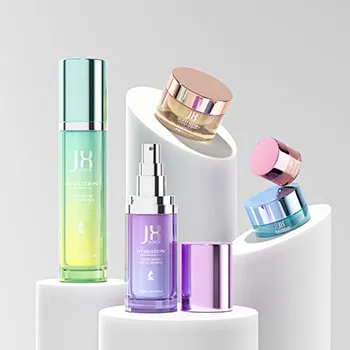
Packaging is another major factor when developing PDRN skincare. Since PDRN is usually positioned as a premium ingredient, the packaging should support the product value.

A manufacturer should be able to help match formula texture with suitable packaging.
| Product Type | Suitable Packaging Options |
| PDRN Serum | Glass dropper bottle, airless pump bottle, frosted serum bottle |
| PDRN Ampoule | Ampoule bottle, vial, premium dropper bottle |
| PDRN Cream | Jar, airless jar, tube, airless pump bottle |
| PDRN Sheet Mask | Single pouch, multi-pack box, premium mask set |
| PDRN Eye Serum | Small airless bottle, roller bottle, slim tube |
| PDRN Skincare Set | Serum + cream box, travel set, premium retail gift box |
Packaging is not only about appearance. It also affects formula compatibility, filling, product protection, user experience, MOQ, cost, and final shelf appeal.
For example, a thick serum may not work well with every dropper. A rich cream may be better in a jar or airless jar. A lightweight emulsion cream may work well in a pump bottle. A sheet mask needs pouch material, carton design, and essence volume control.
If the manufacturer understands packaging matching, the whole development process becomes easier.
For a PDRN skincare set, packaging consistency is especially important. The serum bottle, cream jar, mask pouch, and outer box should look like they belong to the same product line.
A reliable PDRN skincare manufacturer should have a clear quality control process.
Quality control is important because the approved sample must match the final bulk product as closely as possible. This is especially important for premium skincare products where texture, appearance, and packaging details affect the brand image.
When choosing a PDRN skincare manufacturer, brands should ask about:
For cream products, manufacturers should pay attention to emulsion stability, texture consistency, and filling quality.
For serum and ampoule products, viscosity, clarity, bubbles, color, and packaging performance can be important.
For sheet masks, essence volume, mask material, pouch sealing, and packaging appearance should be checked.
A good manufacturer should help reduce the gap between the sample you approve and the product you receive in bulk.
PDRN is a strong marketing story, but claim language must be handled carefully.
Some brands may be tempted to use medical-style claims because PDRN is often discussed in connection with aesthetic treatments and regenerative skincare concepts. For cosmetic products, I would avoid claims such as:
Instead, I would use more cosmetic-friendly language such as:
The right manufacturer should understand that formula, label, and marketing claims need to work together.
For export brands, documentation support can also be important. Depending on the market, a brand may need support with:
A manufacturer that understands export needs can make the launch process smoother, especially for brands selling in the US, EU, UK, Middle East, Australia, or Southeast Asia.
At Xiran Skincare, we support brands that want to develop private label PDRN skincare products from concept to finished production. Instead of only providing a formula, we help brands consider product positioning, formula pairing, texture, packaging, sample testing, quality control, and export needs.
We can support different PDRN product directions, including:
For startups, we can help narrow the product direction and avoid launching too many SKUs at the beginning. For e-commerce brands, we can help develop a hero product that is easier to explain and market. For spa, salon, and distributor brands, we can support product combinations such as ampoule, mask, and cream routines. For established skincare brands, we can help expand an existing line into a premium PDRN repair skincare collection.

Xiran Skincare can support formula development, mature formula adjustment, custom PDRN skincare formulation, packaging matching, sample development, bulk production, quality control, and export documentation support.
The goal is not only to make a PDRN product. The goal is to help your brand create a product that fits your customer, price point, sales channel, and long-term skincare line strategy.
Before choosing a PDRN skincare manufacturer, brands should prepare a clear list of questions. This helps avoid misunderstandings and makes the development process more efficient.
Here are questions I would ask:
A manufacturer that can answer these questions clearly is usually more suitable for a serious private label skincare project.
Choosing the right PDRN skincare manufacturer is not only about finding a factory that can produce PDRN products. It is about finding a partner that understands formula direction, texture, packaging, quality control, cosmetic claims, export needs, and brand positioning.
A strong PDRN skincare product should have a clear formula story, comfortable skin feel, suitable packaging, responsible claims, and consistent production quality.
For new brands, the right manufacturer can help decide whether to start with a PDRN serum, PDRN cream, or a simple serum and cream set. For established brands, the right manufacturer can help expand into a complete PDRN skincare line with ampoule, mask, eye care, and retail set products.
If your brand is planning to develop private label PDRN skincare, Xiran Skincare can help you move from product concept to finished manufacturing. Whether you want to create a PDRN serum, cream, ampoule, mask, or complete skincare set, the first step is to choose a manufacturer that understands both product development and brand strategy.
You should look for formula development ability, PDRN product experience, sample adjustment support, packaging matching, quality control, export documentation support, and an understanding of cosmetic claim limitations.
Yes. A qualified PDRN skincare manufacturer should be able to develop both PDRN serum and PDRN cream. The serum can work as the hero product, while the cream can support hydration, comfort, and barrier care.
Depending on your target market, a manufacturer may support documents such as COA, MSDS, ingredient information, product specification, export documents, and label support. The exact requirements depend on where the product will be sold.
A suitable PDRN formula should match your target customer, product positioning, texture preference, packaging style, claim direction, price point, and sales channel. A good manufacturer should help you evaluate these details before sampling.
Yes. Xiran Skincare provides OEM/ODM support for private label PDRN skincare products, including serum, cream, ampoule, sheet mask, eye care, and complete skincare sets. We can support formula development, sample testing, packaging matching, production, quality control, and export documentation.