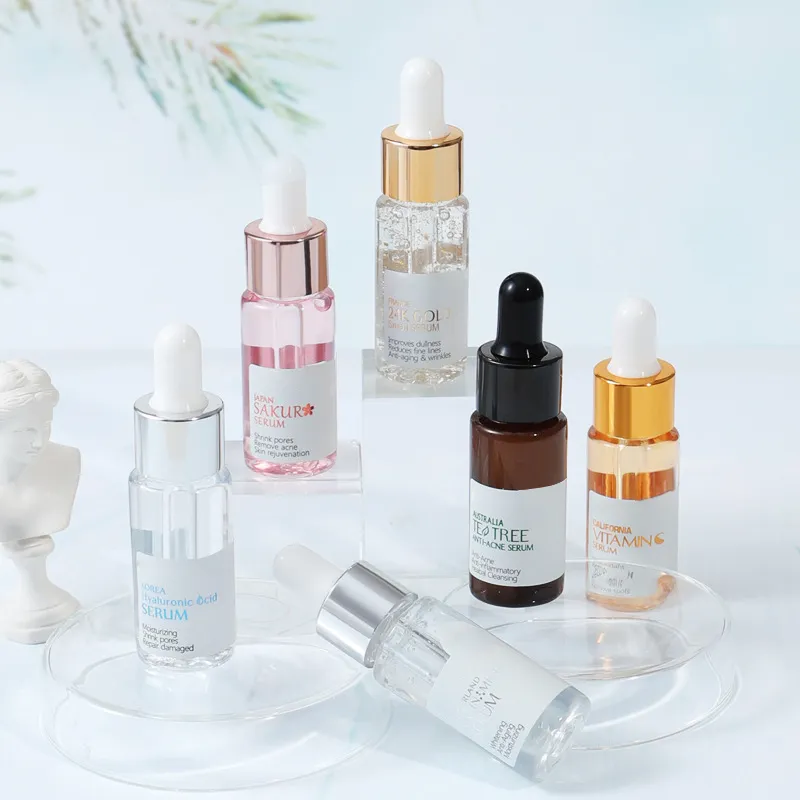
Serum formulation is the process of developing targeted skincare products around specific skin concerns, active ingredients and desired product textures. Common serum formulation directions include hydrating, brightening, anti-aging, barrier repair, soothing, acne control, exfoliating and antioxidant serums. Each requires carefully selected ingredients, compatible formulation systems and appropriate stability and packaging evaluations.
Facial serums are a key category for skincare brands, because they provide flexibility in ingredient selection, product positioning and texture development. A brand can create a light hydration serum, a brightening vitamin C treatment, a peptide-based firming serum or a specialised formula based on new cosmetic ingredients.
But formulating a successful serum is more than just selecting popular ingredients and mixing them all in one bottle. The formulation must include the desired skin benefit, activity ingredient compatibility, base system, sensory characteristics, preservation requirements and packaging performance.
At XIRAN Skincare we formulate serums the same way we formulate products. Before we start picking ingredients we want to understand what the brand is trying to achieve, who will use the product and how it should work in an everyday skincare routine.
For example, a hydrating serum for humid climates needs to be light, spread quickly and have little tackiness. You may have to use a premium anti-aging serum a bit more heavily, and employ a specialised delivery system and packaging to protect sensitive ingredients.
Both of these products might be called facial serums, but the formulation requirements are quite different.
In this guide, we’ll take a look at eight common directions for serum formulations, the ingredients that are often used in each one, and the technical decisions brands need to know before developing a custom skincare serum.

Hydrating serums are among the most versatile skincare products for brands, as hydration is relevant to so many skin types, climates and daily skincare routines.
What makes for a good hydrating serum is its capacity to pull water and hold it in — which results in skin that feels better and stays comfortably hydrated.
The effectiveness of a hydrating serum depends on selecting the right combination of moisture-binding and skin-conditioning ingredients. In our formulations, we consider different humectants and moisturizing components to create products that provide hydration while maintaining a comfortable skin feel.
Together these ingredients allow us to formulate hydrating serums that do more than just deliver moisture. Through different levels of humectants and skin conditioning ingredients, we can create light weight gel type or milky serum textures to suit different brand positioning and consumer preferences.
Brightening serums are formulated for consumers with dull looking skin, uneven looking skin tone and lack of radiance.
There are several ingredient directions available in this category for brands, but the formulation strategy is very much dependent on the chosen form of each active ingredient.
When you are creating a brightening serum, you want to choose active ingredients that will help to brighten and even out the complexion. Our formulation approach considers the chemical form of the ingredient, compatibility, pH requirements and stability in the finished product.
Together, these ingredients allow brands to formulate a variety of brightening serum concepts, from lightweight daily radiance formulas to more targeted vitamin C treats. Instead of treating every brightening serum as the same type of product, we select the supporting ingredients and formula system according to the selected active ingredient.
Selecting the right form of vitamin C is one of the key decisions in brightening serum formulation.
L-Ascorbic Acid is the most studied form, but it is difficult to formulate due to oxidation sensitivity, pH requirements and solubility issues.
Vitamin C derivatives, such as Ascorbyl Glucoside and 3-O-Ethyl Ascorbic Acid, have different chemical properties and may be more suitable for certain water-based or other specialized formulation systems.
These ingredients should not be treated as interchangeable. Their use levels, compatibility, stability and finished-product performance need to be evaluated individually.
Reference: A Review of Topical Vitamin C Derivatives and Their Efficacy – PubMed.
When developing a brightening serum, we evaluate:
For example, a Vitamin C and Niacinamide serum can be developed as a daily radiance-focused product, provided the selected ingredients, pH and overall formula are compatible.
Brands interested in this direction can also explore our Vitamin C Skincare Product Development and Manufacturing Solutions.
Anti-aging serums are for consumers worried about visible fine lines, uneven skin texture, loss of firmness, and changes in skin elasticity.
When developing an anti-aging serum, you typically use more specialised active ingredients and need to be more concerned about stability, packaging and product tolerability than when developing basic hydration formulas.
An anti-aging serum is usually made up of a combination of humectant ingredients, peptides, antioxidants, and retinoids. The aim is to deliver a balanced formulation that supports smoother looking, firmer and well conditioned skin, while delivering an appropriate sensory experience.
This blend of ingredients allows us to create different anti-aging serum directions, from featherlight peptide hydration serums to more specialised retinoid-based treatments. The final ingredient combination depends on the brand's target positioning, desired texture and technical requirements.
Peptides are frequently incorporated into firming-focused skincare formulations. But peptides have different structures and properties, so the formulation team has to check their recommended conditions of use and compatibility with the base chosen.
Retinoids are sensitive to light, oxygen and temperature, so retinol and retinal need extra care. Their stability depends on the ingredient, formulation environment, packaging and storage conditions.
A review of cosmetic retinoid use discusses the different retinoid compounds, their mechanisms and formulation considerations in products developed for visible photoaging concerns.
Reference: Cosmetic Retinoid Use in Photoaged Skin – PMC.
For brands interested in more differentiated anti-aging products, Volufiline™ can be explored as part of an ingredient-led formulation concept.
The Volufiline product development references in Xiran Skincare are:
These examples demonstrate how one ingredient direction can be developed into different product formats.
Serums can be light or velvety, and a richer serum oil can be formulated for a more nourishing application experience.
Explore our Volufiline Skincare Product Development Case Study to see how ingredient selection, supporting actives, texture and packaging can be developed into a coordinated product concept.
Important formulation note: The marketing description of an ingredient doesn’t automatically define what the finished serum will do. We review supplier documentation, ingredient specifications, compatibility and finished product evidence to determine how to position a product.
Barrier-support serums are designed for consumers who want to enhance skin comfort, reduce dryness and maintain a well-conditioned skin surface.
The category is especially relevant for brands creating products for dry, sensitive-feeling or moisture-depleted skin.
A well formulated barrier-support serum contains moisturising, emollient and skin conditioning ingredients. We also consider lipid components for more sophisticated formulations to create a skin-lipid-inspired system.
The combination of these ingredients allows brands to create different barrier-support serum concepts, from light-weight hydrating formulas to richer lipid-focused emulsions. We select the right base system depending on the ingredients, the desired viscosity and target skin feel.
Ceramides aren’t just ingredients you can throw into any serum base and call it a day.
The final product depends on their dispersion, solubility, processing conditions and compatibility with other lipid components.
Just because a formulation lists ceramides in its ingredient deck does not mean the ceramides are well integrated into the final system.
In more advanced barrier support concepts we evaluate the relationship between ceramides, cholesterol, fatty acids and the chosen emulsion or dispersion system.
For example, a serum with Ceramide + Panthenol + Ectoin could be developed with a positioning that emphasises daily hydration and barrier support, and the final texture could be tailored to the target customer.
Soothing serums are created for those who are fans of gentle skin care and products that are made to enhance the comfort of the skin.
The goal of the formulation is not to add as many botanical extracts as possible. It is to develop a balanced formula with the correct ingredients, a comfortable texture and an appropriate overall sensory profile.
A soothing serum only works when the ingredients for skin conditioning and moisturising are compatible. We use botanical extracts and proven cosmetic ingredients to create products which are comfortable and gentle for your skin.
The combination of ingredients allows us to formulate soothing serums that balance hydration and skin conditioning. We can also look at fragrance-free options and lightweight textures that fit into daily routines for brands that target consumers who prefer gentle skincare.
For a soothing serum, we pay attention to:
A possible direction of development is a serum with Centella + Panthenol + Beta-Glucan for daily moisturising and skin conditioning.
A key opportunity for brands is to make a product that has a defined gentle-skincare identity, versus general claims around sensitive skin.
Oil-control serums are targeted to consumers who are concerned about excess shine, oily skin and the appearance of blemishes.
It’s a common formulation mistake to focus only on oil reduction and neglect hydration and overall skin comfort.
The goal for brands creating products for combination or oily skin should be a balanced formula that gives a comfortable feel to the skin without an overly dry finish.
The formulation of an oil-control serum requires the selection of ingredients to match the desired product positioning. Some ingredients are chosen for oil-balancing concepts, others are used in exfoliating or blemish-prone skin formulations.
This combination of ingredients gives brands the ability to formulate different oil control serum concepts from light Niacinamide and Zinc PCA formulas to more specialised exfoliating products. When developing the final formula, we take into account the specific skin concern, the compatibility of the active ingredients and the overall skin feel.
Oil-control serum development requires attention to:
For instance, an oil-balancing Niacinamide + Zinc PCA serum can be formulated, or a different BHA-based formula may be more suitable for brands that want to pursue an exfoliating product direction.
Regulatory note: In the U.S., claiming a product treats or prevents acne may impact its regulatory classification as a cosmetic or drug. Brands should differentiate cosmetic appearance claims from drug claims and review the requirements of each target market before finalising the product name, label and advertising.
See the FDA guidance on Cosmetics and U.S. Law.
Exfoliating serums are aimed at consumers who are worried about rough texture, dull-looking skin and uneven surface appearance.
These formulas mostly contain alpha hydroxy acids, beta hydroxy acids or polyhydroxy acids.
The choice of exfoliating ingredient depends on the desired strength of the product, the skin concern and the formulation system as a whole. We experiment with different acid types and supporting ingredients to develop formulas that combine exfoliating properties with a comfortable application experience.
These ingredients in combination allow brands to develop different exfoliating serum directions, from daily mild-acid concepts to more targeted texture-refining products. The final formulation depends upon the choice of acid, pH, concentration, supporting ingredients and the intended market.
The development of an acid-based serum calls for careful consideration of several technical parameters.
pH control: The pH of the formula controls the behaviour of acids, the compatibility of ingredients and the overall performance of the product.
Active concentration The concentration of the acid must be selected according to the product to be obtained, market demands and substantiating evidence.
Solubility: Different acids need different formulation approaches.
Skin feel: Spreadability, drying time and residual feel of the formulation need to be evaluated.
Packaging and directions Packaging and consumer directions are interrelated, because they are associated with the intended use of the product.
For instance, a Lactic Acid + Panthenol serum concept could be explored for brands looking to combine an exfoliation-centric positioning with skin conditioning support.
A higher concentration or more aggressive formula does not necessarily mean a better commercial product. The right formulation is one that meets the product brief, but is appropriate for the target market.
Oxidative stress-related skincare positioning is tackled by antioxidant serums that contain ingredients intended to help promote a healthy-looking complexion.
They are often found in day by day skincare ranges and can be used along with brightening, anti-ageing and hydrating merchandise.
Development of an antioxidant serum needs to pay attention to different chemical properties of each ingredient. Some antioxidants are water soluble and some are oil soluble so the formulation system has to be chosen according to the complete ingredient combination.
By combining these ingredients, brands can develop a range of antioxidant serum concepts, from lighter day formulas to richer oil-based systems. In choosing the final combination of ingredients, we take into account solubility, phase compatibility, oxidation sensitivity and packaging.
Antioxidant ingredients may require different solubility, stability and processing conditions.
For example, a water soluble vitamin C derivative and an oil soluble antioxidant may require different formula systems.
When we are formulating an antioxidant serum we consider:
An antioxidant serum can also be formulated as part of a broader daily skincare range, providing hydration, radiance and skin-conditioning benefits.
It’s important to differentiate antioxidant skincare positioning from sun protection. You cannot market an antioxidant serum as a substitute for a properly tested sunscreen.
The right active ingredients are just one aspect in the development of a serum. The next challenge is to figure out how they work together in the same formula.
A longer ingredient list does not automatically create a better serum. Each ingredient must play a specific part and the combination must be technically achievable.
At Xiran Skincare we recommend you start with one primary product benefit and then choose supporting ingredients based on the desired performance of the formula.
Here are several examples of formulation directions:
| Main Formula Goal | Potential Ingredient Combination | Development Focus |
|---|---|---|
| Deep Hydration | Hyaluronic Acid + Glycerin + Panthenol | Moisture retention and tackiness |
| Brightening | Vitamin C Derivative + Niacinamide | pH, stability and compatibility |
| Firming & Anti-Aging | Peptides + Humectants | Ingredient compatibility and sensory feel |
| Barrier Support | Ceramides + Panthenol + Ectoin | Lipid dispersion and texture |
| Oil Balancing | Niacinamide + Zinc PCA | Solubility and skin feel |
| Gentle Exfoliation | Lactic Acid + Panthenol | pH and product tolerability |
| Antioxidant Care | Vitamin C Derivative + Vitamin E | Phase compatibility and oxidation |
These are development concepts rather than ready-to-manufacture recipes. Once the selected raw materials and full formula have been reviewed, the appropriate concentrations, processing conditions and final ingredient combinations need to be established.
Two ingredients may both be suitable for use in cosmetics but still work differently when mixed together.
For example:
That’s why we don’t recommend selecting active ingredients based on popular opinion. The formula as a whole should be regarded as a system.edients solely by their popularity. The complete formula must be evaluated as one system.
The texture of the serum affects how customers perceive the product and its role in their skincare routine.
Two products can feel quite different even if they have the same active ingredients.
| Serum Texture | Characteristics | Suitable Product Direction |
|---|---|---|
| Watery Serum | Lightweight, fluid and fast-spreading | Daily hydration and brightening |
| Gel Serum | Clear or translucent with a gel-like feel | Hydration and lightweight skin conditioning |
| Milky Serum | Soft, lotion-like consistency | Barrier support and moisturizing |
| Emulsion Serum | Balanced water and oil phases | Nourishing and multi-functional formulas |
| Oil Serum | Richer, more emollient feel | Dry-skin and mature-skin positioning |
| Bi-Phase Serum | Separate water and oil phases | Specialized dual-phase concepts |
Target skin type: If the customer wants a non-greasy finish, a lightweight serum might be more appropriate, while a richer emulsion might suit a moisturising product concept.
Climate: Humidity and temperature can affect the desired sensorial profile of a product.
Layering: Think about whether you’ll be applying the serum underneath moisturiser, sunscreen or makeup.
Packaging: Dropper, pump or airless dispenser as appropriate to viscosity and flow characteristics.
Brand positioning: Texture can differentiate an entry-level daily serum from a premium treatment-oriented product.
We recommend testing samples after the first few seconds of application. Spreadability, absorption, tackiness, pilling and final skin feel are all important when approving a commercial serum formula.
A successful skincare serum begins with a clear product concept and a formulation system built around its intended purpose.
Whether your brand is developing a hydrating hyaluronic acid serum, a vitamin C brightening formula, a peptide-based firming serum or a specialised PDRN and barrier-support product, the right mix of ingredients, texture, testing and packaging makes a difference.

At XIRAN Skincare we combine laboratory formulation and manufacturing capabilities to support brands through the product development process.
From ingredient selection and sample preparation to packaging sourcing, compatibility evaluation, filling and bulk production, we help turn your serum concept into a manufacturable skincare product.
Have a serum concept in mind?
Let us know your target skin benefit, preferred ingredients, desired texture and packaging requirements and we can help. We can discuss a good private label or custom formulation route for your brand.