One of the first questions entrepreneurs launching a skincare brand need to answer is, “How many units should I order?”
This number is called MOQ which stands for Minimum Order Quantity. MOQ is the minimum quantity of goods that a manufacturer is willing to produce for a single order.
There is no MOQ for private label skincare products. This will depend on a number of factors including level of customisation, packaging requirements, product type and manufacturing process.
The usual MOQ for private label skincare products is between 500 and 5,000 units. However, some special product categories, such as sheet type skin care products, may require much higher quantities.

Most skin care products like creams, serums, lotions, cleansers and other liquid formulations usually have a standard MOQ that falls between:
500–5000 units
MOQ in this range is primarily determined by the type of packaging customisation required.
500–1,000 Units: Existing Packaging Private Label
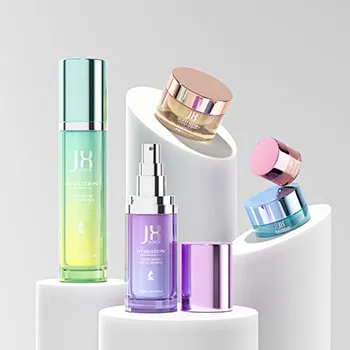
For new skincare brands wanting to enter the market with lower investment, opting for a manufacturer’s existing packaging is generally the most flexible option.
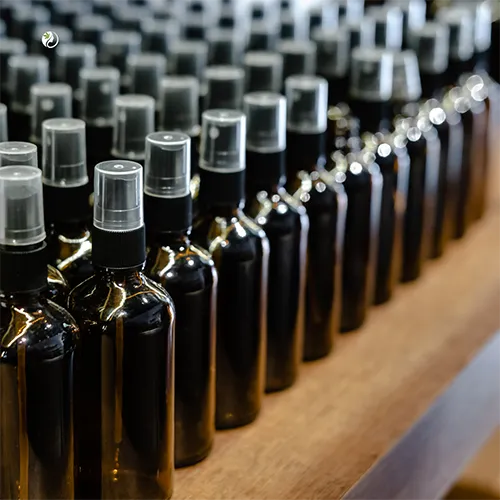
Here, the manufacturer uses their existing inventory of bottles, jars, tubes or containers and the brand owner customises things such as:
The normal MOQ for this option is around:
Existing packaging can make production simpler and allow brands to see if there is demand before they invest in packaging that is completely custom.before investing in fully customized packaging.
Often, customised packaging is required when a brand wants a more unique look.
A few examples of packaging customisation are:
Special materials have to be ordered and special production processes planned. Personalised packing needs extra preparation. That is, MOQ is typically higher.
The typical MOQ for custom packaging is:
More than 5000 pieces
This option suits brands that have a clear market positioning and want their products to stand out thanks to a stronger visual identity.
Why MOQ Can Be So Affected By Changing Packaging? Many customers wonder.
This is because packaging production often involves:
Custom packaging is specially designed for a specific brand . Regular packaging can be used by multiple brands . Manufacturers usually require a minimum order quantity in an effort to make the production process cost effective.
Most of the time private label skin care products will have a MOQ anywhere between 500 and 5,000 units. However, certain products may have a different MOQ due to their unique production process.
The sheet type skin care products are the most popular.
Products such as:
usually require larger quantities as each piece is individually made and packaged.
Common MOQ range:
5,000–100,000 pieces
The main connection with the large quantity requirement is:
If you are a brand planning to launch these products, make sure to plan your inventory carefully, as the typical initial order quantity is much higher than traditional bottled skincare products.
Facial sheet masks is another category that requires higher production requirements.
Average MOQ for sheet mask is:
20,000–30,000 pieces
Compared with creams or serums, sheet masks require:
This means that manufacturers generally need to produce more to remain efficient and keep costs down.
| Product Type | Typical MOQ | Packaging Type |
|---|---|---|
| Cream, Serum, Lotion, Cleanser | 500–1,000 units | Manufacturer's existing packaging |
| Customized Skincare Products | More than 5000 units | Custom bottles, jars, boxes, or containers |
| Lip Masks | 5,000–100,000 pieces | Individual packaging |
| Eye Masks | 5,000–100,000 pieces | Individual packaging |
| Facial Sheet Masks | 20,000–30,000 pieces | Single-use sheet packaging |
The right minimum order quantity depends on your stage of brand, budget, and business goals.
If you’re launching your first skincare product, begin with:
can help to lower your risk of investment and allow you to test feedback from clients.
If your brand already has market demand, customised packaging with a higher MOQ can create:
The minimum quantity order for private label skincare products is usually between 500 and 5,000 units but differs depending on the product and degree of customisation.
With standard skincare products, you can often get 500-1,000 units from existing packaging, and for fully custom packaging, it’s usually 3000-5,000 units.
The MOQ is usually higher for special formats like lip masks, eye masks and sheet masks, ranging from 5,000 to 100,000 pieces depending on the product.
Understanding MOQ requirements before production allows skincare brands to make better choices about product development, investment planning, and market launch strategies.
Reasonable MOQ For Your Private Label Skincare Products Xiran Skincare has a reasonable MOQ requirement.
Tell us your product concepts, target markets, desired consumer experience and any specific business parameters you need to meet.
We will help you think through the most practical implementation strategy and provide all-around services for your brand.
Got a new skincare line coming up?
Please send information to Xiran Skincare about your product ideas, target markets, anticipated production volumes, packaging preferences and market positioning if you are interested in discussing a private-label skincare project.
The minimum order quantity (MOQ) for Xiran Skincare’s own-brand products is 1,000 units; for customized packaging, the MOQ is determined by the packaging supplier's minimum order requirements.
25–100 units → Ultra-low MOQ: Typically stock products or private-label formulations; packaging design services are not included.
100–500 units → Low MOQ: Based on stock formulations and white-label packaging; some manufacturers offer customization options for packaging, scents, ingredients, or specific formulation details.
500–1,000 units → normal low-volume manufacturing: more packaging and formulation flexibility becomes realistic.
2,000+ units → custom OEM/ODM: considerably easier to justify custom formula development, custom packaging and more extensive testing.
Formula Type: Minimum Order Quantities (MOQs) for ready-made formulas (ODM) are significantly lower than those for custom formulas (OEM), as the latter require dedicated laboratory R&D and large-scale mixing equipment.
Packaging Components: Using existing wide-mouth jar designs entails lower MOQs (50–1,000 units); in contrast, custom molds or printed outer packaging often require MOQs of 5,000 units, primarily due to the costs associated with printing equipment and production line setup.
SKU Definition: MOQs are established for each SKU (Stock Keeping Unit)—defined as a specific combination of formula and container style. For instance, filling the same serum into two different bottle sizes would be treated as two separate production orders.
Yes. For founders entering the skincare industry for the first time, utilizing existing formulas for small-batch production (500–1,000 units) minimizes inventory risk and shortens the time to market. Once sales gain momentum, the brand can transition to larger-scale production and adopt more customized formulas and exclusive packaging.
Usually, yes. Smaller production runs tend to have a higher unit cost because formulation, filling, packaging and production setup costs are spread across fewer products. However, the lower initial investment can make small-batch manufacturing more attractive for startups testing a new market.
Yes, many manufacturers offer support with packaging procurement, label printing, and graphic design. However, packaging suppliers typically have minimum order quantity requirements; such support is usually provided only for orders exceeding 500 units.