For many skincare brands, especially those making modern anti-aging and night-repair lines, retinal has gone from "nice to have" to "seriously considered." People know about retinoids. They're also becoming more picky, wanting better results, less irritation, better textures, and packaging that really keeps the formula safe.
The main ingredient in a retinal product isn't the most important part of the work. It's the making: making sure it's stable, that it fits in the packaging, that it passes tests, and that the paperwork is correct for your target markets.
This guide explains what retinal is, why people want it, how brands are making retinal lines, where manufacturing usually goes wrong, and 10 real OEM/ODM partners you should look into.

Retinal (retinaldehyde) is a form of vitamin A that is used in advanced skin care. People often talk about it with retinol, but they are not the same thing. In real life, brands use retinal when they want to position themselves as "results-first" with a more premium, next-step story than entry-level retinol.
You will usually find retinal in:
A lot of brands use this clear explanation to teach their customers:
https://us.medik8.com/pages/retinal-vs-retinol-which-is-better-for-your-skin
Retinal is sensitive, which is an important thing to keep in mind when making products. Oxygen, heat, and light are all important. What it sits next to in the formula and what it sits inside (the packaging) also matter.

Retinoids are still available on the market. They turn. Retinol had a long life. Now the focus is on "what's next," and retinal is getting that attention.
What's driving the category:
This is a good snapshot of how far retinal has come in the conversation among consumers:
https://www.allure.com/story/retinal-products
For For brands, the chance is clear: retinol is a crowded market. Retinal gives you a cleaner angle, especially if you have the quality of the product to back it up.

Retinal isn't a trendy ingredient in the usual way. It's a move in the portfolio.
Retinal is naturally higher up than "starter retinol." That's helpful for pricing and brand architecture.
People don't always know how to convert, but they do know what "advanced retinoid" means.
Retinal education content does well when it explains what it is, how to use it, what to pair it with, and what to stay away from. That brings in search traffic and repeat visitors.
People want both comfort and results. That makes brands combine retinal with barrier support and systems that calm the skin.
Buyers in the EU, the US, and the Middle East all see retinoids as a main category. It's one of the most consistent "evergreen" groups of anti-aging products, if anything.

With retinal, the single-SKU strategy is risky. A better way to go is to make a small system that works for different levels of tolerance and customer maturity.
A useful list:
If you're selling to distributors or professional channels, this tiered approach also makes it easier to place orders: entry, hero, and upsell.

Retinal isn't hard because it's strange. It's hard because it doesn't give up. Most failures happen for the same reasons.
1. Control of stability
Light, oxygen, and heat can break down the retina. A good manufacturer will talk about how they protect the batch during processing and filling, as well as oxidation control, pH range, antioxidant systems, and how they handle raw materials.
2. Managing irritation
If your formula works but customers can't stay on it, you lose. Manufacturers must find a balance between effectiveness and comfort by using supportive ingredients, clean sensory, and smart delivery systems.
3. Compatibility with packaging
A good formula can be ruined by bad packaging. You need parts that won't break down, UV protection, and low oxygen exposure. There is a reason why airless systems are so common here:
https://blueskysolutionsuk.com/airless-packaging-preserving-the-integrity-of-active-ingredients
4. Testing for stability
Retinal products need strict testing: tests that speed up the process and check for stability and compatibility with the final packaging. If not, you're just guessing.
5. Following the rules
Across markets, vitamin A derivatives are being watched closely. Your OEM partner should be able to help with concentration strategy, labeling, and export paperwork. You can find the EU Annex III reference here: https://eur-lex.europa.eu/legal-content/EN/TXT/PDF/?uri=OJ%3AL_202400996
Xiran Skincare is an OEM/ODM maker that makes skincare and personal care products for brands all over the world. They help with retinal serum, cream, and emulsion projects by customizing formulas, providing samples, finding packaging, and handling export paperwork. Xiran is a good choice for a factory that can move quickly without losing control of the process if you're building a retinal line with a lot of SKUs. This is especially true for brands that need to balance performance goals, packaging execution, and cost structure.

Respect Manufacturing is a contract manufacturer that is cGMP-certified and is known for putting processes first. They put a lot of emphasis on documentation, stability validation, and packaging compatibility, which are the areas where retinal products tend to do well or poorly. A good fit if you want to launch a retinal product in North America and want to keep things organized and follow the rules.

Metro Private Label makes private label and OEM skincare products with a strong focus on "launch support." This is a good choice for brands that want to get their products to market quickly but still want to be able to change the formula. When it comes to retinal, ask them a lot of questions about stability workflow and packaging validation. Then, decide if their model fits your level of risk.

Cosmetic Solutions has a wide range of private label skincare products and structured brand support. For brands that want to get to a retail-ready format faster, this can be a good option. If you're interested in retinal, do your research. Make sure they have experience with retinal formulas, packaging suggestions, and the tests they run before you make a decision.

Prime Matter Labs handles everything from formulation to filling to packaging. They are a good choice for brands that want more control over development and scaling up, especially when the product needs more advanced execution (packaging systems, texture, delivery method). That discipline in development can really help with retinal projects.

Medpak Solutions offers private label and contract manufacturing, as well as packaging and production support that help brands grow. If you want a more reliable ongoing supply and are moving beyond pilot quantities, you should look into them. When talking about retinal projects, you should talk about the stability plan, how well the parts work together, and how long you expect them to last.

Emerging brands often use Pravada because it offers flexible private label support and a clear process. If you're testing the market with one hero SKU first, this is a good fit. When volume increases, some brands switch to deeper customization. So, when you choose this route, think about your long-term plans.

ONOXA has a private label model with a low minimum order quantity (MOQ) that is easy and fast to use. It's helpful for quick launches and early validation. For retinal, it's best to think of it as a stepping stone: first, show that there is demand, then improve the positioning, and finally move to a manufacturing setup that allows for more stability and packaging validation at scale.

COSMAX is a global leader in ODM with strong research and development (R&D) infrastructure and manufacturing systems around the world. When brands are making bigger plans, working across markets, or planning a bigger portfolio, they usually look at COSMAX. For retinal lines, platform ODM capability helps make sure that things are done the same way across different SKUs and areas.

Kolmar Korea is a big ODM with advanced research and manufacturing capabilities. Brands that want help with long-term product planning and production systems that can grow often think about it. Kolmar is a good choice if your retinal strategy includes more than one SKU, more than one market, and a longer runway.

Don't make this too hard. Ask the questions that show if the factory can really do retinal work, and then ask for proof.
This is the list to use:
If the answers are vague, there will be problems later.
Retinal is a strong category, but only if it is made correctly. Brands that treat retinal like a technical project and make sure it is stable, packaged, tested, and compliant before launch are the ones that win.
Make a short list of potential partners, run samples with the final packaging, and pick the manufacturer that shows real process control, not just a list of products.
It depends on where you are and what the final formula is. Retinal is often sold as a more advanced retinoid, but the name of the ingredient isn't as important as how well it works.
Yes. The two biggest reasons for failure are stability and packaging. Testing discipline and documentation come next.
Yes. A lot of OEM/ODM partners help with retinal development, but make sure they have real experience with retinal work and a stable workflow.
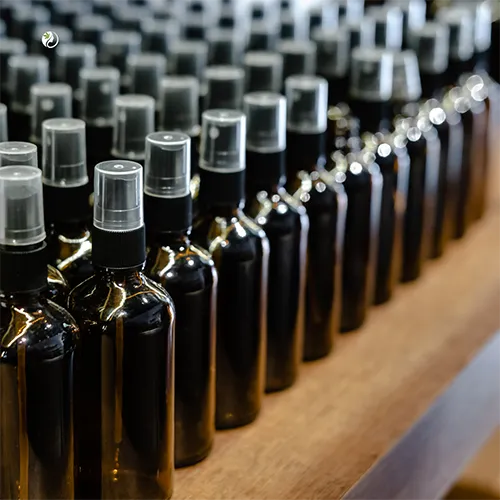
Packaging that is opaque or protects against UV rays and has low oxygen exposure is best. A lot of brands use airless systems to get better protection.