Consumers introduce a serum into their skincare routine for a number of common reasons: hydration, brightening, anti-aging, blemish care and barrier support. This makes serum a very flexible product category for beauty brands, as one format can be developed around very different skin concerns, ingredient stories and market positions.
A successful private label serum should be more than a pretty bottle with a light formula. It needs a reason to exist, a mouthfeel that suits the target customer, ingredients that back up the product concept, and packaging that works with the formulation. Brands should decide what they want the serum to do and who they want it to serve before jumping on the latest trending bandwagon.
So which serum should your skin care brand create?

There is no single serum that will work for every customer. For someone with dehydrated skin, hydration and comfort may be the priority, while someone with oily or blemish-prone skin may want a lightweight formula with a fresh finish. Instead, consumers developing an anti-ageing routine may look for peptides, antioxidants or other premium active ingredients.
That’s why the first question in private label serum development shouldn’t be “What’s the hot ingredient now?” Instead, a better question is, “What does my target customer expect this serum to do? Once the skin problem and the desired product experience are clear, the formula, texture, ingredients and packaging are much easier to define.
Hydration is one of the easiest jumping off points for a serum collection. A private label hydrating serum can be positioned as an easy daily step that helps the skin feel more comfortable and moisturised, and fits naturally between cleansing and moisturising.
Potential ingredient concepts include hyaluronic acid, betaine, panthenol, aloe vera, botanical extracts, moisturising complexes, and barrier-supporting ingredients. But the ingredient list is only part of the story. Texture is also important to customers when selecting a hydrating serum.
Some brands may want a watery, fast-absorbing formula that works well in a minimalist routine while others may want a slightly richer gel or milky serum that has a more nourishing feel. Which is right will depend on your target market, climate, price position and your overall brand personality.
The important thing to remember is that hydration is the benefit but texture is the experience. Both are needed in a strong formula.
Then there are brightening serums, another well-trodden category because they give brands a clear way to build products around radiance and a more even-looking complexion. Depending on the target market and positioning, a private label brightening serum may be formulated with ingredients such as vitamin C, niacinamide, botanical extracts, antioxidants or multi-active brightening complexes.
However, more active ingredients do not mean a better serum. A formula with a lot of trending ingredients might look great in marketing but the end product still has to be stable, comfortable to use and right for the skin concern.
When creating this type of serum, brands should discuss ingredient compatibility, texture, concentration ranges, packaging and sensory feel with the manufacturer. This helps to ensure that the formula works as a whole product, rather than just becoming a collection of trendy ingredients.
The anti-aging serum category can be particularly appealing to brands looking to tap into the premium skincare market. It is possible to combine complex ingredient stories with refined textures and higher-end packaging in one product.
A private label anti-aging serum can be designed around a concept of peptides, hyaluronic acid, ceramides, antioxidants, firming ingredients, botanical complexes or retinol depending on the positioning and market requirements.
The brief for the formulation should still be more specific than just asking for a ‘anti-aging serum’. Brands need to determine whether the product is to be perceived as light-weight, silky, rich or fast-absorbing and whether it is to be positioned primarily for daytime, nighttime or general daily use. Fragrance preference, packaging style and target age group may also affect the development direction.
The more clearly these options are defined, the easier it is for the manufacturer to formulate something that works for the brand, rather than just some generic serum.
Serum doesn’t have to feel rich or nourishing. Oily or acne-prone skin types may prefer lightweight textures that absorb quickly, layer well and don’t feel heavy on the skin.
For this type of serum, brands may consider ingredient concepts built around niacinamide, tea tree, light botanical extracts, exfoliating acid systems, soothing ingredients or an oil-control positioning. The precise formula ought to be a function of the customer profile and the type of routine the product is designed to support.
A serum targeted at teenage skincare consumers may need a very different concept to one aimed at young adults or professional skincare users. Texture, fragrance, packaging, product claims and price positioning should all be reflective of the audience you are trying to reach.
This is why “for oily skin” is just the beginning of the brief. A good manufacturer needs to understand who the customer is and what kind of experience the brand wants to provide.
Skincare for sensitive skin often takes a different approach. Instead of more ingredients and stronger marketing claims, many brands choose to build these products around simplicity, comfort and a more focused formulation story.
“A private label serum for sensitive-skin positioning may focus on hydration, soothing, barrier support and lightweight moisturization. Consider ingredients like aloe vera, panthenol, hydrating complexes or selected botanical extracts, according to the brief of the formula.
Often in this category, a simple and consistent formulation is more useful than a long list of hero ingredients. If the product is built around comfort and simplicity, the formula, packaging and marketing language must all support that idea.
“Serums give skincare brands a lot of flexibility in ingredient storytelling. Popular formulation ideas are Vitamin C, Peptides, Vitamin E, Niacinamide, Aloe Vera, Tea Tree, Turmeric, Hyaluronic Acid, Botanical Extracts and Plant Oils.
But there should be a reason for every ingredient to be there. If the product is for hydration, the formulation has to stay within the hydration category. If the goal is brightening, the ingredient system must tell a cohesive radiance story. If the serum is positioned as a premium anti-ageing product, the actives, texture and packaging should all support this premium positioning.
This way brands won’t get lost in creating products only based on trends. A better way to approach this is to start by identifying the customer need and then find ingredients that can support the formula and the brand story.
Another important decision is whether the serum should be based on one recognisable hero ingredient or a broader benefit-focused formula.

A hero-ingredient strategy can be very clear and simple for the consumer to understand. For instance:
Instead, a multi-active formula may be focused on a full skin benefit rather than a single ingredient. Some examples might be:
Neither approach is inherently superior. Hero-ingredient serums are great for an ingredient-led brand, but a multi-active formula might be more appropriate for a solution-led or premium skincare line. The right strategy depends on your target audience and how you want customers to perceive the product.
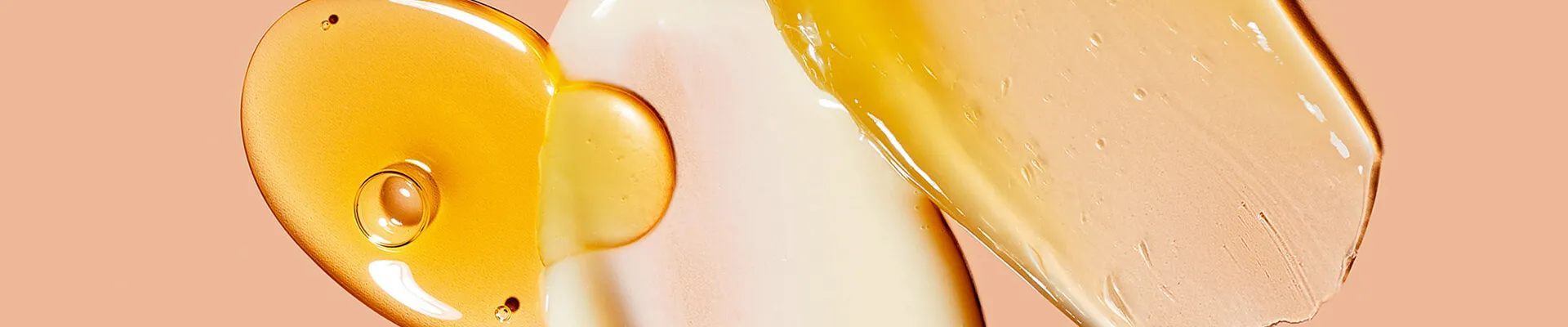
Skincare marketing frequently highlights active ingredients but texture can be equally important to the customer experience. A serum can be watery, gel-like, silky, milky, oil-based, light or more heavy and cushioning.
The best texture depends on how and when customers will use the product. A serum for under makeup might need to absorb quickly and leave minimal residue, whereas a nighttime anti-aging serum could afford a richer sensory profile. Climate, conventions and regional preferences may also play a part in what feels right.
This is an important point in private label development, because no matter how good the ingredient list is, it can’t make up for a texture that the customer doesn’t like. Brands shouldn’t just judge samples on active ingredients, but on how the serum spreads, absorbs, layers, and feels post-application.
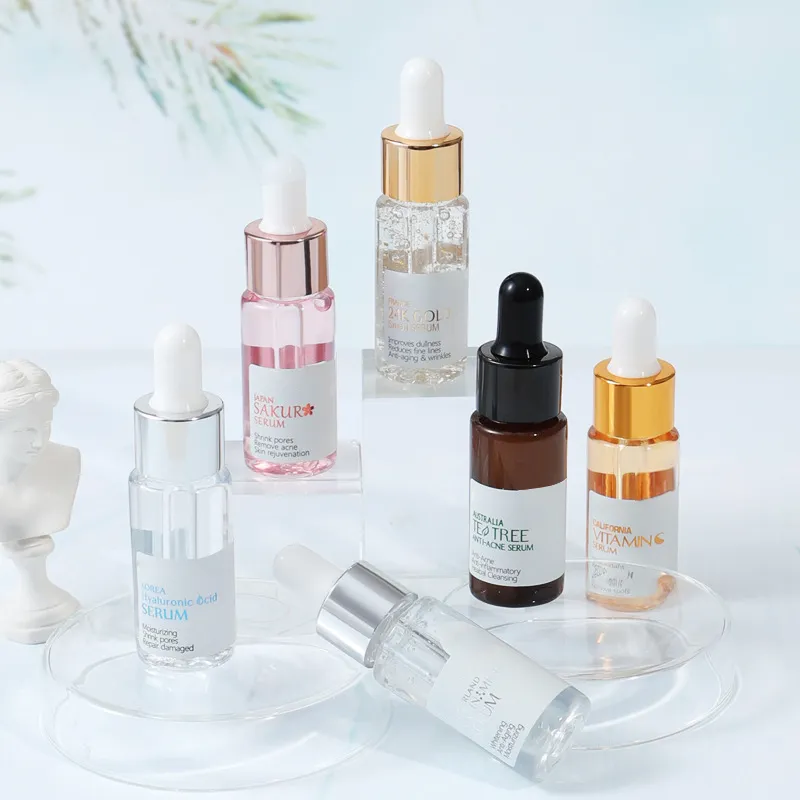
There are many forms of serum packaging like dropper bottles, pumps, airless containers, and ampoules. The best choice depends on more than just visual identity, but also formula viscosity, ingredient stability, dispensing experience, target price and shipping requirements.
For example a very fluid serum may be great for a dropper while a different formulation may be better suited to a pump or airless system. Packaging compatibility is also an important consideration in product development, as some active ingredients may require more care in regard to exposure to light or air.
Hence, it is important to consider packaging before the formula is finalised and not after. Technically, commercially and visually, the formula and the container have to work in tandem.
A serum can be a strong hero product, but brands can also create a full serum collection around different skin concerns. This makes it easier to create a clear product architecture and it offers a simple way for customers to select the formula that is best suited to their needs.
For example, a serum collection could contain:
Each product has its own role, but all together they make a complete serum category for the brand. This can also enable product bundling, cross-selling and future collection expansion.
Instead of having a tonne of unrelated formulas, the brand makes it easy for customers to make a decision: pick the serum that targets your biggest skin concern.
Once the product concept is clear, brands need to determine how much customisation is really needed. Private label serum allows a brand to take an established or mature formulation, and then customise the branding, packaging, fragrance, or specific product characteristics.
This can be a good option for businesses looking for a simpler development process and a quicker route to market. It might also make sense for brands that are testing a new category before they invest in a fully custom formula.
Custom OEM/ODM development gives brands more say in the final product. A custom formulation brief might include target skin concern, hero ingredients, texture, viscosity, fragrance preference, colour, skin feel, packaging, target price and market requirements.
Neither option is inherently better. The right choice depends on how differentiated the product needs to be, how quickly the brand wants to launch, and how much control is needed over the final formulation.
A clear product brief can make the process of development much more effective. Telling a manufacturer “I want a good serum” doesn’t convey what the product should feel like, who it’s for, or what makes it unique.
A more useful short note might be:
We are seeking to create a light weight hydrating facial serum for women ages 25-40. The formula should absorb fast, layer nicely under moisturiser, and be a simple hydration + barrier-support story. We want to develop a clean, premium visual identity for hyaluronic acid and panthenol.
The brief for an anti-ageing concept could be:
We are working on a top of the line anti ageing serum focused on peptides and hydration. We want it silky, not sticky, and in packaging more befitting a higher-end skincare collection.
These examples give the manufacturer far more useful information about the target customer, skin concern, ingredients, texture and positioning. A better brief makes it easier to get from a first thought to a workable sample.
After you have defined the concept, the next step is to take that idea and generate a formula, sample and finished product. Xiran skincare develops private label and OEM/ODM facial serum in a variety of skincare concepts, including hydrating, brightening, anti-aging, firming and other targeted serum categories.
Depending on the project, development may involve formula customisation, ingredient selection, texture adjustment, sample testing, packaging sourcing, printing, design support and production. It allows brands to coordinate the formula and packaging as part of the same product-development process, rather than separate decisions.
A winning private label serum doesn’t need to have the hottest ingredient or the longest list of actives. It’s got to marry the right customer, the right skin need, the right formula and the right brand story.”
The combination of all four elements results in more than just another facial serum on the market. It becomes a product with a clear purpose, and a more compelling reason for customers to buy it.
Start with the customer and product concept rather than choosing ingredients first.
A practical first brief should define:
Then decide whether you want an existing private label formula or a custom-developed serum before approaching manufacturers.
Yes.
In fact, launching with one strong hero serum can be a practical strategy for a new skincare brand.
Serums work particularly well as hero products because consumers often shop them by recognizable ingredients or concerns—such as vitamin C, peptides, niacinamide, retinol or hydration—making the product easier to position than a generic moisturizer.
Shopify's current skincare-startup guide also notes that consumers are more willing to pay a premium for higher-performance categories such as facial serums.
There is no universal “best” serum.
Your first serum should match a clear customer problem and be easy to explain.
Common private label serum directions currently include:
Current serum manufacturers repeatedly highlight vitamin C, niacinamide, peptides and hydration-focused serums as common development directions.
For a new brand, I would generally choose one clear product story rather than putting every trending active into one bottle.
A serum that consumers can understand in five seconds is normally easier to launch.
Published manufacturer examples currently range from approximately 500 units for selected stock-formula projects to around 1,000–2,000 units for semi-custom projects, while fully custom serum projects may require several thousand units.
Other manufacturers currently publish around 1,000 units per SKU for private label serum production and higher quantities for custom R&D.
The cost of a trial launch for a private-label product is approximately $3,000 to $8,000, whereas launching a small skincare line comprising three SKUs could range from $10,000 to $25,000—with the exact amount depending largely on order volume and the level of customization.