Creating a private label skincare line for acne treatment is much different than launching a basic moisturizer or cleanser. Because acne care products fall on the “results-driven” side of the skincare spectrum, brands must pay close attention to formula direction, active ingredients, skin tolerance, product claims, packaging, testing, and regulatory positioning.
According to Xiran Skincare’s experience working with skincare brands, many founders are drawn to the acne care market because the demand is clear. Consumers are looking for products that help with breakouts, excess oil, clogged pores, blemishes, post-acne marks, and sensitive problem skin. But the brands that earn lasting trust are seldom the ones that make the boldest claims. It’s the brands that have a clear routine, pick the right manufacturing partner, and communicate benefits responsibly.
In this guide, I will show you how I would go about building a private label acne treatment skincare line from scratch to the finished product. I will also share some acne skincare manufacturers that brands can look at if they are looking for OEM, ODM, private label, or contract manufacturing support.
Acne treatment is no longer a teenage-only affair. Many adult consumers also have to deal with hormonal breakouts, oily skin, maskne, clogged pores, and post-breakout marks. This situation leaves room for brands to create different product lines for various audiences.
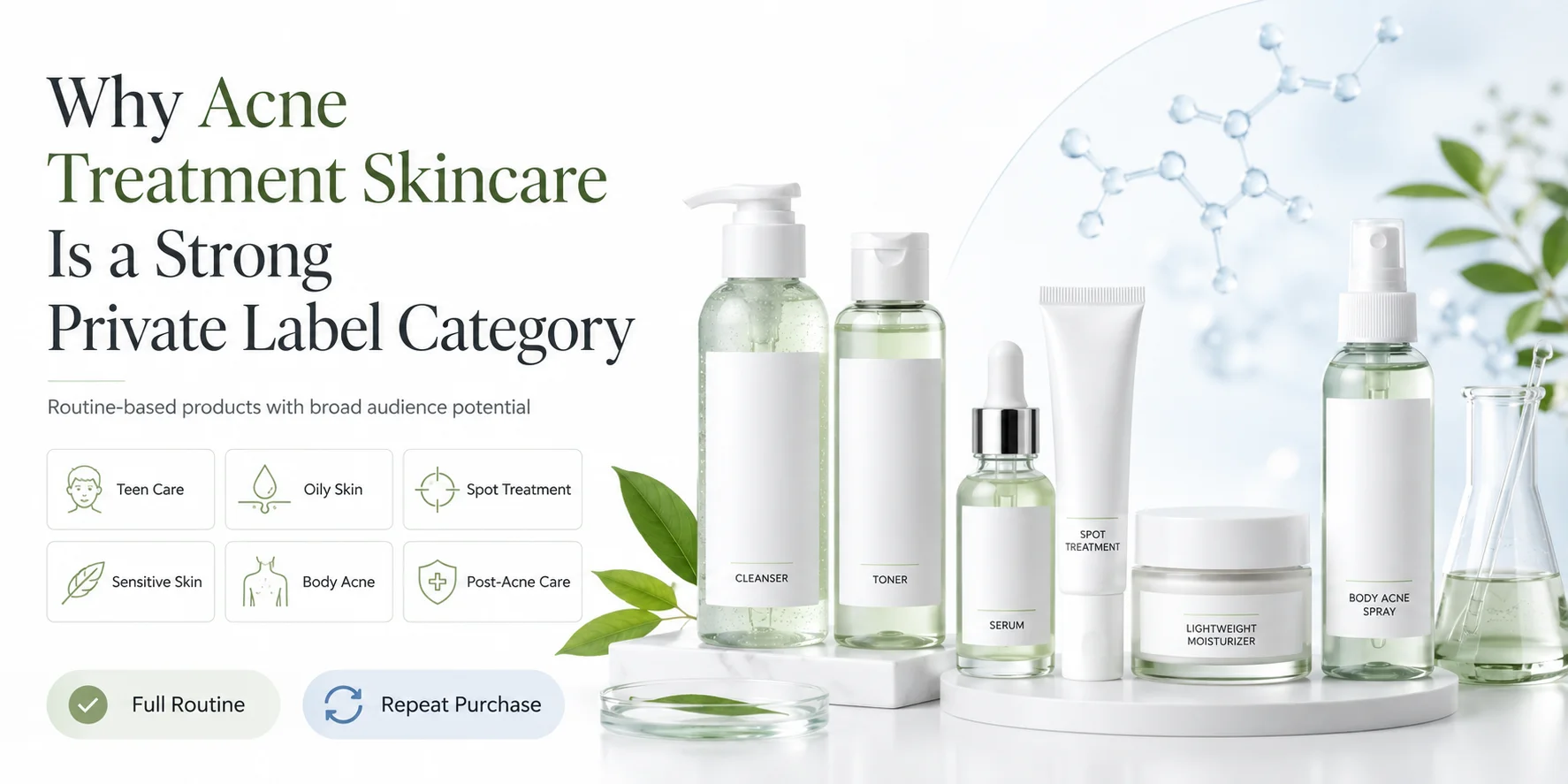
For example, a brand might develop the following:
I like this category because it gives brands the opportunity to build a complete routine and not rely on just one product. Acne clients often need a cleanser, a leave-on treatment, a moisturizer, a sunscreen, and occasionally a targeted spot product. This gives brands more room for repeat purchases and educating their audience.
When I do an acne treatment skincare line, normally I don't start with the formula. Let me start with product strategy. Acne care is a results-driven category, so every decision must be tied back to the target customer, market rules, product claims, and skin tolerance.
The first step is to decide who the line is for. Teen acne care, adult blemish care, and men’s oily skin and sensitive acne-prone skin lines all require different formulas, textures, packaging, and marketing language.
I would also decide if the brand should feel clinical, natural, dermatologist-inspired, clean-beauty, pharmacy-style, or premium. This helps to steer formula direction and packaging style from the beginning.
Before I create acne products, I always ask myself if the product will be positioned as a cosmetic blemish care product or acne treatment product.
In some markets, including the United States, acne treatment products may be classified as OTC drugs. This can change the active ingredients, label format, claims, testing, and manufacturing requirements. For cosmetic positioning, the language is softer, such as “for blemish-prone skin,” “helps improve the look of breakouts,” or “supports clearer-looking skin.”
You don’t need a ton of products to start a new acne skincare line. I would generally start with a simple routine that is easy for the customer to follow.
A beneficial starting line might be a clarifying cleanser, blemish serum, spot treatment, and lightweight moisturizer. This creates a complete routine for the brand’s acne care but also avoids making the product range too complex.
The formula should be relevant to the skin concern and target market. Common ingredient directions for acne-prone skin may include salicylic acid, niacinamide, zinc PCA, tea tree, centella asiatica, panthenol, allantoin, and other soothing or oil-control ingredients.
Some markets may also have more aggressive acne treatment products that include ingredients like benzoyl peroxide or sulfur, but these require more careful regulatory and stability planning.
Acne-prone skin is frequently sensitive, oily, dehydrated, and over-treated. That’s why I’d be reluctant to make the formula too harsh. A beneficial acne skincare product will work, but it won't be harsh.
I don't like to load up on a lot of strong actives; I like to go for a cleaner formula direction with one clear hero ingredient, a good pH, a light texture, and supporting ingredients that help keep the skin comfortable.
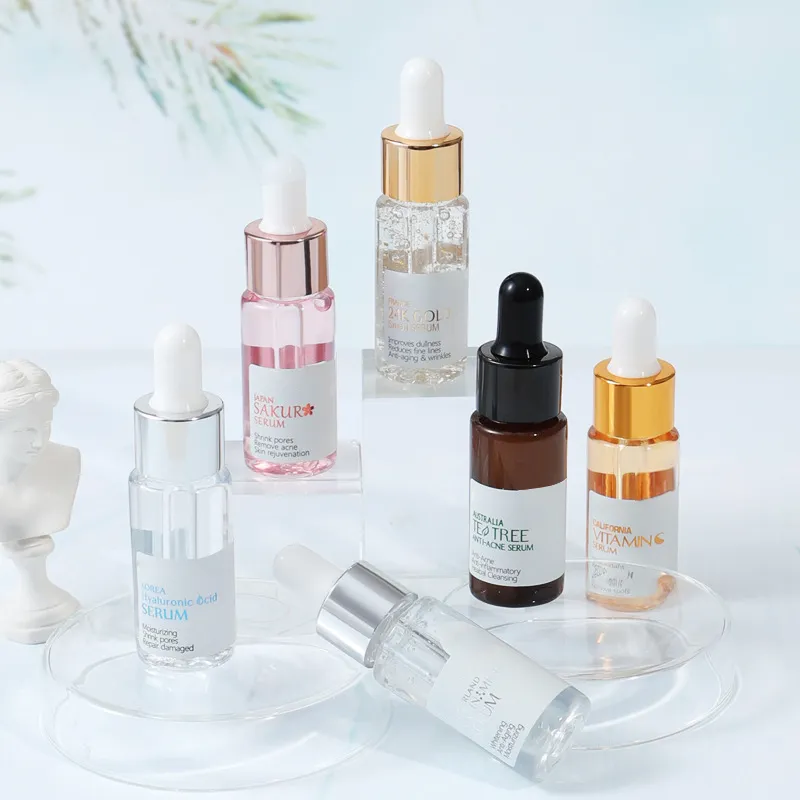
Packaging should support the formula and the user experience. Cleansers are usually best in tubes or pump bottles. Serums can be in airless pumps or dropper bottles. You can buy spot treatments in precision-tip tubes, rollerballs, or pen applicators.
I usually like my acne skincare products to have packaging that is hygienic, convenient, and easy to use. This is particularly true of leave-on products and targeted blemish treatments.
Basic tests such as stability, compatibility, microbial testing, and packaging checks should be carried out on the formula and packaging prior to bulk production. Brands may need a COA, MSDS, ingredient list, product specification, CPSR, CPNP, or other compliance documents as required by the target market for export markets.
This step helps to minimize risks before the product goes to the market.
The manufacturer should know more than just basic filling and packaging. I would look for a partner with experience in acne-prone skin formulas, control of active ingredients, adjustment of texture, matching of packaging, quality testing, and export documentation.
A reputable manufacturer should also ask about the target market, formula claims, MOQ, packaging plan, and launch timeline before giving a final quotation. This indicates that they know the whole development process, not just production.
Here are some private label, OEM, ODM, and contract manufacturer brands that brands can look at when developing an acne treatment or blemish care skincare line.
Prime Matter Labs is a U.S.-based manufacturer of beauty and OTC products specializing in skin, sun, hair, and body care. I would look into OTC-aware acne care development and consider this manufacturer for brands seeking U.S. manufacturing support.
Best for: U.S. brands, OTC acne treatment concepts, clinical-style skin care, brands seeking domestic production support.
Cosmetic Solutions provides full-service private label skincare, formulation, contract manufacturing, packaging, and quality support. It is a fantastic option for new and established brands, medspa brands, professional skincare brands, and online retailers.
Ideal for U.S. private label skincare, professional skincare, medspa channels, and performance-based acne care products.
Cosmewax is a European contract and private label cosmetics manufacturer with experience in skincare and beauty product development. It is worth a look for brands seeking European manufacturing, ready-made formula options, and private label support.
Best for: European skincare brands and retailers, fast-to-market private label projects, and brands looking for ready formulas and custom development.
HSA Cosmetics is an Italian private-label manufacturer of cosmetics with experience in skin and hair care. For brands seeking a made-in-Italy positioning, product customization, and full-service development, I would consider HSA.
Best for: European premium skincare brands, made-in-Italy beauty positioning, and brands looking for support in concept, formulation, and packaging.
Pink Frogs Cosmetics is a private label and contract manufacturer based in Italy with experience in skincare, personal care, fragrances, and dermocosmetics. It provides support from formulation development to manufacturing and packaging.
Who is this for: brands seeking Italian skincare manufacturing, dermocosmetic positioning, and full development support.
Xiran Skincare is a Chinese OEM/ODM skincare manufacturer that specializes in private label skincare development, formula customization, packaging matching, sample development, bulk production, and export document support.
In acne care projects, brands can create products such as acne serums, acne creams, facial cleansers, spot gels, blemish sticks, body acne products, and complete acne skincare sets.
Great for: Startups, e-commerce brands, overseas private label brands, and companies looking for flexible OEM/ODM acne skincare manufacturing in China.
If I were helping a new brand build out their first private label line of acne skincare products, I’d start with a focused 3-step or 4-step routine.
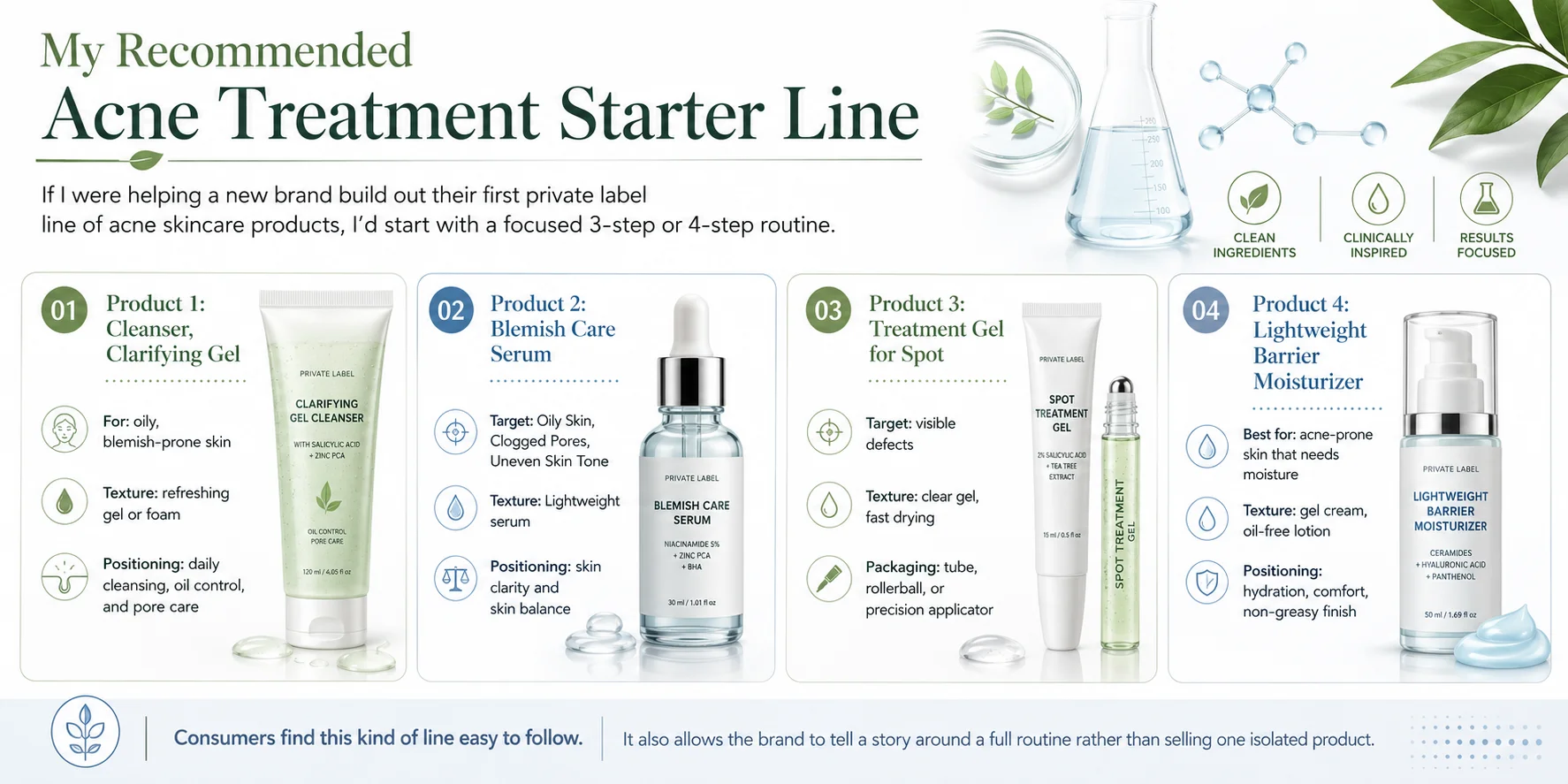
Here is a practical opening line:
For: oily, blemish-prone skin
Texture: refreshing gel or foam
Positioning: daily cleansing, oil control, and pore care
Target: Oily Skin, Clogged Pores, Uneven Skin Tone
Texture: Lightweight serum
Positioning: skin clarity and skin balance
Target: visible defects
Texture: clear gel, fast drying
Packaging: tube, rollerball, or precision applicator.
Best for: acne-prone skin that needs moisture.
Texture: gel cream, oil-free lotion
Positioning: hydration, comfort, non-greasy finish
Consumers find this kind of line easy to follow. It also allows the brand to tell a story around a full routine rather than selling one isolated product.
It’s a great opportunity to offer a private-label skincare line for acne treatment, but it does require careful planning. Acne-prone customers want results, but they often have to contend with irritation, dryness, sensitivity, and frustration from products that are too harsh.
So I wouldn’t just create an acne skincare line based on big claims. I would base it on a defined target customer, a balanced routine, responsible ingredients, comfortable textures, compliant wording, and a manufacturer that knows formulation and market requirements.
The first step for brands looking to enter the acne care space is to clearly define the product direction: cosmetic blemish care or OTC acne treatment, gentle daily routine or targeted active care, teen market or adult acne market, entry level or premium positioning.