Most beauty founders don’t struggle to find companies claiming to be able to manufacture cosmetics. The hard part is knowing which of those companies can produce your product, in your packaging, for your market – but still deliver the same result when the order gets way bigger.
That is why I would not pick a cosmetics manufacturer out of a price list or a sample. A sample can tell you if you like a texture or shade but it doesn’t tell you who made it, what testing sits behind it, if the packaging will work after six months or if the factory can reproduce it consistently.
The immediate risk for a first-time founder is overspending before demand has been proven. A DTC brand has to consider leakage, returns, fast reorders and packaging that can stand up to parcel delivery. A brand already in beauty will be more concerned with repeatability, documentation, and capacity. Another problem in a change of manufacturers is that the new factory has to make the product as it is and not get noticed by the customers if there are any changes.
So the right manufacturer is not the factory with the longest catalogue or the lowest advertized MOQ. It is the one that fits the stage of your brand in terms of product experience, development model, quality system, commercial terms and production capacity. How I would go about narrowing down a long list to two or three manufacturers to sample with.

Write down what you are trying to make before you contact factories. It doesn't have to be a lab document but 'I want a premium serum' is too vague a statement to produce a meaningful quote.
Product Type: Target Customer: Desired Texture/Finish: Hero Ingredients: Ingredients to Avoid: Claims: Fill Size: Packaging Format: Target Retail Price: First Order Quantity: Launch Country: Desired Timing: For foundation or concealer, add coverage, finish, wear, number of shades, undertones. How does the spray feel, how does it finish, how well does it hold and does the setting spray need to be alcohol-free. If you have a reference product, tell us what you like about it, not just that you want a copy.
The brief puts all candidates on an even footing. Without it one supplier may quote a standard formula in a stock bottle while another may quote original development and custom packaging. The first quotation seems cheaper, but the two factories are not quoting the same project.
A company selling cosmetics is not necessarily the company producing them. It may own a factory, contract out some of its work, buy finished products from another manufacturer or be mainly an export company. None of them is inherently unacceptable, but you need to know which one you're dealing with.
Where is the formula compounded? Where is it filled? What steps are outsourced? Then take the products one by one. A factory that excels at making facial serums may not be good at pigment dispersion or foundation shade matching. A manufacturer that fills shampoo and body wash may not have the equipment to fill a high viscosity concealer. Setting spray is a challenge in itself because the formula, pump, spray pattern and nozzle all have to work together.
Do not take a catalogue as evidence, but ask for recent examples of the same product family, normal batch sizes, the equipment used and the quality checks made during production. A good manufacturer can explain the process in plain language. If the answer is still “we can make everything” but no one can describe how your product would be made, I wouldn’t move it onto the sample shortlist.
Private label is often called the basic option and custom formulation is often called the better option. I don't see it that way. These are different tools.
Private label builds on a formula that the manufacturer already has. You can choose the scent, colour, packaging, and so on, or make small alterations. This is usually faster and can be a smart way to go for a first launch, a supporting SKU or a brand looking to test demand before investing more capital.

Custom formulation is better when the formula itself is the heart of the brand: a specific skin feel, shade system, performance target, ingredient combination or claim. It takes longer because the work might include several rounds of samples, technical adjustments, packaging compatibility, stability testing and market-specific review.
In between is “semi-custom” development, where a factory adjusts an existing base design. That can be a good balance but ask what exactly is changing? Changing the fragrance or adding an extract is not the same as rebuilding the emulsion, the preservation system, the pigment ratio or the wear performance.
Get the basics in writing before you shell out a development fee: type of formula, number of sample rounds, testing included, expected timeline, formula ownership, exclusivity and what happens if the sample you approved later flunks testing. Just because a formula says it’s custom, doesn’t mean it’s yours.
One of the biggest traps for the unwary when buying cosmetics is the question of Minimum Order Quantity (MOQ). This is because, in most cases, there is no single MOQ that applies universally.
The MOQ requirements are usually driven by packaging quantity first and formulation second. Most manufacturers, in general, set their private label and custom product MOQs based on packaging volume. If you are using packaging from the manufacturer's stock, MOQs are usually around 500-2,000 units, and if you need custom packaging, it’s more like 2,000-5,000 units or more.
For example, say you want to make a serum. The manufacturer might have a MOQ of 500 units per SKU but a minimum of 3,000 units for custom-colored packaging. Even if you only order 500 finished units, you may still have to pay for and store the other 2,500 units for future use. Such differences can lead to material differences in capital requirements.
Here is a written summary of the minimum requirements for those who are creating a product for their own brand for the first time.
ItemWhat to confirmBulk formulaMinimum batch weight or volumeFinished productMOQ per SKU, size, fragrance or shadePrimary packagingBottle, jar, pump, cap, applicator or wiper MOQDecorationLabel, screen printing, coating, hot stamping or custom colour MOQSecondary packagingCarton, insert, tray and shipping case MOQ
I would start with matching the legal company name on business registration, quotation, contract, bank account, manufacturing licence where applicable and quality certificates. If the factory, the sales company and the payment recipient are not the same, ask the supplier to explain the relationship and add it to the agreement.
A live factory video is a good starting point for a preliminary check, especially if it includes the external address, raw material storage, weighing area, production vessels, filling lines, laboratory, retained samples and finished goods warehouse. A site visit or independent audit provides much stronger evidence if the order is substantial.
Don't judge a factory by clean floors and stainless steel equipment. Look at raw material labelling, segregation of rejected material, traceability of batch numbers, cleaning of equipment, and investigations of quality problems. You will find manufacturing reliability in records and habits, not in the showroom.
At minimum, request business registration, relevant production licence, current quality certificates, factory address, equipment list and sample quality documents such as a batch record or certificate of analysis with confidential information removed.
ISO 22716 is an important GMP reference for cosmetics covering manufacturing, quality control, storage and shipment. If a factory has an ISO 22716 or GMP certificate, check the legal entity, site address, scope, issuing body and expiry date. A certificate from another facility doesn’t confirm the actual production site that will manufacture your order.
Factory certification and product compliance are also separate things. ISO 22716 does not make every formula legal in the United States, European Union, United Kingdom or Australia automatically. The ingredients, claims, safety evidence, labels, product files, notifications and the local responsible business still need to meet the requirements of the destination market.
For the United States, be wary of the phrase “FDA-approved cosmetics”. Most cosmetics are not approved by the FDA before they are marketed, although colour additives are an important exception. Covered facilities have registration requirements under MoCRA, and the responsible person has duties, including product listing and maintaining adequate safety substantiation. FDA registration is not a product approval or substitute for GMP evidence.
The cosmetic product must have a Responsible Person established in the EU, a Product Information File including the Cosmetic Product Safety Report, labelling compliant with the EU requirements and a CPNP notification before being placed on the market for the EU. UK rules govern the PIF and safety assessment requirements, and Great Britain has its own Responsible Person and notification scheme. Again, Australia is another system. Importers need to be aware of AICIS obligations for cosmetic ingredients, while therapeutic claims or certain categories may bring a product under the TGA.
You don’t need the manufacturer to be your lawyer, but it should be aware of the markets it says it serves. Ask it to list what it will provide, i.e. the INCI list, quantitative formula for the safety assessor, raw-material documents, specifications, test reports, manufacturing statement, packaging information and what remains the responsibility of your brand, importer or Responsible Person.
“We have our own laboratory” could mean a lot of different things. One lab may be all about changing fragrance, colour and viscosity in existing formulas. It may be possible to develop a new emulsion, solve a preservation problem, stabilise an active ingredient or develop a consistent range of foundation shades.
To understand the difference, it’s best to talk about a real problem. Ask the team how to prevent serum pilling, deal with foundation oxidation, keep pigments dispersed evenly, prevent a highlighter from settling, or work a setting spray with a fine-mist pump. Good formulators specify limitations and trade-offs. They do not immediately agree to every ingredient, claim and target price.
I’d also like to know how sample development is controlled. Are the samples coded? Documented changes to the formula? What is the number of revisions? Will the factory keep the final approved reference and use it for bulk production inspection? Sampling should be an easy trip from your brief to the formula that hits the filling line.
It can look and feel awesome for two weeks and still fail after launch. Over time it can separate in heat, lose viscosity, grow microorganisms, react with the packaging, clog the pump or change colour. That’s why “we test our products” is not enough of an answer.
For most projects my responsibilities would include stability testing, microbiological quality, packaging compatibility and routine checks at batch release. Products containing water may also require preservative efficacy testing, often called PET or challenge testing. Some claims, such as long wear, moisturization, water resistance or a measured improvement, may need separate performance or claims support.

These tests do different things. A microbial limits result is indicative of the sample tested at that time, not the ability of the preservation system to resist contamination during use. Stability testing in a laboratory package does not guarantee the final pump, bottle, coating or wiper will be compatible with the formula.
Ask what tests are included in the price, what laboratory is used, what conditions and methods are used, how long the program lasts, what constitutes a pass, and whether you get the full reports. If the launch date requires production before longer-term results are available, the risk and next steps should be openly discussed, not masked behind a rushed schedule.
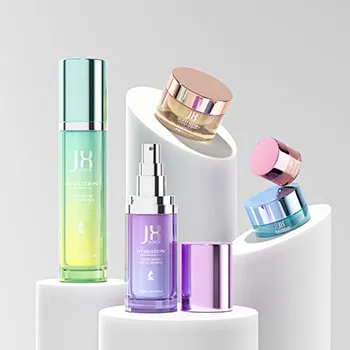
Packaging is not the decoration at the end, it’s the product. The formula, bottle, pump, applicator, wiper, label, printing and carton all have to work together.
Ask if the packaging is purchased directly or via partner suppliers, if you can use your own supplier, and who is responsible for incoming inspection and defective components. Review material, capacity, decoration method, tooling cost, lead time, tolerance, defect standard and replacement terms for all major components.
Whenever possible, the formula should be approved and tested in the proposed commercial package. A generic sample jar does not tell you much about whether an airless pump can dispense a viscous product. I would also talk about leakage, drop and transit testing, carton strength, protective inserts, and master case packing for DTC brands. What looks beautiful in a studio can behave very differently after a week in the parcel network.
So when a manufacturer says it exports worldwide, try asking a more useful question: has it sustained this type of product in your target market? You may be able to ship shampoo to the US, but it doesn’t mean the same team knows what documents are required for an EU complexion range.
Request examples of documentation provided on similar projects, with redactions. Depending on the market, a brand or safety assessor may require the full or quantitative formula, INCI list, product specification, certificate of analysis, stability and microbiological reports, packaging details, raw-material safety information, allergen data, and evidence of claims.
Change control is as important as the first set of documents. If the factory switches a raw-material supplier, fragrance, pigment or packaging component, will you be informed before the next batch? Will the impact on testing, regulatory filings, labelling and product performance be reviewed? A small substitution can create a much bigger compliance problem.
Before comparing the final cost, clarify Incoterms, inspection, goods, customs documents, duties, insurance and who will act as importer of record. The cheapest ex-works quote is not always the lowest landed cost.
Attach capacity claims to your product. And ask what batch vessel and filling line will be used at 1,000, 10,000, 50,000 and 100,000 units. Will the process, equipment, raw-material supplier or source of packaging change as volume increases? How would such changes be assessed?
I also ask about normal lead time, peak season lead time, production scheduling, raw-material reservations, and the lead time for a large reorder. A scalable supplier requires planning and quality discipline, not just bigger machines.
If a brand is changing manufacturers, the question is even more specific: can the new plant replicate the current formula and product experience? The formula sheet may not account for processing temperatures, mixing speed, order of addition, pigment dispersion or other details that influence the result. Plan for pilot batches, side by side comparisons, packaging testing, and a period of overlapping supply before completely leaving the current manufacturer.
After the first round of talks, pay attention to the evidence rather than to the quality of the sales pitch. I would grade candidates on relevant product experience, formula route, true MOQ, factory verification, quality system, R&D, testing, packaging, export documentation and scale. It does not need to be a complicated score. It just makes you compare the same issues across all factories.
Next, look at the weaknesses. A slow response is inconvenient, but a legal entity that can't be explained, fuzzy formula ownership, no testing plan or a certificate that can't be verified is a real risk. If there is one serious unresolved issue, it can outweigh a lower price in five other areas.
Get samples or pilot work from the best candidates on the same brief. Agree on the final formula or approved standard, specifications, packaging, test responsibilities, payment stages, delivery terms, change control, defect remedies, confidentiality, intellectual property and recall responsibilities before placing the commercial order. This is what makes a manufacturer a responsible production partner and not a prospective supplier.
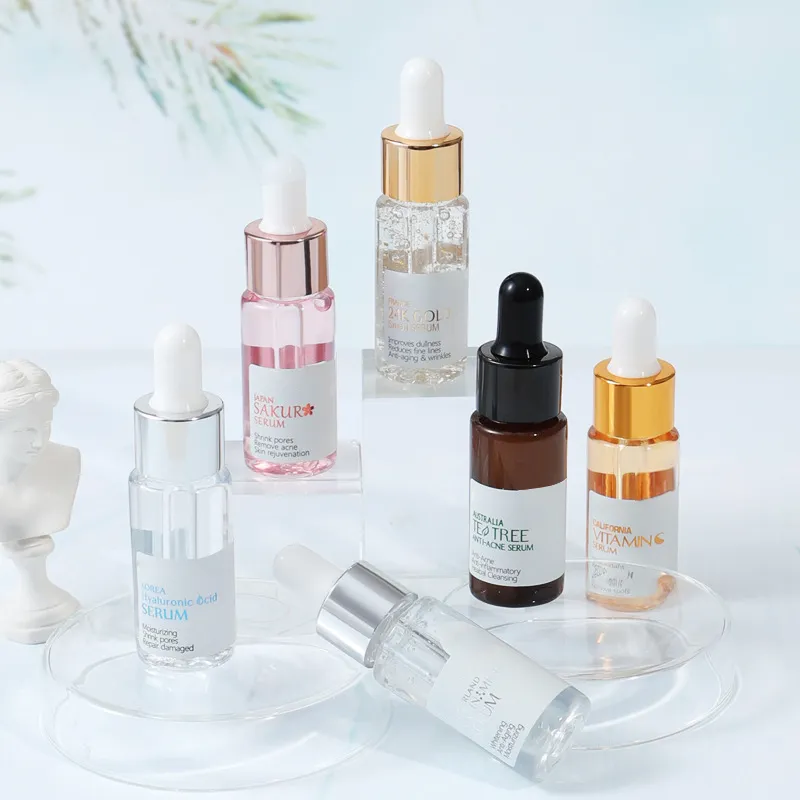
This is also how I think we should be judged by a brand at Xiran Skincare. We are a cosmetics manufacturer in Guangzhou, offering private label, custom formulation, packaging, production, quality control and export support. We can also manufacture facial serums, liquid foundation, concealer, primer, setting spray, makeup remover, body and hair care. This can be useful for a brand developing across several related categories.
Our standard published Minimum Order Quantity (MOQ) for contract manufacturing (CMO) is 500 to 1,000 units per product. However, this figure can change depending on the product type and the stock of the packaging. For instance, facial masks, eye masks, lip masks have a MOQ of 5,000 to 20,000 pieces.
I prefer brand founders to be well versed in these requirements before the prototyping phase rather than discovering issues around packaging MOQs after the formula has been approved.
If Xiran sounds like a good fit for your project, please send us a brief with your requirements. You could ask for specifics that relate to your target market, clarify your testing plans, confirm which processes are done in-house, and discuss how the terms might change if your order volumes increase.
A capable manufacturer can easily answer professional questions, which helps both parties gain a clearer understanding of the project.
Choosing a cosmetics manufacturer is really an exercise in reducing uncertainty. You should know by the time you place an order who is making the product, what you are buying, how it will be tested, what the full MOQ commitment is and who is responsible for each part of market compliance.
Don’t expect a single certificate, factory video or sample to answer all of those questions. The strongest argument is the convergence of several pieces of evidence. When documents, technical answers, commercial terms and sample quality all agree.
For standard skincare products—such as serums, facial cleansers, creams, and body or hair care items—the MOQ is typically between 500 and 1,000 units (bottles). However, for sheet masks, the MOQ is usually around 20,000 pieces, while for eye masks and lip masks, it generally ranges from 5,000 to 10,000 pieces.
Private label is usually more suitable for brands that want to launch quickly, reduce development costs and start with a proven existing formula.
Custom formulation is better suited to brands that need a more differentiated product concept, specific texture, ingredient system, performance profile or positioning.
Neither option is automatically better. The right choice depends on your budget, launch timeline, expected order volume, product strategy and how important formula differentiation is to your brand.
Formula ownership depends on the type of manufacturing agreement.
If you select a manufacturer's existing private label formula, the manufacturer will normally continue to own that formula. If you pay for custom formulation development, ownership or exclusivity should be clearly defined in your contract before development begins.
Brands should confirm whether the formula is exclusive, whether the manufacturer can produce a similar formula for other customers and whether the formula can be transferred to another manufacturer in the future.
Do not assume you automatically own a formula simply because you paid for product development.
The appropriate certifications depend on the products being manufactured and the markets where they will be sold. For cosmetics, brands commonly look for manufacturers operating according to GMP principles, with ISO 22716 being one widely recognized standard for cosmetic manufacturing practices.
However, certification alone should not determine your decision. You should also check how the manufacturer handles raw materials, batch records, microbiological control, testing, traceability, production hygiene and finished-product inspection.
It is also important to distinguish between factory certifications and regulatory requirements. For example, the U.S. FDA does not issue a general “FDA certification” for cosmetic factories in the way some suppliers may imply.
Be cautious if a manufacturer cannot clearly explain its factory location, production process, quality control system or testing procedures.
Other warning signs include vague certificates, unusually low prices without a clear cost breakdown, promises that every product can be produced at an extremely low MOQ, unwillingness to provide samples, unclear formula ownership and unrealistic claims about regulatory approval.
The initial total production cost when partnering with a skincare manufacturer typically ranges from $2,000 to over $30,000, depending on whether you choose a ready-made formula or a fully custom one. The breakdown of these costs depends largely on your production method, minimum order quantity (MOQ), and documentation and certification fees.