If you are planning to launch a skincare brand, one of the first questions you will probably ask is how much money you actually need to get started. The answer can be surprisingly different depending on who you ask. Some suppliers will tell you that a few hundred dollars is enough, while other manufacturers may quote $10,000, $30,000, or even more for what appears to be the same idea.
Both answers can be correct.
The real difference comes down to how you want your products to be made. A founder choosing an existing serum formula in a standard bottle is not starting from the same place as a brand developing a proprietary formula, sourcing a custom bottle, and ordering several thousand units for its first production run.
From a manufacturing perspective, the cost of starting a skincare brand is mainly determined by three things: the formula, the packaging, and the quantity you are prepared to order.
For this article, we are looking specifically at the product-side investment required to launch a skincare brand. That means the formula, packaging, product development, and manufacturing costs. We are not including website development, advertising, marketing, freight, or warehousing because those expenses depend heavily on the way each brand plans to operate.
For a small startup, the product budget can begin at only a few hundred dollars. For a more developed private label project, it may be several thousand dollars. Once you move into custom formulation and custom packaging, the investment can easily reach $10,000-$20,000 or more.
The easiest way to understand the difference is to look at the three main ways skincare products are usually developed: white label, private label, and custom formulation.

White label is usually the lowest-cost route into the skincare business.
In a white label model, the manufacturer has already developed the formula and, in many cases, has also decided on the available packaging. You are essentially selecting a finished or nearly finished product and applying your own branding to it.
Because there is very little development work involved, the minimum order quantity can be extremely low. Depending on the supplier and the product, you may be able to begin with only 20 to 100 units.
This means that a very simple white label launch can sometimes be started with around $100-$500 in product investment.
That sounds attractive, particularly if you are launching your first brand or simply want to see whether customers are interested in a particular product category. Instead of putting several thousand dollars into inventory, you can order a small quantity, test the market, and learn from the response.
The trade-off is that you do not have much control over the product.
The formula is normally fixed, the packaging choices are limited, and the same or a very similar product may also be available to other brands. If ten different companies buy the same serum from the same white label supplier, the main difference between those products may simply be the label.
This is why we normally see white label as a useful market-testing model rather than the strongest long-term brand-building model.
It can work well for a creator, small online seller, salon, spa, or entrepreneur who wants to launch quickly. But if the goal is to build a skincare company with a distinctive product identity, white label can become restrictive quite quickly.
You may eventually want a different texture, a different ingredient combination, a stronger product concept, better packaging, or a formula designed around a specific customer problem. At that point, most brands begin moving toward private label or custom development.
For many new skincare companies, private label sits in the most practical position between cost and customization.
You are not necessarily developing an entirely new formula from zero, but you usually have much more flexibility than you would with basic white label products. Depending on the manufacturer, you may be able to select from established formulas, choose different packaging, create your own labels and cartons, and build a much stronger visual identity around the product.
A realistic starting range for many private label skincare projects is approximately $1,000-$6,000.
The reason the range is so broad is packaging.
When founders first request a quotation, they often concentrate on the cost of the formula. In practice, packaging can change the total investment just as much as the formula itself, and sometimes more.
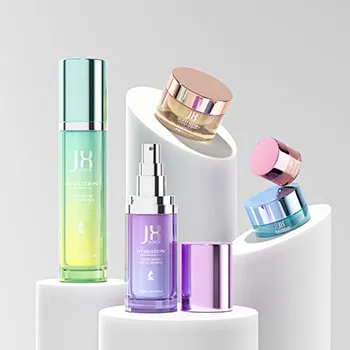
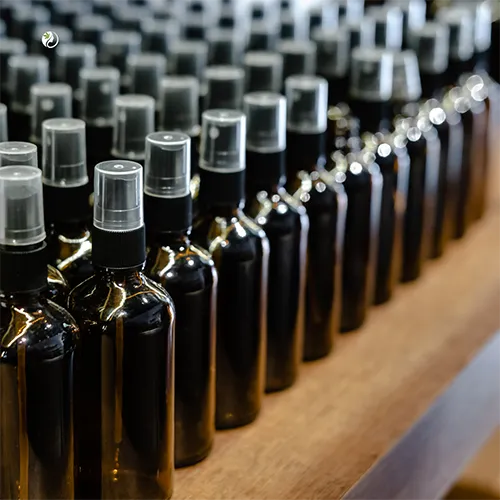
The least expensive private label route is usually to work with bottles, jars, pumps, tubes, and other packaging that are already available through the manufacturer's existing supply chain.
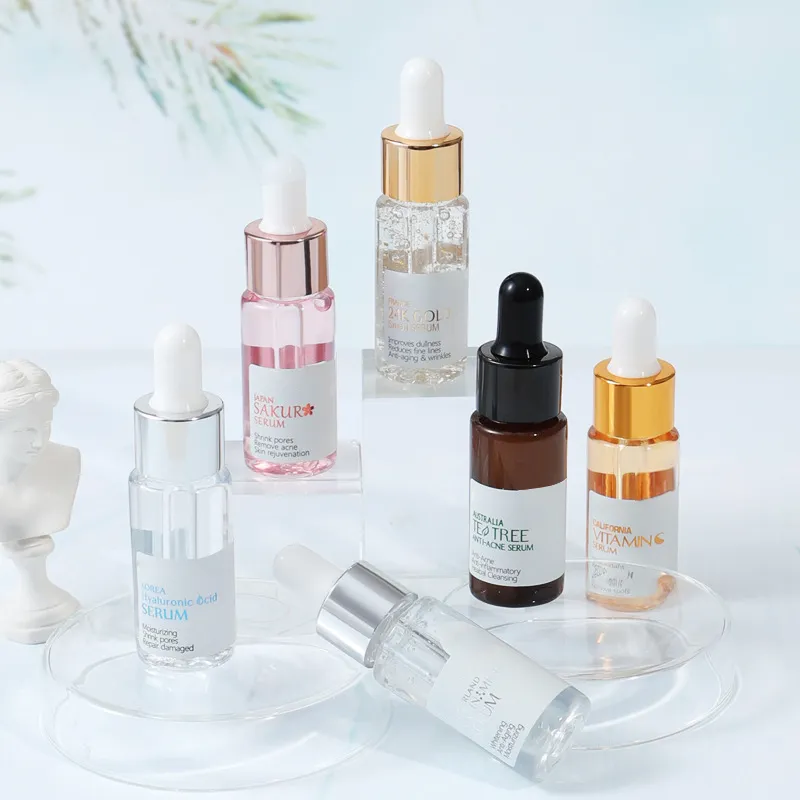
For example, imagine you are launching a facial serum. The manufacturer may already have several standard 30 ml dropper bottles or airless pump bottles available. Instead of developing a new bottle, you choose one of those options and customize the label, printing, color, or outer box.
Because the packaging already exists, the MOQ can remain relatively manageable. In many cases, a project using an existing formula and stock packaging may begin at around 500-1,000 units per SKU.
For this type of project, a startup may spend somewhere around $1,000-$3,000, although the exact cost depends on the formula, packaging materials, decoration, and the number of units ordered.
For a first launch, this can be a very sensible approach.
You still have enough flexibility to create a product that looks like your brand, but you are not spending a large amount of money on custom molds or packaging development before you even know how customers will respond.
In our experience, this is often a better starting point for a serious skincare startup than ordering an extremely small white label batch. It gives the brand more control while keeping the first production run reasonably manageable.
Once you move away from existing packaging, the numbers change.
A completely customized bottle, jar, pump, cap, color, surface finish, or mold usually requires a much larger packaging order. Packaging suppliers work with their own MOQs, and these can easily be higher than the manufacturer's filling MOQ.
This is something new founders do not always realize.
A skincare manufacturer might be willing to produce 500 or 1,000 units of a formula, but the packaging factory may require 2,000, 3,000, or more pieces for the bottle you want.
That is why a private label project using custom packaging can quickly move above $4,000, and sometimes considerably higher.
You are no longer paying only for the product inside the bottle. You are also paying for a larger packaging inventory, decoration, printing, cartons, and potentially additional development work.
Custom packaging can absolutely be worth the investment when the packaging itself is an important part of your brand identity. But for a first product, it is worth asking whether customers truly need a completely custom bottle from day one.
Sometimes a well-selected stock bottle with excellent artwork, printing, and secondary packaging can create a very strong brand presentation without forcing the business into a much larger MOQ.
Custom formulation is different because you are no longer simply choosing a product that already exists. You are asking a manufacturer or laboratory to develop something specifically for your brand.
That may mean creating a serum around a certain ingredient strategy, changing the sensory feel of a moisturizer, designing a formula for a particular skin type, developing a certain texture, or building a product around a specific market position.
Naturally, this requires more work.
A formulator may need to develop several prototypes before the product feels right. Ingredients may need to be sourced specifically for the project. The formula may go through adjustments to viscosity, fragrance, color, absorption, pH, preservation, or performance before the final version is approved.
Testing also becomes more important because a new formula needs to be evaluated before large-scale production.
Once formula development, sampling, manufacturing, and packaging are combined, a custom skincare project can usually require around $5,000-$20,000 or more in initial product investment.
There is no meaningful universal price for custom formulation because two products that are both called “serums” can be completely different projects.
A straightforward hydrating serum using commonly available ingredients may be relatively simple to develop. A more complex formula containing multiple expensive actives, unusual raw materials, difficult textures, or specific performance requirements can cost substantially more.
MOQ is another reason custom formulation becomes more expensive.
Manufacturers normally need to purchase raw materials and prepare production equipment specifically for the formula. As a result, custom projects often begin somewhere around 1,000-5,000 units, depending on the manufacturer and the complexity of the product.
And once custom packaging is added to a custom formula, the total investment rises again.
For that reason, I would not normally recommend choosing custom formulation simply because it sounds more premium. It makes the most sense when there is a clear product reason for doing it.
If your brand positioning depends on a unique formula, a specific sensory experience, a particular group of ingredients, or a product concept that existing formulas cannot deliver, then custom development can be worth the additional cost.
If the main goal is simply to launch a good cleanser, moisturizer, or serum under your own brand, a strong private label formula may be a much more efficient place to begin.
Manufacturing location can also have a major impact on how much you need to invest.
This is not only because labor costs differ between countries. MOQ requirements, packaging supply chains, development fees, raw material sourcing, and the manufacturing model itself can all change the economics of a project.
For brands working with manufacturers in China or parts of Southeast Asia, private label and custom manufacturing projects can often be started with more flexible quantities.
Depending on the formula and packaging, product-side budgets can fall somewhere between approximately $1,000 and $20,000.
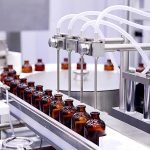
One of the main reasons is supply-chain access. In China, for example, skincare manufacturers often operate close to large networks of bottle factories, carton printers, raw material suppliers, label manufacturers, and other packaging vendors. This can make it easier to combine formula development and packaging sourcing within a relatively flexible budget.
For an early-stage brand, that flexibility can be important.
In markets such as the United States, Europe, South Korea, and Japan, the initial investment can be much higher, particularly when the manufacturer has higher production minimums.
Some manufacturers in these markets may require minimum orders of several thousand units for private label or custom projects. Once the cost of the formula, filling, packaging, cartons, and inventory is combined, the first production run can reach $10,000-$70,000 or more.
That does not mean manufacturing in one region is automatically better than another.
A brand may have very good reasons for choosing a manufacturer in Korea, Japan, the United States, France, Italy, or another market. Country of origin may be important to its positioning, customers, or distribution strategy.
The important point is simply that manufacturing location should be included in the budget calculation from the beginning. A founder should not assume that the same product will have the same MOQ or development cost in every country.
If you are still at the idea stage, it helps to think about your budget in terms of what you are trying to achieve rather than asking for one universal startup number.
If your goal is simply to test whether customers will buy a skincare product, it may not make sense to spend $20,000 developing a formula before you have any sales data. A white label or low-MOQ private label launch in the $500-$3,000 range may give you enough information to decide whether the concept is worth developing further.
If you already have a defined brand, target customer, product concept, and sales plan, a $3,000-$10,000 private label budget gives you considerably more flexibility. You can usually make better packaging choices, create a more professional brand presentation, and order enough inventory for a proper launch without immediately committing to a fully custom product.
If the product itself is intended to be a major point of differentiation, then you should be prepared for a larger investment. A custom formulation project may require $10,000-$20,000 or more, especially once custom packaging and higher MOQs are involved.
There is also nothing wrong with moving through these stages gradually.
A brand might begin with a professionally developed private label serum, prove that customers want it, and then create a custom second-generation formula after the business has generated sales. In many cases, that is financially healthier than putting the entire startup budget into product development before the first customer has placed an order.
Another decision that has a major effect on startup cost is the number of products you launch.
Founders often arrive with plans for a cleanser, toner, serum, eye cream, moisturizer, mask, facial oil, and sunscreen—all for the first launch.
From a manufacturing perspective, every additional SKU multiplies the investment. Each product has its own MOQ, packaging, labels, cartons, and inventory.
If one private label product requires a $2,000 investment, launching six products does not create a $2,000 skincare brand. It can turn into a $12,000-$20,000 inventory commitment very quickly.
For many new brands, starting with one strong hero product or a small two- to three-product collection is more manageable.
A serum paired with a moisturizer, for example, may tell a clearer story than eight unrelated products. More importantly, it allows you to see which products customers actually reorder before investing in a larger portfolio.
You can always expand later.
If we simplify the numbers, the product-side investment for starting a skincare brand often looks roughly like this:
| Development Model | Typical Product Budget | Typical MOQ | Best Suited For |
|---|---|---|---|
| White Label | $100-$500+ | 20-100 units | Testing a market or idea |
| Private Label with Stock Packaging | $1,000-$3,000+ | 500-1,000 units | New skincare brands |
| Private Label with Custom Packaging | $4,000+ | 2,000+ units | Brands focused on packaging differentiation |
| Custom Formulation | $5,000-$20,000+ | 1,000-5,000+ units | Brands developing unique products |
These figures should be treated as planning ranges rather than fixed quotations. Product category, formula, ingredients, packaging material, decoration, testing, manufacturing country, and order size can all change the final number.
There is no single correct budget for starting a skincare brand.
You can technically enter the market with only a few hundred dollars through white label products, but that comes with limited differentiation. You can build a more recognizable private label brand with several thousand dollars, particularly if you use existing formulas and packaging intelligently. And if your goal is to develop a genuinely unique skincare product, you should expect a much larger investment in formulation, testing, packaging, and inventory.
For most new skincare founders, I believe the most important question is not simply, “What is the cheapest way to start?”
A better question is:
“What level of product development makes sense for the stage my brand is currently in?”
There is little advantage in paying for custom formulation when your business is still testing demand. At the same time, launching the cheapest possible white label product may not make sense if your strategy depends on product differentiation and long-term brand building.
The right manufacturing model should leave you with enough product quality and brand control to compete, without tying up so much capital in inventory that the business has no room to grow.
At Xiran Skincare, we work with brands at different stages of this process, from private label skincare using existing formulas and packaging to more developed custom formulation projects. The best starting point depends on your budget, target market, product idea, and how much customization you actually need.
Opting for our private-label and custom-formulation services with a starting order quantity of 500 to 1,000 units helps you control costs and mitigate risk, while laying a solid foundation for your brand's long-term growth.