Private label skincare manufacturing usually starts with a formula that a manufacturer has already developed. A brand chooses a suitable product, tests samples, selects packaging, approves the final specifications and then moves into bulk production. The manufacturer handles the technical manufacturing process, including material preparation, mixing, filling, quality control and packaging.
That is the basic answer. What matters in practice is understanding what happens between those stages and which decisions must be approved before the factory can move forward.
From our experience working with skincare brands at Xiran, manufacturing projects rarely become complicated because the production steps themselves are difficult to understand. More often, delays happen when a formula is approved before the packaging is checked, artwork changes after printing begins, or the brand and manufacturer have different expectations about the finished product.
This guide explains the private label skincare manufacturing process in eight steps, from the initial product brief to final shipment. It also explains what the manufacturer handles, what the brand needs to approve and which decisions can affect the production timeline.
Private label skincare manufacturing is a business model in which a cosmetics manufacturer produces skincare products that another company sells under its own brand.
Instead of building a laboratory or purchasing manufacturing equipment, the brand works with a supplier that already has formulation, production and quality control capabilities.
In a typical private label project, the manufacturer provides an existing formula, while the brand selects the product, approves samples and chooses its packaging and branding. Depending on the manufacturer's services, some adjustments to fragrance, texture or ingredients may also be possible.
However, not every private label project involves the same degree of customization.
A ready-made moisturizer with a standard jar and custom label is relatively straightforward. A serum requiring a new active ingredient system, special packaging and additional testing may involve a more extensive development process.
The important distinction is that private label manufacturing provides an established starting point, but the finished product still needs to pass through a controlled development and production process.

The manufacturing process can be divided into eight main stages:
Product Brief → Formula Selection → Sampling → Packaging → Testing & Compliance → Production Planning → Bulk Manufacturing & QC → Shipping
Some activities, particularly packaging development and regulatory preparation, may take place at the same time. However, the final formula, packaging and production specifications should be approved before bulk manufacturing begins.
The first stage is turning a general product idea into a manufacturing brief that the factory can actually work with.
A request such as "I want a hydrating facial serum" does not provide enough information for a formulation team to recommend the right product. There are many possible versions of a hydrating serum, and they can differ considerably in texture, ingredients, packaging and production cost.
Before starting development, we normally want to understand the product category, target market, desired skin benefits, texture, ingredient preferences, packaging direction, expected order quantity and target manufacturing budget.
For example, a lightweight hyaluronic acid serum intended for humid climates may require a different texture from a richer serum positioned for mature skin. These are formulation decisions, not simply marketing preferences.
The intended sales market also needs to be identified at this stage. A product intended for the European Union, United States or Middle East may require different labeling, documentation and regulatory preparations.
What should be confirmed at this stage? The brand and manufacturer should agree on a product brief covering the product type, performance targets, formula direction, packaging requirements, intended market and preliminary commercial expectations.
A clear product brief reduces unnecessary revisions later in the process.
Once the product requirements are clear, the manufacturer can recommend suitable formulas from its existing development portfolio.
This is one of the main differences between private label manufacturing and fully custom formulation.
Instead of developing an entirely new formula from the beginning, the laboratory identifies products that already match most of the brand's requirements. For example, a manufacturer may offer several established niacinamide serum formulas with different textures, supporting ingredients and skin-feel characteristics.
The brand should evaluate more than the ingredient list.
Two products containing niacinamide and hyaluronic acid may behave very differently when applied. One might absorb quickly, while another leaves a more noticeable moisturizing film. Neither is necessarily better; they are designed for different product experiences.
During formula selection, I recommend paying attention to texture, absorption, fragrance, after-feel, compatibility with the intended routine and the product's target price.
Minor adjustments may be possible, but even a small ingredient change can affect stability, preservation or sensory performance. It should not be assumed that ingredients can simply be added without further development work.
The output of this stage is a selected base formula, together with any agreed adjustments that need to be evaluated during sampling.
Sampling is the stage where the proposed skincare product becomes something the brand can physically evaluate.
The manufacturer prepares samples based on the selected formula and any agreed changes. The brand then tests the product and provides feedback before deciding whether the formula is ready for commercial production.
At Xiran, initial sampling for suitable projects typically takes around 7–10 days, although additional modifications, testing or shipping may extend the overall approval schedule.
One thing I always encourage brands to do is evaluate the sample in the same way their customers will use it.
A moisturizer should not be judged only by how it feels immediately after application. The brand should also consider absorption, residue, fragrance and how it behaves with other products in the intended routine.
For example, a serum may initially feel comfortable but become tacky when layered under a cream. That is a useful issue to identify before placing a large production order.
Feedback should also be specific. Telling the laboratory that a serum feels too sticky after application gives the formulator something actionable. Simply saying that the product does not feel premium provides much less direction.
When revisions are necessary, the manufacturer prepares another sample and repeats the evaluation process.
Before moving forward, the brand should approve a clearly identified final sample or agreed formula specification. This reference becomes important when the factory later needs to confirm that commercial production matches the approved product.
The output of this stage is an approved formula and reference sample, with any revisions documented.
Packaging is often treated as a design decision, but it also affects how the skincare product is manufactured, filled, dispensed and protected.
A cream may be too viscous for a particular pump, while a thin serum may leak from a poorly matched dropper assembly. Certain formulas can also interact with packaging materials or require additional protection from light or air.
That is why packaging selection should begin while the formula is being finalized, not after the entire development process is complete.
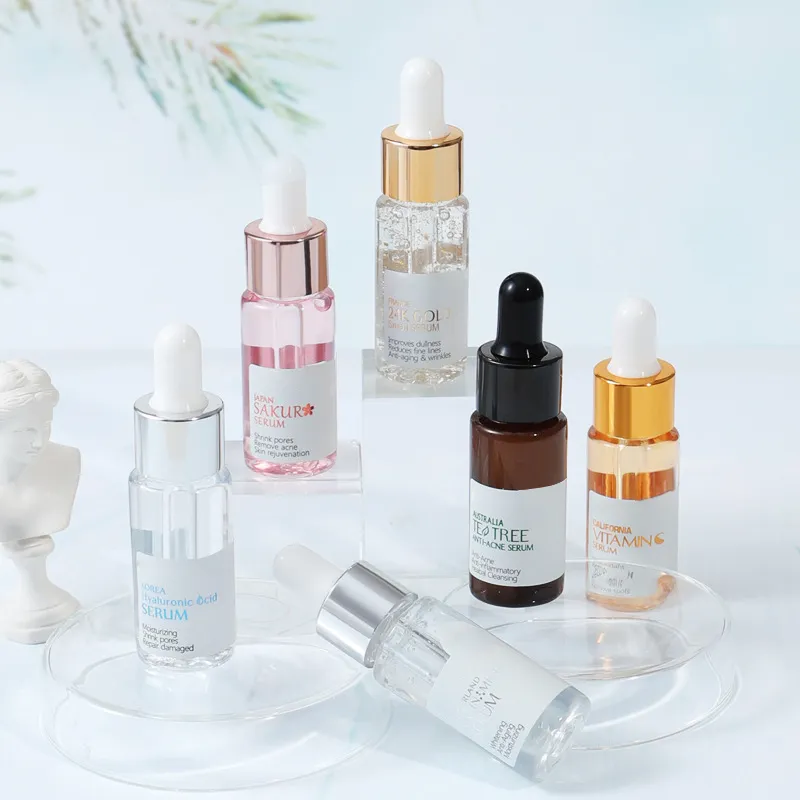
Typical private label skincare packaging includes glass or plastic bottles, airless pumps, jars, tubes and other standard containers. Many brands begin with existing packaging because it can reduce tooling requirements and simplify procurement.
Customization may involve label printing, bottle colors, screen printing, hot stamping, outer cartons or more specialized designs.
However, fully customized components can introduce higher minimum order quantities and longer lead times.
The manufacturer should assess relevant packaging compatibility and dispensing performance, while the brand approves the container design, dimensions, decoration and labeling artwork.
A practical example is an airless bottle. It may look suitable for a premium cream, but the pump must still dispense the formula consistently. Appearance alone does not establish compatibility.
For brands developing unique packaging, our custom skincare packaging services cover packaging selection and customization options.
The output of this stage is approved packaging specifications and artwork, together with the necessary compatibility checks or testing plan.
Once the formula and packaging direction are established, the project needs to satisfy the relevant technical and regulatory requirements.
This is not simply a final paperwork exercise. Testing and documentation can affect whether a formula or packaging combination is suitable for commercial production.
Depending on the product, the manufacturer may conduct or arrange stability testing, microbiological testing, preservative efficacy testing and packaging compatibility assessments. Routine checks may also evaluate appearance, pH, viscosity and other specifications relevant to the formula.
Not every cosmetic product requires the same tests, and a formula's previous testing history does not automatically cover every new ingredient adjustment or packaging change.
For brands selling in the European Union, Regulation (EC) No 1223/2009 establishes the main cosmetic regulatory framework. Relevant obligations include a Responsible Person, safety assessment, Product Information File, compliant labeling and notification through the Cosmetic Products Notification Portal (CPNP) before the product is placed on the market.
In the United States, cosmetic products must meet applicable FDA requirements, including relevant obligations under the Modernization of Cosmetics Regulation Act of 2022 (MoCRA). Facility registration and product listing requirements apply subject to statutory exemptions, and registration is not the same as FDA approval.
For international private label projects, it is important to establish which documents the manufacturer will supply and which regulatory responsibilities remain with the brand, importer or designated responsible party.
The goal is to identify these requirements before commercial production rather than discovering missing information after the products have been manufactured.
The output of this stage is the applicable testing evidence, technical documentation and an agreed regulatory compliance plan for the target market.
After the formula, packaging and other required specifications have been approved, the project moves from development into production planning.
At this stage, the manufacturer confirms the production order, final quantity, unit cost, material requirements and agreed delivery schedule.
The factory also needs an approved version of the formula and a complete list of the materials required to manufacture and pack the finished product.
This may include raw materials, bottles, pumps, caps, labels, cartons and other components. Before production is released, the specifications and artwork should be checked against the approved versions.
Minimum order quantities are especially important here.
For example, a manufacturer may be able to produce a relatively small batch of an existing formula, but the packaging supplier may require a higher quantity for custom-colored bottles or specialized printing.
This is why the effective MOQ depends on both the formula and packaging.
At Xiran, standard private label skincare programs generally start at approximately 1,000 units per SKU, while selected small-batch projects may support 500–1,000 units under suitable formula and packaging conditions. Fully customized packaging may require higher minimum quantities.
The manufacturer should explain these conditions before the brand commits to production.
The output of this stage is the confirmed purchase order, approved production specifications, material requirements and manufacturing schedule.
Bulk manufacturing begins once the approved materials and production requirements are ready.
The exact manufacturing operations depend on the product type. A facial cream, for example, may require controlled heating, mixing, emulsification and cooling. A water-based serum may involve a different mixing process, while an anhydrous facial oil may require another production approach.
Before manufacturing begins, incoming raw materials and packaging components should be checked against their relevant specifications.
During production, ingredients are weighed and processed according to the approved manufacturing instructions. The resulting bulk product is then evaluated using appropriate in-process quality checks.
Depending on the formula, these checks may include appearance, pH, viscosity, odor and other relevant physical or chemical parameters.
Once the bulk product meets the required specifications, it moves to filling and packaging.
The filling line must use the approved bottles, jars or tubes, and the manufacturer should verify fill quantities, packaging condition and relevant sealing or dispensing performance.
Quality control does not happen only at the end of the production line.
It involves checking materials, monitoring production and evaluating finished goods. Batch identification and production records also help support traceability.
The purpose is to ensure that the commercial batch is consistent with the approved specifications and meets the applicable release criteria.
A laboratory sample may look excellent, but successful manufacturing means producing the same intended quality consistently across the commercial batch.
You can learn more about our equipment and factory operations through our skincare production process page.
The output of this stage is a manufactured and filled production batch that has passed the required quality release checks.
Once the finished products have passed the required checks and are released, they can be packed for shipment.
This stage includes verifying quantities, completing cartons, preparing packing information and arranging transportation according to the agreed commercial terms.
For international orders, shipping arrangements may include freight booking, export documentation and coordination with the customer's forwarder or logistics provider.
The most appropriate transport method depends on the shipment size, destination, product characteristics and delivery requirements.
Shipping should be discussed earlier in the project, because the manufacturing completion date is not necessarily the date the brand will receive its goods.
International transport, customs clearance and local distribution all need to be considered when planning the product launch.
It is also useful to discuss reordering before the first production run is completed.
If the brand expects repeat orders, retaining clear formula specifications, approved packaging artwork and production records can make future manufacturing more consistent.
The output of this stage is the released finished product, relevant shipment documentation and an agreed delivery or collection arrangement.
One of the most important parts of private label manufacturing is understanding where the manufacturer's responsibilities end and the brand's responsibilities begin.
The following table summarizes the typical division of work.
| Manufacturing Stage | Manufacturer's Responsibility | Brand's Responsibility |
|---|---|---|
| Product Brief | Review requirements and manufacturing feasibility | Define the product and target market |
| Formula Selection | Recommend suitable existing formulas | Select the preferred formula |
| Sampling | Prepare samples and agreed revisions | Test and approve the final sample |
| Packaging | Source or assess components and compatibility | Approve design, packaging and artwork |
| Testing & Compliance | Provide agreed testing and technical documents | Confirm market requirements and regulatory responsibilities |
| Production Planning | Confirm materials, quantity and schedule | Approve specifications and purchase order |
| Bulk Manufacturing & QC | Manufacture, fill, inspect and release products | Confirm agreed acceptance requirements |
| Shipping | Pack goods and prepare agreed shipping documents | Coordinate importing, delivery and distribution as contracted |
The precise responsibilities vary by manufacturer and contract. For example, some brands appoint their own regulatory consultants and packaging suppliers, while others prefer the manufacturer to coordinate these services.
The important point is to agree on the division of responsibilities before the project reaches a stage where changes become costly.
The total timeline depends on how quickly the formula is selected, how many sample revisions are needed, whether the packaging is available and what testing or regulatory work must be completed.
For a straightforward private label project, an existing formula and stock packaging can shorten the early development stages.
A more customized project may take considerably longer, particularly if it requires new ingredients, bespoke packaging or additional testing.
At Xiran, the following figures can serve as general planning references:
| Stage | Typical Timing |
|---|---|
| Product brief and formula selection | Depends on product requirements |
| Initial sample preparation | Approximately 7–10 days |
| Sample revisions and approval | Depends on feedback and number of revisions |
| Packaging sourcing and approval | Depends on stock availability and customization |
| Testing and regulatory preparation | Depends on formula and target market |
| Bulk production | Approximately 25–45 days after relevant approvals |
| International shipping | Depends on destination and transport method |
These are indicative planning ranges rather than a guaranteed total project duration. Some stages can overlap, while others cannot begin until earlier approvals are complete.
For example, a formula may be ready for manufacturing while the brand's custom bottles are still being produced. In that situation, packaging availability can determine the actual production schedule.
My recommendation is to plan backward from the date when the goods must arrive at your warehouse, rather than the date when you hope manufacturing will finish.
The cost of private label skincare manufacturing depends on the finished product, not simply the price of its formula.
Two manufacturers may quote very different prices for what appears to be the same 50 ml facial serum because their quotations include different materials and services.
The main cost components usually include:
| Cost Component | What It Covers |
|---|---|
| Formula and Raw Materials | Base formula, active ingredients and other raw materials |
| Sampling | Sample preparation and agreed revisions |
| Packaging | Bottles, jars, pumps, labels and cartons |
| Testing | Stability, microbiological, compatibility or other required assessments |
| Manufacturing | Bulk mixing, filling and production operations |
| Quality Control | Relevant inspection and batch release activities |
| Documentation | Agreed regulatory or technical support |
| Shipping | Freight, export arrangements and associated logistics costs |
Some quotations include filling, labeling and packaging, while others separate these services.
For that reason, I would avoid comparing suppliers solely by the advertised unit price.
Ask whether the quotation covers the complete finished product and which costs are charged separately. Packaging artwork, custom molds, testing and international freight can have a meaningful impact on the total investment.
The most useful figure is the total cost of obtaining a finished, compliant product ready for your intended market—not simply the cost of producing the bulk formula.
Private label and custom formulation follow many of the same manufacturing stages, but they begin with different levels of product development.

| Comparison | Private Label Skincare | Custom Skincare Manufacturing |
|---|---|---|
| Starting point | Existing manufacturer-developed formula | New or substantially modified formula |
| Formula flexibility | Limited or selected modifications | Broader formulation development |
| Sampling | Often fewer development rounds | May require additional prototype rounds |
| Development time | Generally shorter | Typically longer |
| Development cost | Usually lower initial R&D cost | Higher R&D and testing requirements may apply |
| Product differentiation | More dependent on branding and selected customization | Greater potential for formula differentiation |
| Best suited for | Faster launches and market validation | Brands with specific technical product requirements |
Private label does not necessarily mean the product must remain completely unchanged.
Some manufacturers support adjustments to fragrance, texture or selected ingredients. However, once modifications become extensive, the project may require additional formulation work and testing.
For brands looking to develop a unique ingredient system or proprietary product concept, our custom skincare formulation services provide a different development route.
The choice should depend on what the product needs to achieve rather than the assumption that custom formulation is automatically better.
Even a relatively simple private label project can experience delays if important decisions are left unresolved.
In our experience, four areas deserve particular attention.
A small change can have a larger technical impact than expected. Replacing an ingredient, adding a new fragrance or adjusting the viscosity may require fresh compatibility or stability evaluations.
The easiest way to avoid unnecessary rework is to finalize the formula before releasing materials for production.
This is one of the more frustrating problems because the formula and packaging may each appear acceptable separately.
A thick cream may not dispense correctly through the selected pump, or a package may need additional compatibility testing before it can be approved.
The best approach is to evaluate the formula and its intended packaging together while there is still time to make changes.
Labels can require more than a brand name and attractive graphics.
Depending on the destination market, ingredient declarations, responsible-party information, warnings and other details may be necessary.
If regulatory review happens after printing, the brand may need to revise or reproduce labels and cartons.
A ready-made formula does not mean all packaging components are immediately available.
Custom bottles, special decoration and printed cartons may involve separate manufacturing schedules. International shipping and customs procedures can also affect the final delivery date.
This is why we recommend establishing a complete project schedule rather than focusing only on the factory's bulk manufacturing time.
At Xiran Skincare, we combine laboratory formulation and manufacturing capabilities to support brands from product development through bulk production.
For a standard private label project, we begin by reviewing the product requirements and recommending suitable formulas. Once the brand selects its preferred option, our laboratory prepares samples for evaluation.
After the formula is approved, we coordinate the applicable packaging, testing, documentation and production requirements.
Our manufacturing process covers material preparation, bulk production, filling, packaging and quality control, with the final production details determined by the approved project specifications.
For brands that need more flexibility, we can also discuss custom formulation, packaging development and small-batch manufacturing options before scaling to larger OEM production.
Standard private label programs generally start at around 1,000 units per SKU, with initial sampling typically taking 7–10 days and bulk manufacturing around 25–45 days after the relevant approvals. Actual project conditions depend on the product, packaging and order requirements.
What we try to make clear from the beginning is that a successful manufacturing project depends on a sequence of approvals. The formula, packaging and production specifications need to work together.
If your brand is preparing a skincare product for manufacturing, our private label skincare manufacturing services can help you evaluate the available development and production options.
Private label skincare manufacturing allows a brand to sell professionally manufactured skincare products under its own brand name without owning a cosmetics factory.
Depending on the manufacturer, a brand may choose an existing formula, make limited modifications to an established formula, select packaging and then add its own branding, labels and product positioning. More extensive formula development is normally treated as semi-custom, ODM or custom formulation rather than simple private labeling.
For a new beauty brand, the main advantage is that the manufacturer has already built much of the formulation and production infrastructure required to make the product.
A typical private label skincare project moves through several stages:
Product brief → Formula selection → Samples → Packaging → Artwork and labeling → Testing/document review → Bulk production → Filling and packing → Quality control → Shipment
Minimum order quantities (MOQs) for some private-label manufacturers are around 500 units per SKU, while others require 1,000 units or more, depending on the product type, production method, and packaging requirements. For instance, Xiran Skincare’s current private-label program—utilizing existing formulas and ready-stock packaging—sets an MOQ of 500 units, whereas Hong Shin requires an initial production run of 1,000 finished units per SKU.
Private label does not always mean the formula must remain completely unchanged.
Depending on the manufacturer and formula, brands may be able to modify elements such as:
However, significant changes can turn a simple private label project into a custom formulation project.
Existing formulas and standard packaging usually move faster. At Xiran Skincare, a standard OEM order typically takes around 25–35 working days after the formula, packaging and production details have been confirmed. A fully customized project will take longer because sampling, formula revisions, testing and custom packaging need to be completed before mass production begins.