I've noticed that more skincare brands are asking more specific questions about actives instead of just following general anti-ageing trends. People keep talking about GHK-Cu in these conversations.
The name of the ingredient itself is interesting, but so is the type of product direction it can support. When it comes to making cosmetics, GHK-Cu is often linked to high-end skin care that focuses on repairing skin, making it look smoother, making it look firmer, and coming up with more treatment-focused product ideas.
People usually talk about the ingredient in cosmetics as copper tripeptide-1. Interest in it has grown along with the general demand for anti-ageing products.
When brands look into OEM, ODM, or private label options, the real question isn't just what GHK-Cu is. The better question is how to make it into a product that makes sense for your business, fits your market position, and works with a stable, well-designed formula.
In this guide, I want to explain what GHK-Cu means for skin care, what kinds of products it can be used in, and what brands should think about before they start selling a line of GHK-Cu-based products.

The tripeptide GHK and copper make up GHK-Cu. It has been studied for decades, and people often talk about it in skin care because it is linked to cosmetic ideas that focus on renewal and repair. Researchers first found GHK in the 1970s, and interest in it grew as they linked it to more general regenerative activity.
In real-world skincare development, GHK-Cu is more often seen as a high-end active than as a common filler. When brands want a more advanced story about how to make skin look better, smoother, and more refined, they usually want it.
I wouldn't call GHK-Cu a miracle ingredient on its own for OEM and ODM development. The concentration strategy, base system, texture, ingredient compatibility, packaging, and overall positioning of the final product all still matter for a strong formula.
From a brand's point of view, GHK-Cu is appealing because it can support more than one product story at the same time.
It can fit into:
That ability to be flexible is important. A lot of skincare companies don't want to make another generic moisturiser or a broad anti-aging cream that has no clear purpose. They want the story to be more active and the reason for the product to exist to be clearer.
GHK-Cu is more than just a trendy ingredient. It links the ingredient to things that people care about, like visible ageing, hair-related uses, skin recovery, and care that focuses on protection.
This is where GHK-Cu becomes useful for businesses that make things. It gives brands the chance to make a more specialised line that people think is worth more.
People often think of GHK-Cu in relation to ideas like the following:
The main goals of GHK-Cu's beauty treatments are to make skin firmer and more elastic, get rid of visible wrinkles, make rough skin smoother, strengthen skin barrier proteins, fix sun damage, and make hair thicker.

The main goals of GHK-Cu's beauty treatments are to make skin firmer and more elastic, get rid of visible wrinkles, make rough skin smoother, strengthen skin barrier proteins, fix sun damage, and make hair thicker.
A good GHK-Cu product usually has a clear purpose, well-thought-out texture design, balanced active pairing, and the right packaging.
One of the best things about GHK-Cu is that it can be used with a lot of different kinds of products, depending on your target market, price point, and brand strategy.
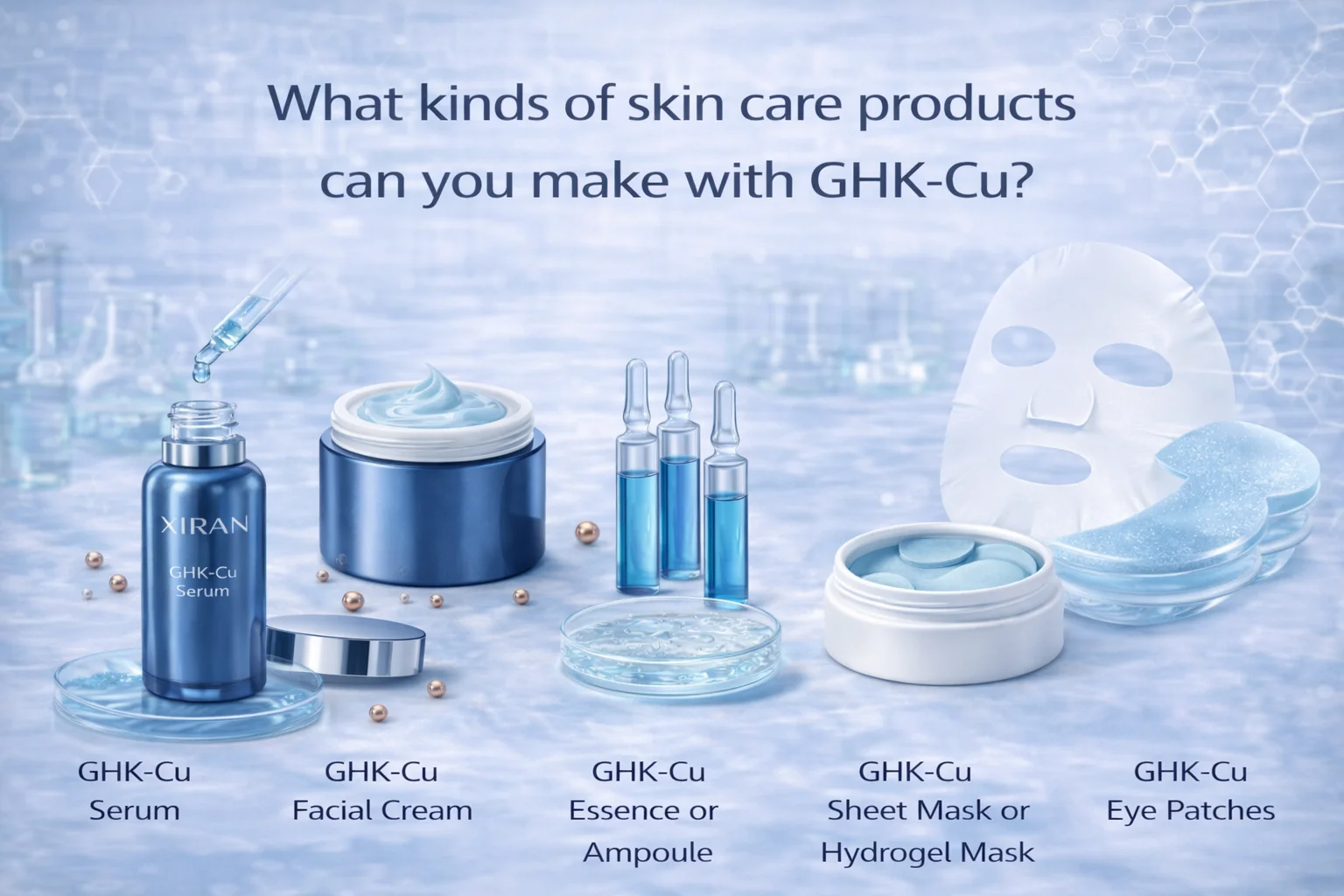
A serum is often the most direct and appealing way to sell GHK-Cu. It works well for brands that want a high-end, concentrated, treatment-based hero product. This format is very helpful for launches that focus on peptides, repairing skin, and anti-ageing.
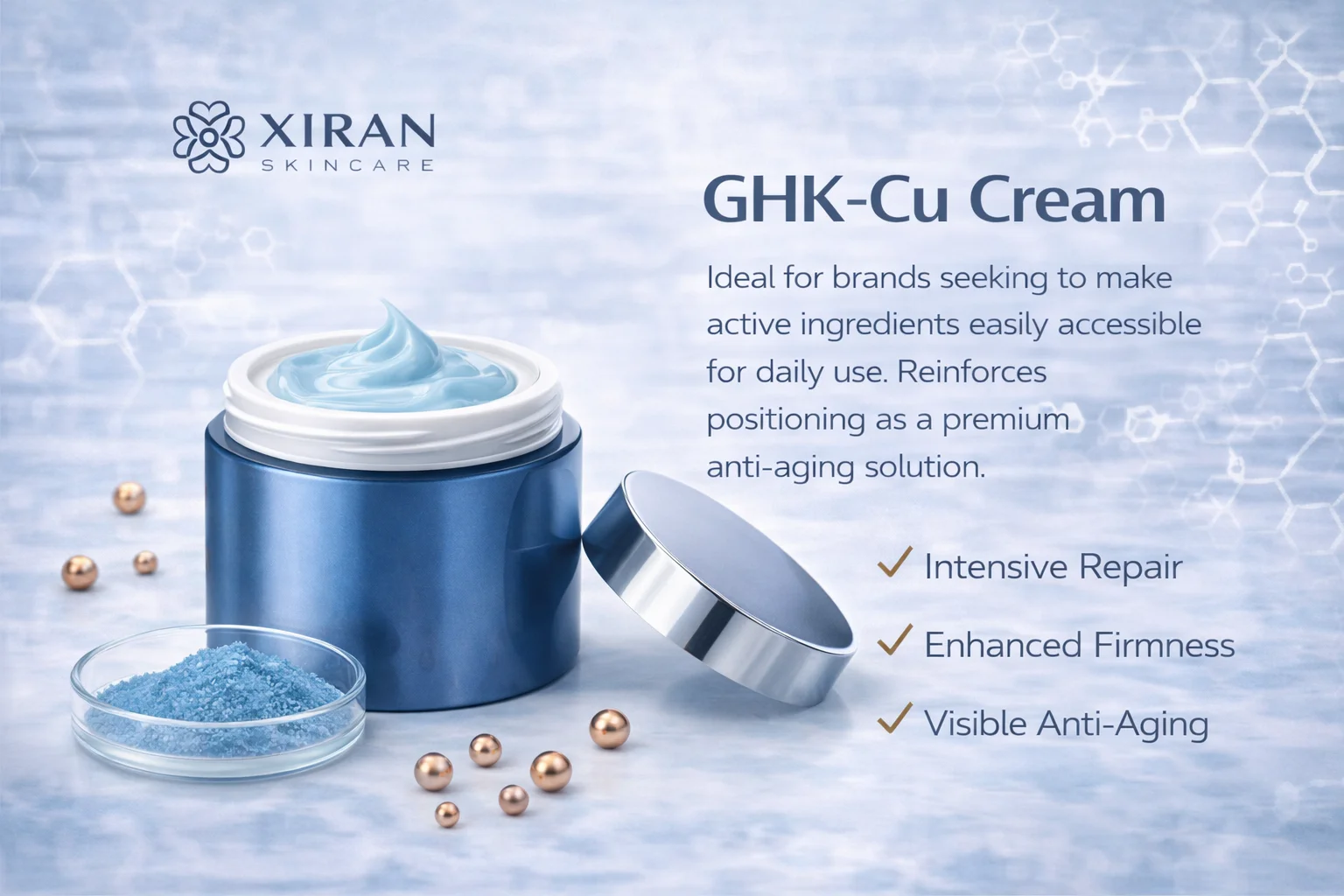
A cream format is good for brands that want to make the active more accessible for everyday use. It can support a premium anti-ageing position while reaching more people than a serum that only treats.
This is a strong direction for brands that want to target Asian-beauty-inspired layering routines or a more intense treatment idea. Ampoules and essences also make the brand seem more valuable when it wants to look more technical.
Mask formats can be a great choice for brands that want a product that only needs to be used for a short time. They are great for stories about high-end repairs, care for visible fatigue after travelling, or spa-style products.
GHK-Cu eye patches can be a strong option for brands that want to create a more targeted under-eye treatment concept.
The best format depends on how the brand wants to enter the market. Some brands start with one hero serum. Others build a small collection around the same active direction.
Not every actor can have a high-end line. GHK-Cu can do this because it naturally fits with a more technical and valuable product story.
For a new brand, that could mean releasing a hero serum with a more advanced look than a basic hydrating serum. It could mean adding a peptide-led repair line or creating a more expensive anti-ageing sub-line for a brand that already exists.
GHK-Cu also benefits from being in a category that already seems specialised. People who look for peptide-based products are usually not just browsing. They usually want to make a more careful purchase, which is often better for premium pricing and more focused positioning.
When used in a private label or custom formulation, GHK-Cu is usually most effective when it is part of a well-planned active system.
Depending on the idea behind the product, it might be mixed with things like the following:
You don't want to put too many active ingredients in the formula. The goal is to make a product that is stable, makes sense in the market, and has a clear place in the lineup.
For one market, a strong GHK-Cu serum might need to feel light, absorb quickly, and look nice. A strong GHK-Cu cream for a different market may need to feel thicker, more protective, and more obviously nourishing. The direction of the formula should be based on what the buyer wants, not just what is popular.
When it comes to planning a product, GHK-Cu skincare is often best for brands that want to make the following:
It is especially helpful for brands that want to do more than just keep skin hydrated and create a stronger functional skincare identity.
A newer brand might use GHK-Cu to make one SKU that stands out. A brand that is older may use it to make its anti-ageing line stronger. In both cases, the ingredient works best when the story behind the product is clear and specific.
Finding an interesting ingredient isn't the hard part for many brands. The hard part is making a product out of that ingredient that is stable, unique, and ready for the market.
A manufacturer can help shape that process through:
This is important because it's not common for a GHK-Cu product that is ready for the market to come from just adding one active to a standard base. It happens when the story, texture, packaging, target audience, and pricing logic of the ingredients are all in sync.
That's the difference between a sample formula and a product that's ready to be sold.
If I were planning a GHK-Cu-based product family for a brand, I would usually think in terms of line architecture instead of a single SKU.
A simple but commercially strong structure might look like this:
Hero Product: GHK-Cu Peptide Serum
A concentrated product that carries the main active story.
Support Product: GHK-Cu Repair Cream
A companion product for day or night routine building.
Premium Extension: GHK-Cu Eye Serum or Eye Cream
A higher-margin item with a more targeted positioning.
Treatment Add-On: GHK-Cu Hydrogel Mask
A weekly or occasional product that expands the line and raises perceived expertise.
This kind of structure helps the brand feel more deliberate. It also creates better opportunities for bundling, routine selling, and stronger product identity.

At Xiran Skincare, we support skincare brands that want to build more targeted and differentiated product concepts through OEM, ODM, and private label manufacturing.
For GHK-Cu skin care projects, this may include support for serum and cream development, eye care concepts, mask formats, texture planning, packaging coordination, and broader peptide-led line expansion.
Whether you are building a single hero serum or a more complete repair and anti-aging collection, the development process should match your brand positioning, target market, and product image.
GHK-Cu is one of the more interesting active ingredients that skincare brands can use to go beyond general anti-ageing claims.
The name of the ingredient isn't the only thing that makes it valuable. Its worth comes from how flexible it is. GHK-Cu can help high-end serums, creams that repair skin, eye care products, masks, and larger peptide-based skincare lines when used in the right way.
The best thing for OEM, ODM, and private label brands to do is not just follow the GHK-Cu trend. The goal is to turn that trend into a product idea that is ready for the market and has strong positioning.