Hair care trends often change quickly. One month, it is rosemary. The next month it is peptides, bond repair, or scalp exfoliation. But every now and then, an ingredient crosses over from skincare into hair care in a way that actually makes sense.
To me, Centella asiatica is one of those ingredients.
Most people already know it as cica—the calming botanical that shows up in creams, serums, and barrier-repair products for stressed or sensitive skin. In skincare, it has a long-established reputation for soothing, supporting the skin barrier, and helping skin feel more comfortable when it is dry, reactive, or overworked.

So when I see Centella asiatica showing up in scalp serums, soothing shampoos, anti-hair fall tonics, and scalp masks, I do not think that is random. I think it reflects a bigger shift in the market: brands are treating the scalp more like skin, and consumers are starting to expect that.
However, I believe a lot of online content overstates the importance of this ingredient.
If I were explaining Centella asiatica for hair honestly, I would not sell it as some miracle fix for every kind of hair thinning. I would frame it as something more believable and, honestly, more useful: a scalp-support ingredient that helps a formula feel calmer, gentler, and more modern.
There is some emerging hair-related research around Centella asiatica and dermal papilla biology, but the stronger body of evidence still supports its role in skin and scalp comfort rather than proven large-scale regrowth in humans.
That is exactly why I think it is commercially intriguing.
Centella asiatica is a botanical extract also known as gotu kola or cica. It has a long history of use in traditional medicine, and in modern cosmetics it is most often associated with sensitive-skin, redness-care, and barrier-support products. Cleveland Clinic notes that Centella asiatica is commonly used for dry, sensitive skin and is valued for helping support hydration, redness reduction, and skin comfort.

From a formulation perspective, the ingredient is usually interesting because of several well-known active fractions, especially:
These are the compounds most often discussed in reviews covering Centella asiatica’s role in inflammation modulation, antioxidant protection, collagen support, and wound-healing-related activity.
That background matters, because once you stop thinking of the scalp as “just hair territory” and start thinking of it as skin with follicles, Centella asiatica starts to look less like a trendy ingredient and more like a logical one.
The reason is fairly simple: a lot of hair concerns are also scalp concerns.
When the scalp feels irritated, tight, flaky, inflamed, or stripped from overwashing and harsh formulas, the entire hair routine can start to feel like it is underperforming. That does not mean every scalp problem causes hair loss, and it does not mean a cica serum will magically regrow hair. But it does mean that ingredients with a strong reputation for calming stressed skin have a real place in scalp care.
That is also consistent with mainstream dermatology guidance. The American Academy of Dermatology points out that many forms of hair thinning and hair loss involve scalp-related factors or underlying conditions, and it emphasizes that hair loss can have many causes—not all of them cosmetic.
So from where I stand, Centella asiatica fits the market for two reasons.
First, skincare already has consumer recognition. Second, it supports a gentler “scalp as skin” positioning, which appeals to consumers seeking more natural and less harsh hair care solutions.
If I were choosing one reason to use Centella asiatica in a hair product, this would be it.
I think its strongest and most credible role is in scalp soothing. Reviews of topical Centella asiatica repeatedly discuss anti-inflammatory effects, antioxidant support, and skin-repair-related benefits, which is why it has become such a familiar ingredient in sensitive-skin skincare.
That gives it a natural place in products for people who complain about:
This is also why I think Centella asiatica reads better in leave-on scalp products than in a hair-growth headline. The ingredient seems more credible when it soothes the scalp than when it's called a miracle.
One reason Centella asiatica became so popular in skincare is that it aligns closely with barrier-support positioning. Cleveland Clinic’s explanation of cica for skin focuses on hydration, barrier support, and reduced irritation, which is exactly the sort of benefit language consumers now understand.
And that logic carries over nicely to the scalp.
A scalp with better comfort and less visible stress is often a better starting point for a healthy routine. That does not mean Centella asiatica alone solves every scalp condition, but it does mean the ingredient is very useful in products designed around comfort, resilience, and low-irritation maintenance.
My honest answer is that it may have some benefits for hair and can improve scalp health. Studies have shown that Centella Asiatica, in a laboratory setting, exhibits increased dermal papilla cell proliferation and hair follicle induction capabilities, indicating that it can stimulate dermal papilla cell growth and reduce hair loss, providing a natural treatment for androgenetic alopecia and thinning hair.
However, for those facing more severe hair loss, patchy hair loss, burning sensations, tenderness, or dandruff, these symptoms require professional evaluation, as hair loss can be related to inflammation, autoimmune diseases, hormonal changes, infections, or other conditions.
Both the American Academy of Dermatology (AAD) and the Mayo Clinic emphasize that hair loss has multiple possible causes and cannot be completely resolved by a single plant ingredient.
If I were choosing a product for this ingredient, I would usually skip the idea that a rinse-off shampoo is the best delivery format. A shampoo can still be nice, but contact time is short. For scalp support, I generally think leave-in scalp serums, tonics, or essences make more sense, because they stay on the skin longer.
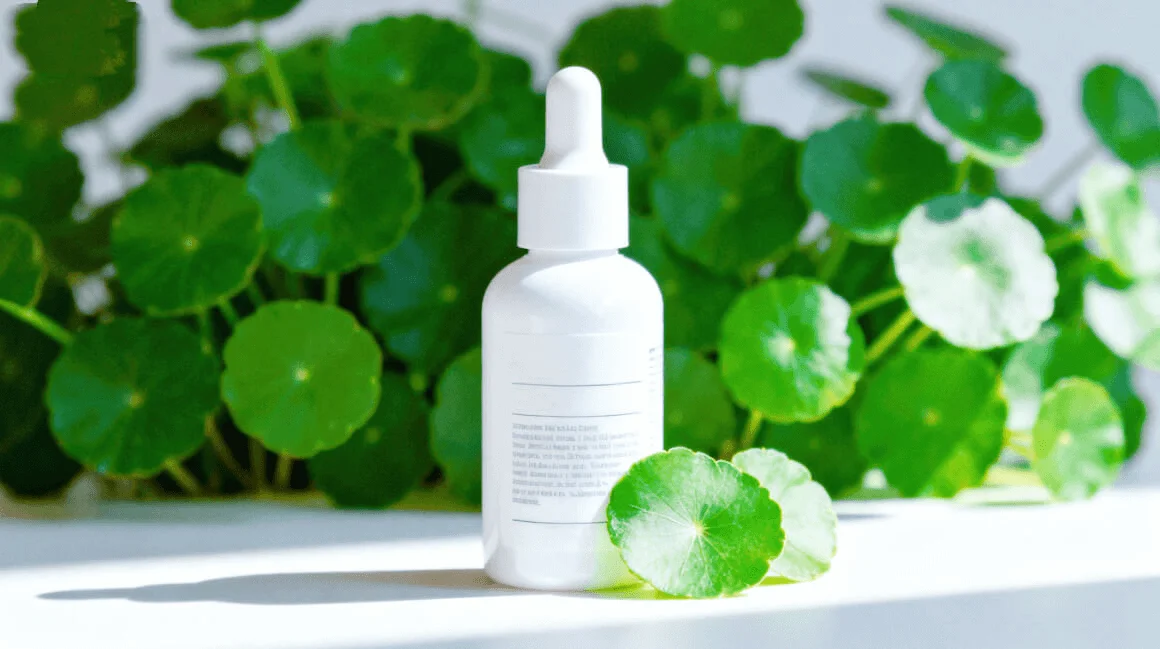
I would look for:
Then I would apply it consistently to the scalp—not the hair lengths—several times per week or as directed. With scalp-care ingredients, consistency usually matters more than intensity. Dermatology guidance for sensitive or inflamed skin also repeatedly favors gentle, fragrance-free care over overcomplicated routines.
Since so many consumers are now looking for hair products made with gentler, more natural-looking ingredients, I think Centella asiatica is a very strong choice for brands that want to extend a product line or launch something new with a clearer point of difference.
If I were developing this kind of product, I would rather work with a manufacturer that has real skincare manufacturing experience instead of choosing a factory that only treats it like a standard hair formula project.
The reason is simple: Centella asiatica already carries strong skincare associations—soothing, calming, barrier support, and care for sensitive skin.
A manufacturer that understands that background is usually better at turning the ingredient into a scalp-care product that feels relevant, premium, and marketable.
If you ask me whether Centella asiatica is worth using in hair care, my answer is yes—but mostly because it makes sense for the scalp, not because I think it should be marketed as a dramatic hair-growth shortcut.
That is where the ingredient feels the most honest, the most useful, and the most commercially relevant.
It works well in the direction the market is already moving: gentler products, skin-care-style scalp care, more believable claims, and formulas that help the user feel like their scalp is being looked after instead of aggressively treated.
And from an OEM/ODM perspective, that is exactly why I would take it seriously. It is not just a trendy extract. It is a beneficial bridge ingredient between skincare credibility and modern scalp-care product development.
Yes, but I think it is more compelling for the scalp side of hair care than for the hair strand itself. Its strongest fit is in soothing, comfort-focused, scalp-support formulas. Reviews of Centella asiatica consistently emphasize skin-related anti-inflammatory and repair-support properties, which is why the scalp application makes so much sense.
It may have hair-related potential, and lab-based research has shown interesting effects in human dermal papilla models. But current evidence is still stronger for scalp support than for broad, proven human hair regrowth claims.
I would usually choose a leave-in scalp serum or scalp tonic first. Those formats allow better contact time and make the ingredient story easier to communicate.
Some of the best companions are niacinamide, panthenol, caffeine, peptides, ceramides, hyaluronic acid, betaine, and other low-irritation support ingredients.
Yes, but I think it works best when the line is focused and scalp-led. A serum, a shampoo, and one treatment SKU usually make more sense than forcing cica into every product category.