I usually think of body oil as something that goes in the body care section, not the treatment room.
At first glance, the two categories look close enough. Both are oil-based. Both can soften skin. Both can sit inside a body care or wellness line. But once I start looking at them from a private label and formulation perspective, the gap becomes much clearer.
A body oil for daily use is usually built around skin feel, nourishment, glow, and wearability. A massage oil for spa use is usually built around slip, movement, sensory experience, and ritual. That is why I do not usually treat them as interchangeable products, even if they share a similar base format.
If a brand does not define that difference early, the final product often ends up somewhere in the middle. It may feel too rich for a modern body oil, but too light for a proper massage oil. The scent story may feel unclear. The packaging may not match the use occasion. And once that happens, the product starts to lose sharpness before it even launches.
In this guide, I want to break down the difference between body oil and massage oil, how brands should choose the right category, what changes in body oil formulation and massage oil formulation, what different markets tend to prefer, and how private label brands can build a product that feels more specific and easier to sell.
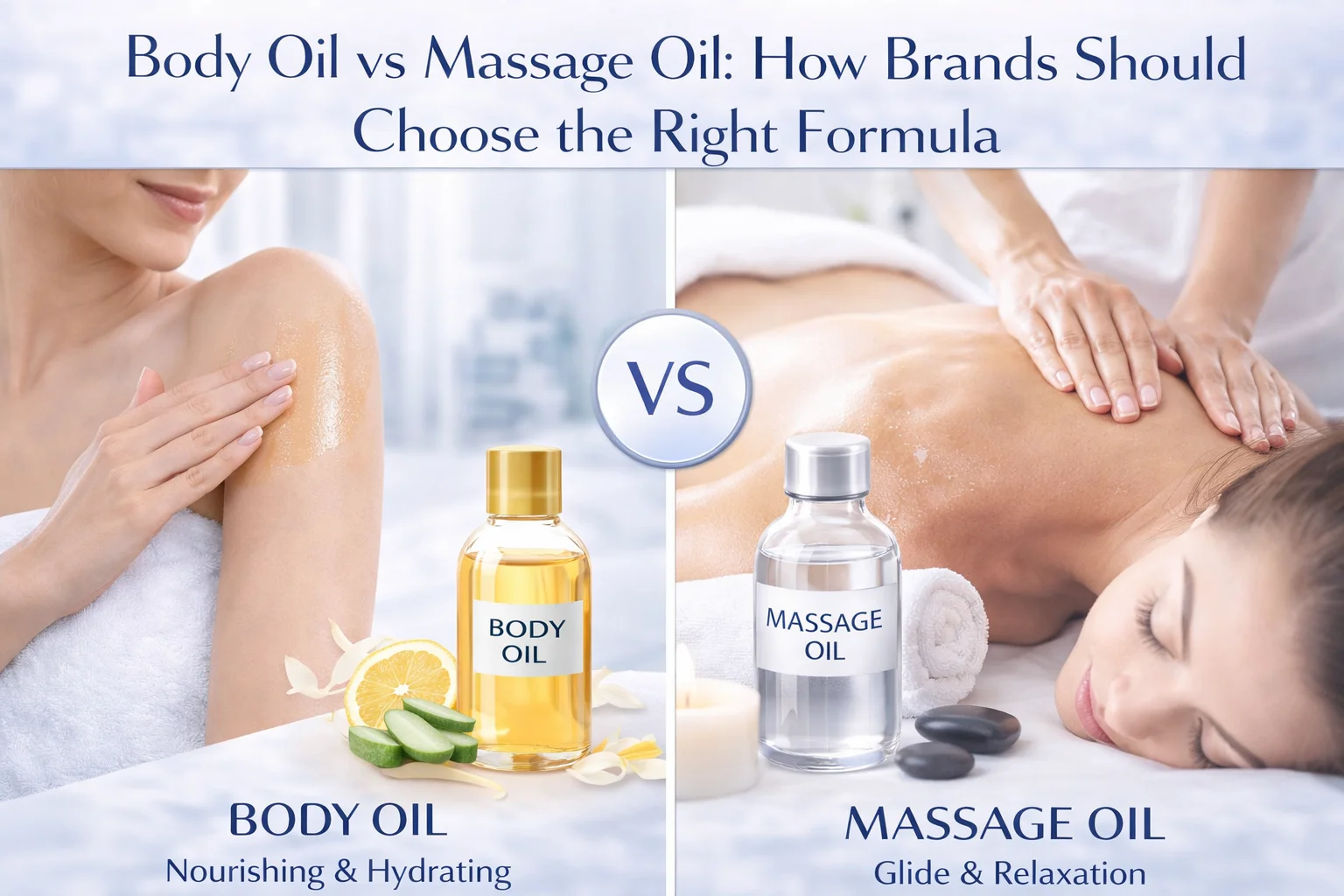
| Category | Body Oil | Massage Oil |
|---|---|---|
| Main Purpose | Daily body care and skin nourishment | Massage glide and sensory ritual |
| Skin Feel | Usually lighter, cleaner, more wearable | Usually slower, richer, more slip |
| Absorption | Faster or moderate | Slower |
| Finish | Softer, more elegant, less residue | Longer surface playtime |
| Fragrance Direction | Cosmetic, beauty-led, wearable | Spa-like, calming, wellness-led |
| Typical User Moment | After shower, daily moisturizing, body glow | Home massage, spa use, relaxation ritual |
| Packaging Style | Retail-focused, beauty-oriented | Practical, treatment-oriented |
| Better Fit For | Body care brands | Wellness and spa brands |
I usually think of body oil as something that goes in the body care section, not the treatment room.
People often buy it to make their skin softer, feel better after a shower, and look better. People expect a private label body oil to help with glow, smoothness, and daily nourishment without making them feel too greasy.
That matters because a good body oil isn't just one that has nice oils in it. It's whether or not the user really wants to use it all the time. A body oil for dry skin might be thicker and softer, while a lighter body oil for daily use might need to dry faster and be cleaner.
It stops acting like a modern body care product if it feels too heavy, too slow, or too sticky. That might work for a winter treatment oil that only a few people use, but it's not the best choice if the brand wants to sell it every day. When I think about how to make body oil, the first thing that comes to mind is daily habits. The product has to be worth using again.
A different product brief is usually where massage oil starts. The main question isn't just how the skin feels after you put it on. The most important thing is how the formula works when you use it.
That's a big part of what makes body oil and massage oil different. A private label massage oil needs to be slippery enough to let the skin move.
The massage stops if it absorbs too quickly. Users can tell right away if it feels draggy. If the smell doesn't help create a relaxing mood, the whole idea can seem weaker than it should.
That's why I think that massage oil for wellness brands is more about performance than most people think. It's not just about having skin that is moist. It also has to do with rhythm, slipping, comfort, and how it feels. That's often the whole point of the product for spa brands, salon brands, and home ritual lines.
I wouldn't start with trending ingredients if I were helping a brand choose body oil or massage oil.

I would start with this question:
What is the product supposed to do in the real world?
That usually gives a better answer than starting with a board of trends.
If the product is for:
Choose a massage oil if the product is meant for:
A lot of brands get stuck when they try to make one formula do both jobs. That might work sometimes, but it usually makes a product that feels a little off in both directions.
The formula should act like a body oil if the product is meant to be used as part of a daily routine. It should act like a massage oil if the product is meant to help with a slower, more treatment-like ritual.
That's usually the easiest way to make a choice about a category.
When a brand wants a product that focuses on skin finish, body care, and repeat use, a body oil is usually a better choice.
This is especially true for brands that already sell body scrubs, lotions, washes, or serums. In that light, a private label body oil seems like a natural next step. It can add a higher level to the range without changing the brand's main category too much.
I would choose body oil for ideas like:
The finish is very important in these situations. The oil doesn't always have to be very light, but it should feel like it was meant to be that way. A good body oil shouldn't feel like a massage oil that has been renamed; it should feel like something that belongs in modern body care.
When the experience of using the product is just as important as how it feels on the skin, massage oil makes more sense.
This is where massage oil for spas or wellness brands usually stands out. The formula does more than just soften skin. It is there to help with movement, comfort, and the mood.
I would lean toward massage oil if the brief includes:
In those cases, quick absorption isn't the best feature. The formula needs to spend enough time on the surface to be useful when you use it. That is a different job than a body oil for everyday use, and I think it should be made with that difference in mind from the beginning.
This is where the difference between categories starts to make sense.
People usually judge a body oil by how well it settles, how comfortable it is to wear, and whether they want to put it on their skin before going out or after getting dressed. People judge a massage oil formulation more by how long it works while the hands are still moving.
That changes the way people think about development.
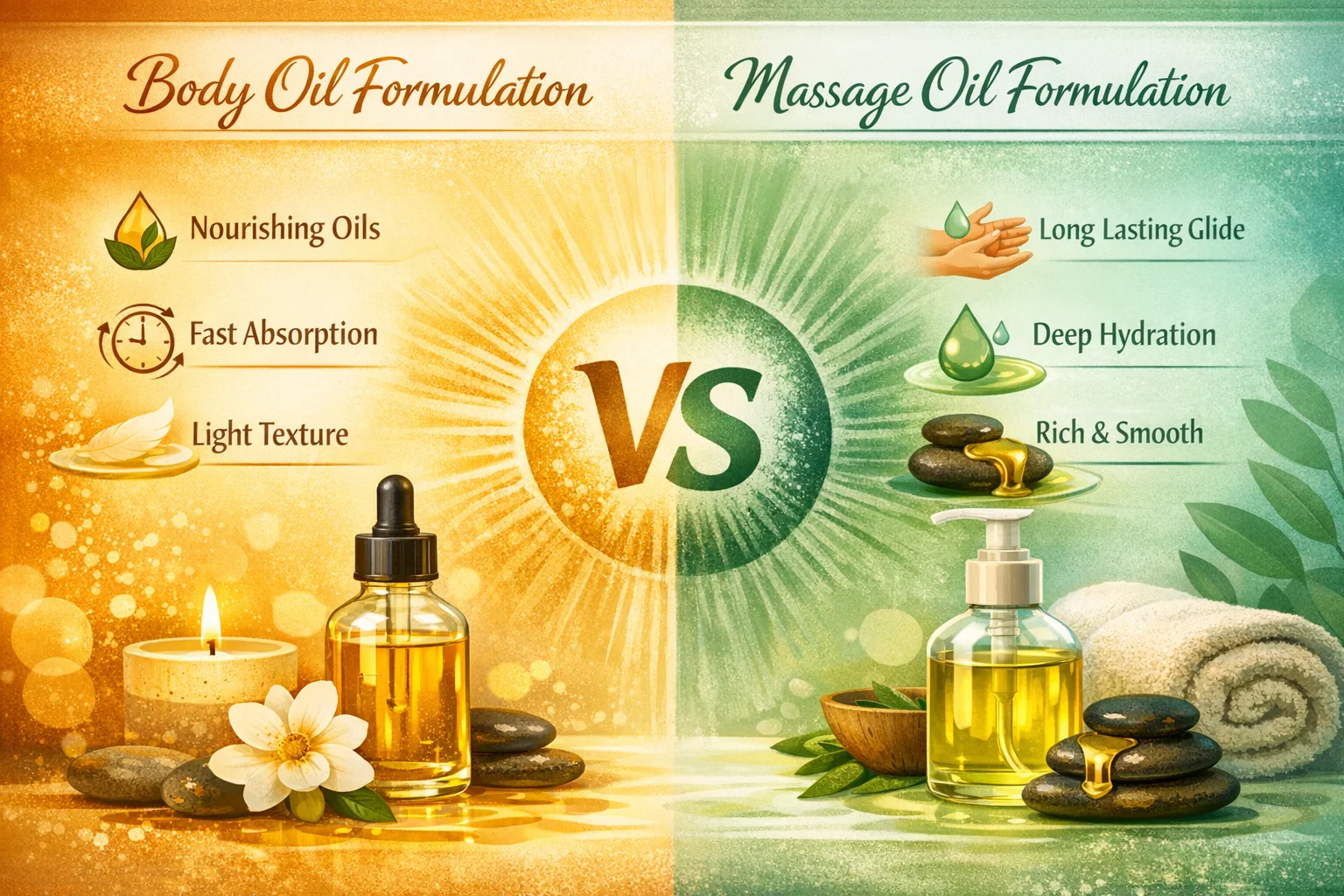
When making body oil, I would usually pay close attention to:
When making massage oil, I would care more about:
That's also why you shouldn't judge these products the same way when you sample them. Not just a quick swatch on the hand, but real-use testing is very important for massage oil.
A lot of product briefs still spend too much time talking about the oil blend and not enough time talking about the finish. But in this group, people usually remember the finish first.
Many brands now want body oil that feels good and doesn't make you feel old. They want a finish that is smoother and more elegant. They want shine, but not a lot of grease.
They want it to be soft, but not so soft that it leaves behind a mess that makes it hard to use. When you use massage oil in a spa, your expectations change.
The formula needs more time. It needs to stay active on the surface long enough for massage to work. It doesn't feel like a good massage product anymore if it goes away too quickly. That's why I don't think companies should make body oil and massage oil that feel the same on the skin.
The scent strategy also changes based on whether the brand is making a private label body oil or a private label massage oil.
When the scent of a body oil feels like makeup and can be worn, it usually works best. It can be soft and flowery, clean, warm, slightly sweet, or quietly fancy. It should feel like something you wear to take care of your body.
A massage oil usually has a different purpose. The smell often needs to go along with the ritual. It could smell more like herbs, plants, calming things, or a spa. It's not so much about wearing it all day as it is about how it makes you feel.
That difference may seem small, but it is a big part of how body oil and massage oil are positioned. The product may start to feel inconsistent if the scent doesn't match the occasion.
One of the easiest things to forget when making a private label is this.
Not every market likes the same texture, richness, or scent style. The weather is important. Beauty habits are important. Expectations for each category are important.
In markets that are warmer or move faster, lighter body oil for everyday use is often a better choice. People may want food, but they also want something that settles quickly and is comfortable to wear.
Brands might have more room to make products that feel slower and softer in more luxurious body care or wellness categories.
The same is true for smell.
Some markets respond better to:
Others may respond better to:
So, if I were making a line for more than one market, I wouldn't commit to one formula direction too soon. I would usually try out more than one scent style and skin-feel option first.
If the idea is too broad, this category quickly becomes generic.
Many products say the same things: they make you glow, nourish you, hydrate you, relax you, give you a silky finish, and help you take care of yourself. None of those are wrong, but they aren't enough by themselves.
I would make the product role more specific if I wanted a private label body oil or massage oil that didn't feel so generic.
For example:
This kind of detail usually makes the whole product feel sharper. The formula becomes easier to make. The direction of the scent becomes clearer. The packaging is easier to understand. The marketing makes more sense.
I also think that line structure can help brands stand out more.
For example:
That kind of design makes it easier for customers to choose one product over another and makes the range feel planned.

herbal scents for health and wellness that smell like a spa
warmer, more relaxing notes
So, if I were making a line for more than one market, I wouldn't commit to one formula direction too soon. I would usually try out more than one scent style and skin-feel option first.
How Private Label Brands Can Stand Out More Clearly
If the idea is too broad, this category quickly becomes generic.
Many products say the same things: they make you glow, nourish you, hydrate you, relax you, give you a silky finish, and help you take care of yourself. None of those are wrong, but they aren't enough by themselves.
I would make the product role more specific if I wanted a private label body oil or massage oil that didn't feel so generic.
For instance:
This kind of detail usually makes the whole product feel sharper. The formula becomes easier to make. The direction of the scent becomes clearer. The packaging is easier to understand. The marketing makes more sense.
I also think that line structure can help brands stand out more.
For instance:
Body Oil for Every Day, Body Oil for Glow, Massage Oil, Night Body Oil, and Aromatherapy Massage Oil
That kind of design makes it easier for customers to choose one product over another and makes the range feel planned.
If I had to make it simple for skin care brands, I would say this about body oil and massage oil:
If you want to use the product as part of your body care routine, choose body oil.
When you need a product that supports touch, glide, and a more ritualistic moment, choose massage oil.
Choose both when the brand is strong enough to make the differences between the two uses clear.
I don't think the smartest brands in this group are the ones that try to make one formula do everything. They usually decide early on what kind of product they are really making.
A good body oil should feel like it fits in with modern body care.
A good massage oil should feel like it was made to be used slowly, glide better, and feel more like a sensory experience.
That clarity is what makes a product much easier to sell and position.