I still remember the first time I got a "Made in Lebanon" cosmetic sample pack and thought, "This could really make our launch easier." The formulas weren't trying to be flashy, but the textures felt commercial, the packaging looked like it was ready for retail, and the communication with the supplier was faster than I thought it would be.
That moment made me want to learn more about cosmetics companies in Lebanon—not just who says they can do private label, but who can really help a brand from idea to shelf without any problems or delays.
Since then, I've looked at Lebanese manufacturers the same way I look at any serious supplier: by looking at what they publish publicly, how clearly they describe what they make, and whether their service stack includes everything that Western brands need, like private label, custom development, packaging support, and documentation.
This article will show you the Lebanon manufacturers you chose in a way that will help you save time and avoid working with the wrong people. By the end, you'll know which suppliers are best for boutique clean beauty, which are best for mass retail and distribution, and which look more like structured OEM or contract manufacturing partners.
You're not the only one trying to choose a Lebanon cosmetics partner right now. The right match can make your next line run more smoothly from sampling to production.
So, let’s get started.

Even if you're only buying things in Lebanon, your business case is linked to trends in the industry as a whole:
In practice, this usually means that buyers want: quicker launches, clearer compliance packs, and manufacturers who can handle everything from choosing a formula to putting it in a package.
| Manufacturer | Best For | Model | Core Strength | Notes |
|---|---|---|---|---|
| Casia Beauty Care (Casia Handmade) | Boutique, hotel amenities, gifting | Private label + wholesale | Natural/handcrafted brand story | Great for small-to-mid runs and giftable concepts. |
| Saga Cosmetics | Distributors, pharmacy/mass retail | Manufacturing + distribution (confirm PL/OEM scope) | Broad everyday categories | Good if you want multiple categories under one supplier. |
| DermaLife Skin Care Manufacturer | Brands needing structured OEM workflow | Contract manufacturing + private label + custom formulations | Process/QC-led OEM support | Stronger “OEM/ODM-style” presentation; verify paperwork early. |
| JANA Laboratoires | Dermo/pharmacy-style positioning | Private label + formulation + packaging + design + delivery | Turnkey private label services | Best when you want fewer vendors and a compliance-forward story. |
| Samoa Cosmetics | Retailers/resellers in makeup & nails | B2B partner platform (OEM scope to confirm) | Assortment + trade channel | Treat as B2B/assortment partner unless OEM is confirmed. |
When I want a natural, handcrafted brand story instead of a factory-like one, I look at Casia Beauty Care, which is based in Lebanon. Their positioning is eco-friendly and giftable, which is great for small DTC brands, boutique stores, and hotel amenities that need small-batch private label with a clear story about where it came from.
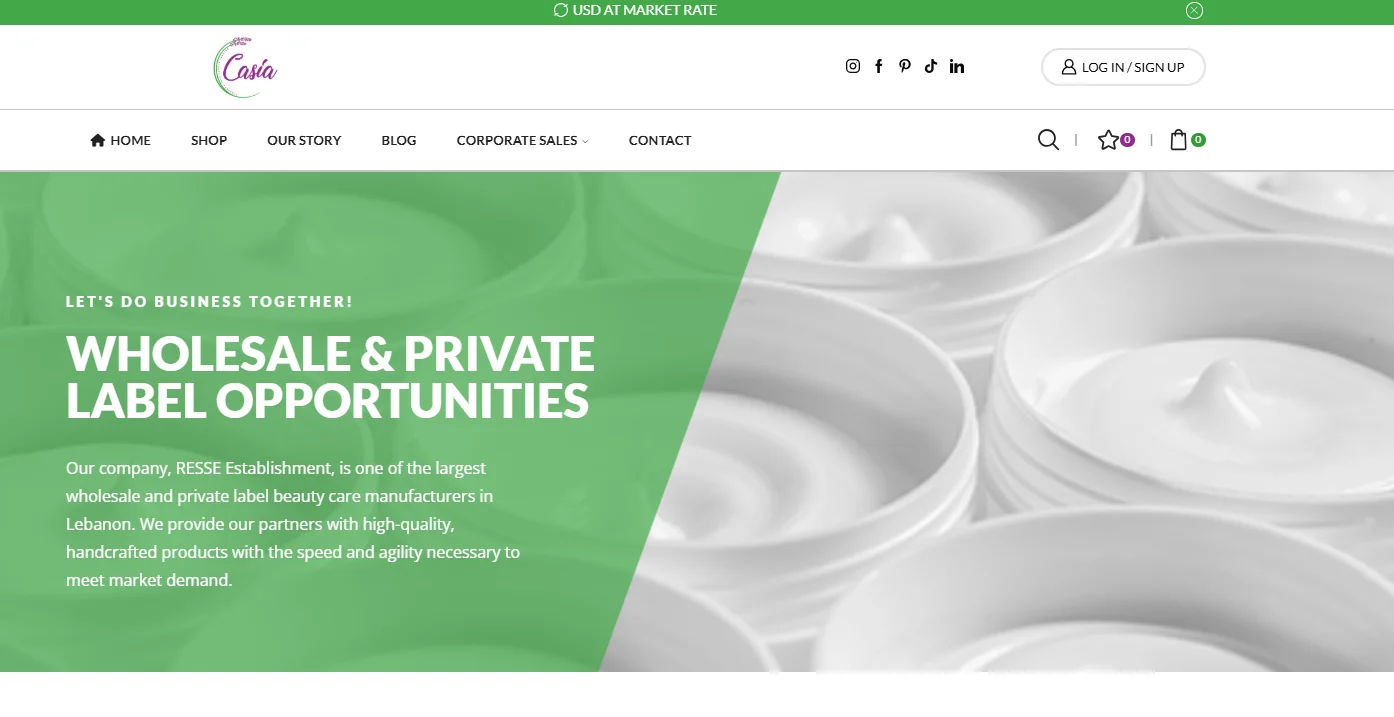
They mostly make olive oil, natural soaps, body lotions, shower gels/body washes, liquid hand soaps and hand care products, body scrubs, body sprays/hair sprays, gift boxes, and sets of different things.
Casia Beauty Care helps brands get started quickly by offering private label and wholesale supply. They also offer formula/ingredient consultation and help hotels and boutiques with amenities or gifts. You can get packaging and labeling, and during the RFQ process.
Best for: clean beauty shops, hotel and amenity lines, and bath and body brands that want to be "made in Lebanon."
When I need a wide range of products and steady production in everyday categories, I turn to Saga Cosmetics. They focus on making and selling personal care and home care products in the area, which makes them a good fit for pharmacy, mass retail, and distributor-led programs.

Principal Manufacturing/OEM Products
They talk about a professional line and a portfolio that includes deodorants, hand soap and cream, nail polish remover, hair color kits, disinfectants and surface cleaners, and air fresheners.
Services provided to brands
Saga is a good choice when you need a steady supply of goods in many different categories. I'd double-check the exact scope and paperwork pack for private label/OEM depth (customization, packaging execution, and documentation) during the RFQ.
Best for: pharmacies, mass retail programs, and distributors who want to work with a single Lebanon manufacturer for a wide range of products.
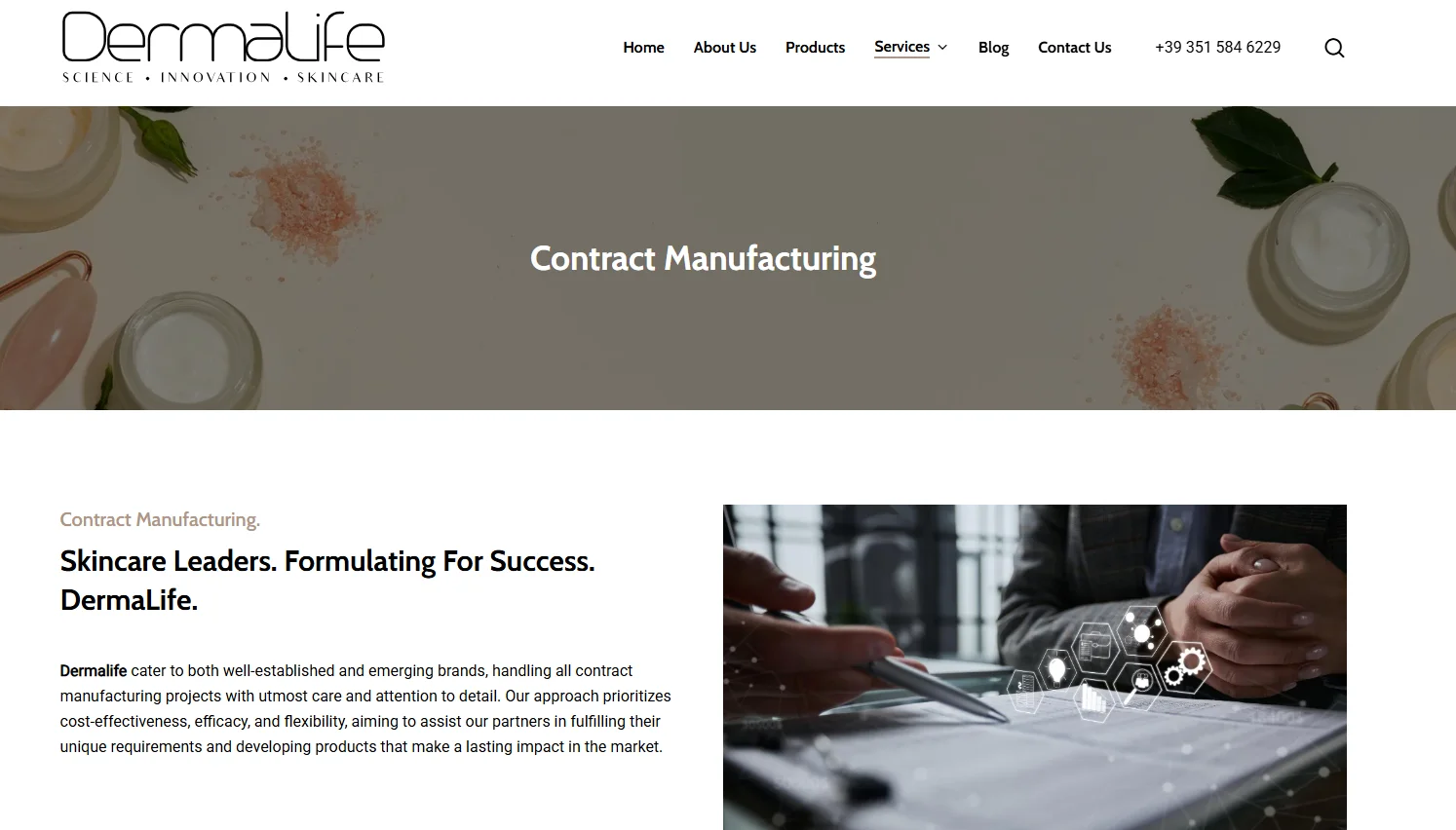
When I want a clearer path to contract manufacturing, I always choose DermaLife. I think of them as a more process-driven OEM candidate when I need consistency and a predictable workflow because they actively market contract manufacturing, private labeling, and custom formulations.
Principal Manufacturing/OEM Products
Instead of a public SKU catalog, they group their capabilities by category. Because of this, I see them as a partner for building full routines under private label or custom development in all the categories they list.
Services provided to brands
DermaLife does contract manufacturing, private labeling, and making custom formulations. I'd ask for their documentation package (specs, batch records, quality approach) early and double-check the options for packaging during the RFQ.
Best for: brands that want OEM/ODM-style help, structured development, and a manufacturing story that focuses on compliance.
When I want a more lab-led story and a clear private label path, I think of JANA as a supplier. They focus on making cosmetics and health care products and talk directly about developing formulations and structured private label support.

Principal Manufacturing/OEM Products
They have a wide range of products and offer private label as either choosing from existing products or making a new formulation. So, during the RFQ, I would check your exact category list.
Services provided to brands
JANA is clear that they can help with making formulations as well as packaging, brand design, and delivery. This makes them a great choice if you want a private label partner who can do everything for you.
Best for: private label projects that need stronger messaging about standards, and brands that want to reach pharmacy and dermo-cosmetic channels.
I treat Samoa differently than the others. Their public partner flow is for shop owners and points to a B2B platform, so at first I thought they would be a great trade/assortment partner for nails and makeup. I'd check that scope early on if you need real OEM or private label manufacturing instead of just assuming it.

Principal Manufacturing/OEM Products
They are publicly known for their makeup and nail products. If you need OEM or private label manufacturing instead of B2B assortment access, make sure to check capabilities and minimum order quantities (MOQs) directly.
Services provided to brands
Samoa gives partners access to a B2B platform as part of their onboarding process. When it comes to OEM/private label services, I say "confirm first." Before you plan a launch around them, ask if they can help with customization, packaging, and compliance documentation.
Best for: retailers and distributors who want a Lebanon-based partner channel for makeup and nails; brands looking for OEMs should check the scope of manufacturing up front.
Lebanon is becoming a good place to get beauty products because more and more brands are switching to private label and contract manufacturing to speed things up and keep costs down. This is especially true for skincare and personal care lines that need good value, flexible production, and clear brand stories.
The manufacturers on this short list have very different strengths, from natural concepts that are ready for boutiques to more structured OEM-style workflows. You can make cosmetics that launch smoothly, stay on shelves, and grow confidently in Western markets if you make sure your product plan matches the right partner's skills and then test it with samples, packaging, and paperwork.
Most Lebanon cosmetic manufacturers focus on skincare and personal care (creams, lotions, cleansers, soaps, haircare, hygiene essentials). Some also cover home care and select color cosmetics/nails, depending on the company’s setup and channel focus.
You can find both. If you want fast launch + ready-to-brand formulas, private label is usually the quickest route. If you need custom texture, fragrance direction, or a differentiated formula, look for suppliers that explicitly offer contract manufacturing and custom formulations and ask about their R&D workflow.
Private label: pre-developed formulas you brand and launch quickly.
OEM: the manufacturer produces your product to an agreed specification (may include light customization).
ODM: deeper development—new or heavily customized formulations built around your brand brief.
They can be, but it depends on your documentation, labeling, and regulatory pathway. The smartest move is to tell the manufacturer your target market on day one and request an export-ready documentation pack early—before you finalize packaging.
I don’t rely on marketing language alone. I ask for:
A clear procedure for handling complaints, returns, and formula changes
Certificates (GMP/ISO) if claimed
QC process outline (incoming raw materials → in-process checks → finished goods)
Batch records/traceability approach