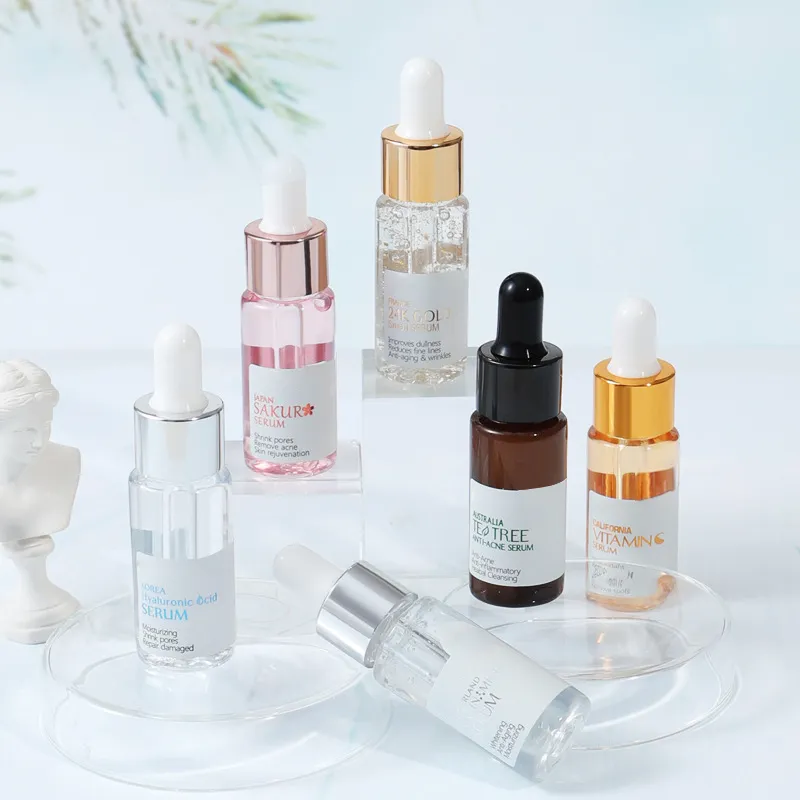
Two factories may be quoting on the same brightening serum, and still be quoting on two very different products. Someone may start with an existing formula and make some changes, someone may create a new formula around specific ingredients, texture requirements and performance goals. The difference isn’t always obvious in the initial quote, but it can affect development costs, production timelines and how much control a brand has over the final product.
India has a mature beauty manufacturing industry, with suppliers offering everything from ready-to-brand products to bespoke formulations and commercial-scale manufacturing. The most interesting to me is how these companies do product development. Will they cope with delicate active ingredients? And how do they test the packaging for stability and compatibility? And when a brand wants to make a certain performance claim, what kind of evidence can the manufacturer supply?
Here’s what I think matters when selecting a manufacturing partner, especially for brands developing products around hydration, brightening, anti-aging, or other cosmetic benefits.
The following article reviews ten beauty product manufacturers in India and compares their formulation capabilities, technical resources, and suitability for different types of projects.
I wanted this guide to be different than the usual list of companies that call themselves reliable, innovative and affordable.
Those words are not very helpful when you compare manufacturers.
Instead I focused on 4 questions.
First, does the company disclose any actual formulation or manufacturing capabilities, as opposed to just distributing finished products?
Secondly, what kind of development work does it seem able to do? A manufacturer that specialises in private label stock formulas may be good for a fast launch but not so good for a difficult custom formulation.
Third, does it describe any meaningful quality or testing procedures? To have a laboratory is one thing. Another is explaining how a formula is evaluated for stability, consistency and commercial production.
Finally, do you think the company's business model is a good fit for an emerging beauty brand or an older company?

| Manufacturer | Main Manufacturing Strength | Relevant Beauty Product Focus | Public MOQ |
|---|---|---|---|
| Kain Cosmeceuticals | Dedicated skincare R&D and performance testing | Advanced creams, skincare and beauty formulations | Request quote |
| Dermat India | Analytical, microbiology and stability laboratories | Functional skincare and personal care | Request quote |
| Acticon Life Sciences | Active-ingredient formulation development | Vitamin C, niacinamide, retinol and peptide serums | Request quote |
| Clarion Cosmetics | R&D, process validation and production scale | Creams, lotions, body care and personal care | Request quote |
| HCP Wellness | Formula libraries and customized manufacturing | Serums, creams, skincare and body care | From 500–1,000 units for selected ready-formula programs |
| Cosmetify | Custom product development | Customized skincare and beauty products | Request quote |
| Swadesh Life Science | Ingredient-led and multi-category development | Facial serums, derma-positioned skincare and body care | Request quote |
| Bo International | Formulation, analytical testing and packaging | Functional skincare and beauty formulations | From 2,000 units |
| AG Organica | Botanical ingredients and custom formulation | Face oils, serums, creams and botanical beauty | From 2,000 units on its main service page |
| Reviera Overseas | Professional beauty and specialty formulations | Exfoliants, facial treatments, masks and serums | Product-specific quote |
The absence of a published MOQ doesn't mean a manufacturer accepts small orders. It means the company hasn't established a clearly applicable public minimum for every product type.
When a beauty company talks about innovation, I want to see what’s going on in their formulation lab.
Is the company just chasing ingredient trends, or can it afford to experiment with texture, product stability, compatibility and manufacturability?
This is why I got caught by the Kain Cosmeceuticals.
The company claims to have a 140,000-sq-ft manufacturing facility and approximately 4,500 sq ft of dedicated R&D laboratory space. It also defines separate research resources for skincare and colour cosmetics, supported by development, scale-up, stability and quality validation work.
That is a useful distinction between product categories.

For example, a cream formulation and a liquid foundation formulation may both involve emulsions but they have different performance requirements. The moisturiser should have the right hydration, texture, skin feel and stability. With complexion products, you have to think about pigment dispersion, coverage, shade consistency, and how it plays with your other skincare.
A manufacturer can use the differences if it has committed development resources.
Kain also reports large production capacity numbers. "They are not something I would look at as an indicator for the quality of the product but they do make the company worth a look for brands that expect to graduate from product development into larger manufacturing programs."
If I were a brand developing a unique beauty formulation, I would ask how Kain sets performance targets in R&D and what evidence is provided prior to commercial approval.
A formulation that looks great in a lab sample must still be consistent when it is moved to production equipment.
What I think of is Kain as a candidate for brands that are about innovating in the formulation and scaling it commercially, as opposed to just taking an existing product and slapping a new label on it.
One thing I look for when evaluating a beauty manufacturer is how seriously it takes quality testing.
Marketing materials often feature popular ingredients, rich textures and visible benefits. But even a promising formula can turn into a commercial problem if the preservation system, packaging, or production process are not appropriate.
Dermat India is interesting, because the published material is not just a catalogue of products.
The company is based at Gurugram, Haryana and has its own analytical, instrumentation and microbiological laboratories and dedicated stability testing area.
Its published manufacturing brochure also lists a capacity of about 50 metric tonnes per month, with separate bottle and tube filling capabilities.

More than the volume of the headline production, the lab setup is important to me.
If I was to ask a brand to develop a facial serum for daily use, I would hope that the technical discussion would include pH, viscosity, compatibility of ingredients, microbiological quality, packaging suitability and expected shelf-life.
These are not optional marketing details. They affect reliability of performance of the final product.
Dermat also provides private label manufacturing and custom formulation for the skin and personal care categories. Its public development process includes ingredient research, lab samples, stability and compatibility work and commercial production.
That makes it a reasonable manufacturer to check out for products that require a structured development process.
I would still like to see real testing docs for the specific formula. Having laboratory capabilities does not necessarily mean that all finished products have been tested the same way.
If you’re developing an active-led moisturiser, targeted serum or a technically demanding personal care product, Dermat is one to put on your shortlist to research.
Another differentiator for Acticon Life Sciences is that it offers prospective buyers a better view of the ingredients and product concepts it manages.
Its published serum portfolio includes niacinamide, zinc, hyaluronic acid, Vitamin C, peptides, encapsulated retinol and other active-led formulations.
That’s important for a beauty brand that depends on a certain ingredient system or visible cosmetic benefit for its positioning.
However, I wouldn’t pick Acticon just because it lists popular actives.

Apply a Vitamin C serum. The stability of Vitamin C can be affected by the form of Vitamin C, the pH of the formula, the surrounding antioxidant system, the container and exposure to oxygen.
A similar issue is presented by retinol-containing products, where ingredient stability, packaging, usage conditions and the target market all need to be considered together.
These discussions are especially pertinent to Acticon’s product range.
The company provides options for custom development and off-the-shelf formulations, as well as a variety of packaging formats, including airless pumps, droppers and tubes.
That combo could work well for an ingredient-focused beauty brand. An attractive ingredient list may be present in a formulation, but the product still needs to be supported by the container and the manufacturing process.
I would like to see Acticon explain how they choose an appropriate formulation system, what tests are done on the finished product, and whether the evidence supports the specific claims the brand wants to make.
For example, a manufacturer that sells a 20 percent Vitamin C formula should be able to say more than just the percentage on the label.
Acticon is a company I would consider for brands developing functional facial products where active ingredient formulation is a key part of the concept.
A successful laboratory formula doesn't always scale up the same way with the batch size.
The finished product is influenced by the mixing equipment, heating and cooling rates, ingredient addition sequence and production conditions. That’s one reason I take manufacturing scale-up seriously.
From this perspective, Clarion Cosmetics is especially intriguing.
The firm has manufacturing facilities at multiple locations in India, including Chennai, Haridwar and Navi Mumbai. Its published infrastructure information lists R&D labs, microbiological labs, pilot facilities and production lines for various packaging formats.
What caught my eye was Clarion’s take on the development process.

The company says that its formulators take customer requirements and create technical specifications, produce prototypes and follow the first six production batches. It also provides validation related to product use and stability.
That’s a more meaningful manufacturing detail than just saying they’ll always be of high quality.
When a new cosmetic formulation is taken into commercial manufacturing, early production lots can provide useful information on processing consistency and manufacturing controls.
Of course, I'd still like to know what measurements Clarion actually records. And what happens if a batch falls outside the approved specifications?
It has a very large production infrastructure, which could be interesting for established brands or companies that want to launch various beauty products with large commercial volumes.
But big production capacity is not always a plus for a small brand.
I'd check with Clarion before I'd go to them to see if the project is within their practical minimum quantities and if they can do pilot scale production.
If your business is moving from early formulation development to repeatable commercial production, Clarion is one of the more relevant companies in this comparison.
Not all beauty brands need to spend big to create a brand new formulation from scratch.
Sometimes a manufacturer already has a good base formula and the smartest commercial decision is to adapt the product instead of turning it into a lengthy R&D project.
A helpful example of this approach is HCP Wellness.
The Ahmedabad-based manufacturer offers private label and contract manufacturing in the skincare, personal care and other categories. It describes an internal development team and a wide range of existing formulations.
The published MOQ information from the company is particularly useful.

HCP says selected ready-formula products with pre-approved packaging can begin at 500 to 1,000 units. A common amount for many creams, serums, or other bottled or jarred products is 1,000–3,000 units. Tube products may require much larger quantities.
This tells me that the packaging choice is almost as important as the formula.
For example, a founder forecasting 1,000 units of a facial moisturiser might find a standard jar doable, but a custom printed tube might be a much bigger commitment.
HCP also publishes approximate lead times of 30-45 days for ready-formula projects and 60-90 days for many first-time custom projects, depending on formulation and packaging requirements.
These are valuable figures for early budgeting, but they should not be taken as guarantees.
I would look at HCP for a brand that is deciding between an existing private label formula and a more differentiated custom product.
I would ask what could be changed without restarting testing, could a formula be licensed on an exclusive basis and how does the cost compare between the two development routes.
Cosmetify is worth a look because it makes a distinction that many manufacturers leave unclear.
The company states, “We don’t do white label products. Rather, its business is dedicated to private label and custom manufacturing services.
That doesn’t mean that every product is created from scratch, but it does make the formulation relationship an important part of the conversation.”
Cosmetify is an internal laboratory where brands can discuss new or changed skincare products. It also provides packaging, printing and finished product supply services.
This might be useful for a founder with a clear idea for a product.

Imagine a brand creating a lightweight moisturiser for those who hate traditional heavy creams. It's not simply about picking hyaluronic acid or some other hydrating ingredient.
The final formula must satisfy sensory expectations, be stable, use the appropriate packaging system and meet the intended retail price.
A development-oriented manufacturer should be able to translate those requirements into a testable product brief.
I would come to Cosmetify with a benchmark texture, target ingredients, packaging preference, expected order quantity and intended consumer claims.
Then I would ask the team to explain the stages of development, sample revision policy, testing plan and the difference between adapting an existing formula and developing a new one.
Its published information makes it relevant for brands seeking meaningful product customisation as opposed to a standard off-the-shelf SKU.
The most important point to define would be the commercial and legal meaning of that customisation, especially if the brand acquires the ownership of the formula or the exclusivity.
The product information of Swadesh Life Science places a lot of emphasis on ingredient-led skincare and custom formulation.
Its facial serum range includes products formulated with vitamins, botanical extracts, peptides and other cosmetic ingredients. The company also operates in the wider skincare and personal care categories.
The interesting question, I think, is what does a manufacturer do with those systems of ingredients for different consumers.
A facial serum that’s meant to be used for daily hydration might need to feel light and layer well under sunscreen. Such a richer barrier-care product may require a different emulsion structure and packaging approach.
Both can be sold as skincare solutions, but the formulation work is not interchangeable.

Swadesh describes in-house R&D facilities, raw material checks, controlled manufacturing procedures and stability testing .
These are useful capabilities to explore, especially if a brand is looking at a suite of products that need to provide a consistent sensory experience.
Its publicly available materials also mention flexibility with private label and custom development.
I want to know the exact manufacturing set-up before I decide if it’s right for a start-up or a larger brand.
Could the proposed formulation, for instance, be produced by an established base? And if the brand wants a new active ingredient or a new texture? Does that mean more development fees and stability testing?
Swadesh is for brands that want to compare current skincare formulations to more tailored product ideas, focusing on ingredients.
The final assessment of suitability would be based on sample quality, technical documentation, formula terms and confirmed production requirements.
Another Indian manufacturer, Bo International, has a wide range of beauty and personal care products, but it was the way it described the technical side of its operation that caught my eye.
The company provides information on its formulation laboratory, microbiological testing, analytical testing and stability testing.
Its testing information includes parameters like pH, viscosity, specific gravity, microbiological quality and some raw material properties.
These tests are for different purposes and should not be confused with proving a consumer facing efficacy claim.

A pH test can be used to confirm that the product is of specification. A stability study tells us how the formulation behaves under defined conditions. To support a performance claim, a controlled consumer or instrumental study may be needed.
I would want the manufacturer to explain what it does of these for the proposed beauty product and which would require extra work.
Bo provides private label and custom development of skincare, body care and other personal care formats. It also offers support in packaging and filling.
Where manufacturers only claim a flexible-MOQ, Bo says its private label minimum is usually 2,000 pieces, depending on the product and packaging.
Its website also indicates a standard manufacturing lead time of 3-5 weeks for applicable private label or contract production projects.
These are good starting points for building a launch schedule.
Bo International is worth looking at against other full-service suppliers if a brand is looking for a single manufacturing partner to handle formulation, quality control, packaging and commercial production.
Be careful about what is included in the initial price as you will need to get a separate technical quote for some of the services.
Botanical ingredients may be core to a beauty brand’s identity, but their source alone doesn’t tell us how the final product will perform.
A facial oil made from plant-derived ingredients must also meet appropriate quality specifications. A botanical cream needs a proper formulation system, a preservation strategy and packaging.
This is where AG Organica brings an interesting manufacturing background.
Besides its private label and custom cosmetic manufacturing services, the company has experience with essential oils, carrier oils and botanical materials.
Its skin-care products include serums, facial oils, moisturisers, cleansers, masks and other items.

As a manufacturer I’d like to know how the company links raw material sourcing and finished product formulation.
For example, if I’m working on a botanical facial oil, I’d be asking about the identity and quality of oils, oxidation control, choice of packaging and the analytical documentation available.
AG Organica gives information on stability testing, product development and its manufacturing process.
Its main service page is for private label manufacturing from 2,000 units, with a typical 15-20 day turnaround for qualified established-formula projects. More complex custom development is covered separately.
I would not interpret that short turnaround as a promise that a whole new formula can complete all the stability and performance testing required in three weeks.
The company has published different MOQ ranges in several service articles so I would trust a product-specific written quote rather than a generic minimum.
One to check out for botanical beauty products, facial oils and brands where ingredient sourcing is a big part of the product concept is AG Organica.
Another perspective on this list is offered by Reviera Overseas, whose product portfolio includes a number of formats related to professional and speciality facial care.
Along with cleansers, creams, masks and serums, the company also lists exfoliators, facial kits, and a variety of peel formulations.
For a brand that is developing spa or professional beauty products, those categories can create opportunities, but they also require careful consideration of the intended use of the proposed product.
This is not a professional chemical peel, but rather a gentle exfoliating face wash. ingredient levels, application conditions, warnings and regulatory classification can be very different.
I would like to pin down those differences before I ask a manufacturer for samples.
Reviera describes a manufacturing facility in Ahmedabad, which includes formulation, quality checking, filling and packaging services.

It also details a development process which includes product requirements, selection or development of formula, packaging, costing, sample approval, production and final inspection.
This gives a buyer a good starting point for the discussion on the project.
As a brand planning professional facial products, I would ask if the proposed formula is for ordinary cosmetic use or a more specialised application. I would also like to know how the company measures safety and supports product claims.
Reviera's published information does not define a universal MOQ for all product categories.
I would not assume that a mask, serum and peel will have identical manufacturing requirements, I would request separate quotations for the chosen formula and packaging for the type of project I would send to Reviera.
After looking through these companies, I would not approach all ten with the same general inquiry.
I would narrow the list down to the development problem the brand really needs to solve.
| Your Development Priority | Manufacturers Worth Investigating |
|---|---|
| Formulation innovation and product texture | Kain Cosmeceuticals, Cosmetify |
| Analytical, microbial and stability testing infrastructure | Dermat India, Bo International |
| Active-led serums and ingredient-focused products | Acticon Life Sciences, Swadesh Life Science |
| Commercial scale-up and repeatable production | Clarion Cosmetics, Dermat India |
| Existing private label formulas and defined launch quantities | HCP Wellness, AG Organica |
| Botanical oils and plant-derived formulations | AG Organica |
| Professional facial care and specialty products | Reviera Overseas |
These are research leads, not factory audit endorsements.
A supplier might have great manufacturing resources, but might not be right for the quantity, budget, or type of formula you are developing.
I like starting with the outcome a product is supposed to deliver.
A brand might seek a moisturiser that leaves skin feeling comfortable for hours, a brightening serum that improves the appearance of uneven tone, or a product that creates a smoother-looking skin surface.
They are product development objectives. They are not efficacy claims proven by default.
If you know what you want to achieve, you’ll be better able to decide which formulation and testing capabilities matter.
| Product Goal | Relevant Formulation Work | Evidence to Discuss |
|---|---|---|
| Hydration and barrier support | Humectants, emollients, ceramides and emulsion design | Moisturization or barrier-related instrumental testing where appropriate |
| Brightening and even-looking tone | Vitamin C derivatives, niacinamide and formula stability | Appropriate consumer or instrumental evidence supporting the specific claim |
| Smoother-looking skin | Retinoids, peptides, exfoliating systems and texture control | Stability, tolerability and relevant appearance-related efficacy testing |
| Sensitive-skin positioning | Mild formulation, fragrance considerations and preservation | Safety evaluation and appropriately designed tolerability testing |
| Professional facial care | Exfoliating systems, masks and application-specific formulations | Classification review, safety data and product-specific testing |
I would not assume that a skincare product is effective just because it has a trendy ingredient in it.
The form of the ingredient, its concentration, pH, stability, the environment of the formulation, packaging and intended application all have a bearing on the finished product.
For instance, two facial serums can feature niacinamide, but they can be worlds apart in terms of sensory properties, packaging, preservation and consumer experience.
Similarly, just because you add peptides to a cream, doesn’t mean the final product actually increases collagen production.
I would go to the manufacturer and ask what ingredients they are selecting, why they are appropriate for the formulation, and what testing supports the actual claims.
When a manufacturer says a product is tested, my usual follow-up question is: tested for what?
Different tests ask different questions.
Study of behaviour of the product under prescribed conditions . The stability testing It can sense changes in colour, odour, viscosity, pH, separation or other properties over time.
Microbiological testing is useful to evaluate microbial quality. The purpose of preservative efficacy testing is to determine whether the preservation system can control microbial challenges under defined test conditions.
Packaging compatibility testing determines if the selected bottle, pump, tube or jar is compatible with the formula.
Performance and efficacy testing relates to the specific claims of the product. This may involve, depending on the claim, instrumental measurements, controlled user evaluations or other appropriate study designs.
I would not consider these interchangeable.
A product passing a stability study does not mean it has clinically proven anti-aging benefits. Nor can a consumer perception survey substitute for an appropriate product safety assessment.
For any claim that is important for positioning of the brand, I would want to look at the study design, the sample size, the length of the test, the endpoints and whether the results actually support the wording proposed for the packaging.
This is where a manufacturer with a strong R&D team can add real value, even when some specialised testing needs to be done by an independent laboratory.
India has a large personal care and beauty manufacturing industry, with many Indian manufacturers providing services in formulation development, contract manufacturing, packaging and export.
But I would not choose a supplier only based on the country of manufacture.
The appropriate factory depends on the product and the commercial requirements.
A brand sourcing botanicals from India may have different priorities than a brand developing specialised textures, airless packaging or a larger range of facial and body care products.
When I compare India to China or another manufacturing locati0n, I would request equivalent quotes using the same formula brief, packaging specs, testing plan, order quantity and delivery terms.
Otherwise, the price comparison won't mean very much.
At Xiran Skincare, we support brands with OEM/ODM skincare formulation development and manufacturing.
Our work covers facial care and body care products, including serums, moisturizers, creams, cleansers, and masks.
Because our laboratory development and manufacturing operations are integrated, we can coordinate formula development, sampling, packaging decisions, compatibility evaluation, bulk production, and quality control within the same manufacturing workflow.
For a new development project, I would begin by understanding the intended consumer, product benefits, ingredient direction, texture, packaging, target price, and expected quantity.
Then we can determine whether an established formula or a custom development program is more suitable.
Brands interested in this approach can explore our facial care manufacturing services and private label serum development options.
For founders still planning their first product collection, our guide to starting a skincare line explains how manufacturing fits into the larger launch process.
The best beauty product manufacturing partner is not always the company with the biggest product catalogue or the biggest factory.
For an ingredient-driven product, formulation knowhow could be the clincher. For an established brand that has a commercial launch in mind, production consistency and quality systems may be more important. For a startup, a realistic minimum order quantity and manageable development cost can make or break the financial feasibility of the project.
I’m looking for a manufacturer who knows the product, not just the marketing blurb.
Can the company explain the reasoning behind the design of the formula? Does it understand packaging and testing requirements? Does it give realistic costs and a clear timeline for development? And is it capable of reliably manufacturing the same approved product when sales increase?
Those are the questions I would ask before I placed my order."
India has many manufacturers worth considering, and this guide highlights ten of them. Then I would narrow it down to two or three suitable candidates and compare their proposals. I would also look at samples and check the applicable manufacturing documentation before making my decision.
A good manufacturing relationship begins with a product brief, but it succeeds through formulation discipline, transparent commercial terms, and consistent production.
Published manufacturer examples commonly start between 500 and 2,000 units per SKU for selected established formulas. HCP Wellness advertises 500–1,000 units for eligible ready-formula projects, while Bo International and AG Organica publish starting quantities of approximately 2,000 units.
Many custom or specialized projects require 2,000–5,000 units or more, and custom packaging may have higher component minimums. The exact MOQ should always be confirmed for the formula, variant, pack size, and packaging design.
Published Indian supplier fees provide a useful starting point. TYMK Group advertises custom R&D beginning at ₹15,000 per product, with more involved projects reaching ₹50,000–₹200,000 or higher. Nesta Botanicals publishes a starting custom R&D and sample-development fee of ₹25,000, excluding tax and shipping.
For a technically complex project, I would budget additional funds for specialized ingredients, revisions, testing, packaging compatibility, and any formula ownership agreement. The development fee is separate from the cost of manufacturing finished units unless the quotation explicitly includes both.
For selected existing formulas, publicly advertised manufacturing times range from approximately 3–6 weeks after the necessary approvals. HCP Wellness publishes 30–45 days for ready-formula projects and 60–90 days for many custom first orders.
Fully custom projects involving extended stability testing, specialized packaging, or significant regulatory work may require 3–6 months or longer. I would request separate timelines for initial samples, formula approval, testing, packaging, production, and shipment rather than relying on one overall delivery estimate.
Yes. Several manufacturers in this guide offer custom formulations built around active ingredients, product texture, and specific beauty goals. However, a company's ability to incorporate an ingredient doesn't automatically prove the final product's efficacy.
I would ask whether the manufacturer can support appropriate stability, safety, compatibility, and claim-substantiation testing. The evidence should relate to the finished formula and the exact claims the brand intends to use.
I would start with the applicable Indian cosmetic manufacturing licence, including Form COS-8 or Form COS-9 where relevant. GMP systems and ISO 22716 documentation can also be useful, but the certificate's current validity, holder, facility, and scope must be verified.
For the finished product, I would request appropriate batch specifications, microbiological and stability information, and relevant testing reports. A quality certificate does not replace product-specific testing or compliance with the rules of the country where the product will be sold.