I’ve done enough private label, OEM and ODM skincare projects to know that the term manufacturer can mean a lot of different things.
Sometimes a brand arrives at the factory with nothing more than an idea. It needs help to turn an idea into a formula, select packaging and prepare a product for commercial production.
Other brands have a totally different position. They’ve got the formula already. They may have approved raw-material suppliers, fixed specs, and established packaging. What they need is a factory that can consistently produce the product at scale. It needs to be qualified.
It is that second situation that makes skincare toll manufacturing so pertinent.

The nomenclature, however, is not always neat. That was immediately apparent when evaluating manufacturers in different countries. Cosmetics factories in the Philippines and Indonesia commonly use toll manufacturing. Instead, an equivalent project might be offered as contract manufacturing, OEM manufacturing or custom manufacturing in China, Australia and many Western markets.
That difference is important because I would never turn down a good manufacturing partner because it had a different label.
For example, the cosmetic toll manufacturing framework of the Philippine FDA describes a model where the trader owns the formulation and shares product quality responsibilities with the manufacturer.
So for this list, I ignored the wording. I concentrated on what a buyer really cares about:
Can this manufacturer reliably take a defined skincare project and turn it into commercial production?
| Manufacturer | Location | Manufacturing Model | I Would Consider It For |
|---|---|---|---|
| XIRAN Skincare | China | OEM / ODM / Contract Manufacturing | International brands needing development + manufacturing |
| Orsolabs Inc. | Philippines | Toll / Contract Manufacturing | Straightforward cosmetics toll production |
| Kosmetics Technologies | Philippines | OEM / Toll Manufacturing | Formula development combined with toll production |
| USCLC | Philippines | Toll / Full Manufacturing | Brands supplying ingredients or packaging |
| SCC Innovasia | Philippines | Contract / Toll Manufacturing | Established skincare and personal-care projects |
| ADEV Natural Indonesia | Indonesia | Toll / OEM / ODM | Indonesian and Southeast Asian projects |
| Marui Solusindo Atmadja | Indonesia | Toll Manufacturing | Brands needing technical and regulatory support |
| Prima Satya Abadi | Indonesia | Toll Manufacturing | Skincare, body care and spa products |
| ANC Projects | Australia | Toll / Contract / OEM | Larger Australian-made skincare projects |
| Cosmopro | Pakistan | Toll / Contract Manufacturing | Multi-category skin, body and hair projects |
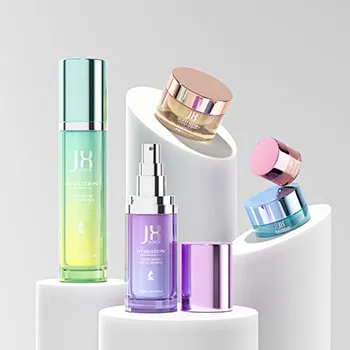
OEM/ODM SKINCARE MANUFACTURING Custom Formulation Private Label Production Packaging Development and Production Support For Facial Care, Body Care, Hair Care, Men's Care and Other Personal-Care Products. Xiran skincare has its own R&D and production facilities, multiple production lines, and a large existing formula library.
That makes us more relevant when a project still has questions that haven’t been answered.
For instance, a customer may know that it wants a ceramide barrier cream, but still needs to refine the texture, active system, fragrance, packaging and target cost before commercial production. Another might already have a formula and want to get closer to an OEM-style manufacturing arrangement.

The two projects require different levels of support.
Brands often underestimate the benefit of keeping formulation, packaging, sampling, testing and bulk production in the same project team – for me it’s an essential. It minimizes handovers where error can occur.
So if the project sits somewhere in between traditional toll manufacturing and full custom skincare development I would short list Xiran skincare.
Best For: International beauty brands, distributors, e-commerce brands and established businesses looking for OEM/ODM or custom skincare manufacturing.
My pick for: A basic, standard toll-production alternative
If a buyer explicitly told me, I would look at Orsolabs as one of the first companies:
“I’m not looking for a private label cosmetics supplier, I want a cosmetics toll manufacturer.”
The company is based in Cavite, Philippines and offers formulation, blending, filling and packaging for skincare and personal-care products. It has production lines for serums, creams, lotions, toners and hair care products.
What I like about Orsolabs is that the manufacturing model is pretty easy to understand from a sourcing perspective.

A buyer can call the company for toll manufacturing, contract manufacturing or OEM work instead of being directed to a pre-made private-label catalog.
That flexibility is a bonus when a brand has already invested in product development.
I wouldn’t want to go back to square one after spending six months developing a serum with my own chemist, just because the manufacturer wants to use its own stock formulations. I like to discuss scale-up, process parameters, packaging compatibility and repeatability.
Orsolabs is the kind of vendor I would add to that shortlist.
The company also has an FDA licensed manufacturing facility in the Philippines. The company’s manufacturing operation includes cosmetics and personal-care production.
Best fit: Relatively mature product specs looking to toll or contract manufacture in the Philippines.
My choice for: Brands that need technical assistance prior to scaling up
Not every brand seeking toll manufacturing comes with a production-ready formula.
That’s an important difference.
I’ve seen projects where the founder says “We have the formula already”, but what they have is a lab prototype. The product may look pretty in a small beaker but has never been scaled up commercially, never been tested for compatibility with packaging or evaluated for long term stability.

I'm interested in Cosmetics Technologies because it combines toll manufacturing with an R&D led approach.
It develops cosmetic products, researches raw materials and active ingredients, creates textures and fragrances, manufactures in batches, fills and packages and performs quality operations.
This combination makes sense for products that are somewhere between development and production.
If my formula was really finished, I would want the factory to respect it, not to re-design it without need. But if a batch of 500 kg behaves differently than a laboratory sample of 500 g, then I also want access to a team that can solve the problem.
This is the sort of middle ground I see here.
Best Fit: Skincare brands with their own concept or formula that may need to be refined in formulation or scale-up support.
My pick for: Brands that want a more traditional toll setup
If I had to show someone one example of what a traditional skincare toll manufacturer can look like, I would probably show them USCLC.
The reason is simple. Its toll-manufacturing structure allows the customer to provide ingredients and packaging materials, while allowing the factory to provide certain major ingredients where needed, and to handle manufacturing.
This model is very different than buying an existing private label serum and swapping out the logo.

This allows for much more involvement of the brand with the product.
I think this type of setup is most sensible when the company has technical resources backing it up already. Maybe the brand has its own formulation consultant. Maybe it has a proprietary active ingredient. Maybe it has a formula somewhere and now wants a second production partner.
USCLC also offers a more complete path including raw materials, QC, pilot manufacturing, packaging development and R&D support.
I like that because brands don’t always stay in the same manufacturing model forever. You can start with a more turnkey project and then as you grow you can take more control of formulations and sourcing.
Best fit: Brands that have existing formulas, ingredients or packaging that want more control over production.
My pick for: More established personal-care programs
SCC Innovasia is different from many startup-oriented private-label suppliers.
I would think of it when the project is already pretty well formed and requires reliable outsourced production, not a quick "pick a formula and put on a logo" launch.
It offers capabilities such as skincare and personal-care contract manufacturing and quality assurance, technology transfer, packaging management and warehousing. It also accepts toll manufacturing inquiries.
I would pay attention to the technology transfer part.

It’s not as simple as sending an ingredient list to move production of a mature formula from one facility to another. Processing temperature, mixing sequence, equipment, shear rate and cooling can all affect what you get out of the tank.
This is even more important for emulsions, suspensions and products with difficult active systems.
So I would probably look at SCC for a brand that already knows what they are doing and wants a manufacturer that can fit into an existing technical and supply-chain structure.
Best fit: Existing skincare or personal-care brands, especially those moving an existing product into outsourced production.
My choice for: Brands that target Indonesia or Southeast Asia
One of the more interesting manufacturers on this list, ADEV separates OEM, ODM and toll manufacturing quite distinctly.
For tolling, the brand can have more control over its formula or materials and ADEV manufactures. Its wider manufacturing system can also include formulation, packaging, testing and regulatory work for customers requiring greater support.
I think flexibility is useful in practice.
A startup and a big skincare company could both approach the same factory, but they shouldn’t get the same manufacturing solution.

The startup might find it difficult to convert an idea into a solid formula. The established brand may provide raw materials, specifications, and a specific production target.
ADEV can be used across categories of skincare including serums, toners, moisturizers, facial cleansers, sunscreens and masks. Its manufacturing operation is also accredited to CPKB, ISO 9001:2015, ISO 22716:2007 and Halal.
If Indonesia is an important target market I would give ADEV extra consideration as manufacturing and local regulatory support can be managed closer together.
Best fit: Brands selling in Indonesia or Southeast Asia, especially those that require manufacturing and local market support.
My pick for: Manufacturing + supporting services for brands
Another Indonesian manufacturer I would keep on the list is Marui, especially if the brand doesn’t want to coordinate ten different suppliers itself.
Its skincare business integrates toll manufacturing with R&D and laboratory support, registration services, raw-material sourcing and packaging supply and fulfillment related capabilities.
I like this kind of setup for one simple reason. The formula is only one part of bringing skincare product to market.
And you need the container to work with the recipe.

You need the label and the claims to be sensible for the market you are targeting.
Samples must be approved before bulk production can begin.
And after a while, you have to do it again without the second batch feeling or looking any different from the first.
A factory that can play across those steps can remove a fair amount of friction.
I’d still want to know exactly where toll manufacturing ends and full service development begins before requesting a final quotation as that boundary affects both cost and ownership.
Best fit: Skincare companies that need toll manufacturing and development, sourcing and regulatory support.
My choice for: Ranges oriented to body care, skincare and spa
Prima Satya Abadi caught my eye because it fills the gap between cosmetics, skincare, body care and professional beauty.
It makes toll products for cosmetics and products like body scrub, body butter, lotion and shower gel. It also works with customers in places like salons, spas, beauty clinics and branded retail.
That makes it more interesting to me for some types of product line than others.
For example, if I was designing a spa-inspired collection with a body scrub, body butter, massage-focused product and lotion, having those products with one manufacturer could make sourcing much easier.

Prima Satya Abadi also handles Indonesian regulatory and manufacturing requirements, including CPKB/BPOM and Halal-related certification.
For an international buyer, though, I’d take extra time during due diligence talking about export documentation, testing, communication workflow and experience with that particular destination market.
This is not a criticism. It’s just something I would check before I went ahead with a big international project.
Best fit: Indonesian brands of skincare, body care, spa and professional beauty
My pick for: Brands wanting to produce specifically in Australia
ANC Projects offers another alternative to this list.
If "Made in Australia" is commercially important to the brand, I'd be looking at ANC and not just looking at cost versus Asian factories.
The company’s toll and contract manufacturing and OEM and private label activities include skincare such as moisturizers, serums, cleansers, toners, masks, eye creams and facial oils.
One thing I would check very early on is MOQ.

ANC says minimum order quantity of 5,000 units for its skincare manufacturing programs.
Then I know immediately which conversations are worth having.
If I were a first time founder and I wanted to test 500 bottles of serum, this probably wouldn’t be my first call. That'd make a lot more sense if I were a well-established brand projecting several thousand units per sku.
That’s why I don’t compare manufacturers on headline capability.
The size of production has to match the business.
Best fit: Established or growing brands looking for Australian-made skincare, and able to support larger production quantities.
My pick for: Brands moving into skincare, body care and hair care
If the project is not only about facial skincare then you can think of Cosmopro.
Its toll-manufacturing capabilities include skin, body, hair care, hair color and toiletries with in-house R&D for custom product development.
That can be a real life difference for beauty brands that offer multiple categories and for distributors.
Let’s say I want to launch a facial moisturizer this year and then shampoo, conditioner and body lotion. Running three factories means managing three commercial relationships, three quality systems, three production schedules and possibly three packaging supply chains.

If one manufacturer can really do those categories well, consolidation becomes attractive.
I'd still be paying close attention to documentation when products are destined for regulated export markets. I would want to know the testing package, quality records, regulatory responsibilities and experience with the country where I want to sell before I order.
Best fit: Brands and distributors to develop broader personal-care ranges as opposed to a one-skin-care SKU.
The list takes me to the first talk.
It doesn't make the final decision for me.
Before I decide on any skincare tool manufacturer I would like to have clear answers to the following questions.
That seems obvious until you get the contract.
If I came up with the formula myself and paid for the R&D, I would want the agreement to say:
I wouldn’t make something this important dependent upon a sales conversation.
For example, in the Philippine cosmetic toll-manufacturing regime, the trader owns the formulation and the trader and manufacturer share responsibility for product quality.
That does not mean that every country or manufacturer follows exactly the same structure.
Leggere l'accordo.
This is another area where the term toll manufacturing can be deceiving.
Sometimes the brand is everything.
Sometimes it offers only one proprietary ingredient.
Sometimes the manufacturer buys all the materials from approved suppliers.
The costs and risks of such arrangements are very different.
For example, if I brought out an expensive patented active, I’d want to know exactly how it is received, stored, weighed, documented and reconciled after production.
For normal materials such as glycerin, emulsifiers or normal botanical extracts it might be much more efficient to let the manufacturer source them.
It relies on the formula that is correct.
A good laboratory sample is not the same as a production ready formula.
“This is something I would look very closely at.
And then what happens if the batch is 300 kg?
What about Viscosity ?
Is the emulsion stable?
Does it take much longer to cool?
Is the product still fillable efficiently?
I would ask if pilot production or scale up testing is needed before full commercial run.
And if you skip this step to save money, it can cost you a lot of money later on.
My next question when someone says a skincare product is “fully tested” is:
Tested for what?
Depending on the formula and market I may have to discuss:
I'd rather agree on the testing plan before production, than discover after the first batch that an important test was never included.
A factory can make a wonderful cream and still be the wrong partner for my market.
If I want to sell in the U.S., I need to take into account current requirements for cosmetics in the U.S.
Under MoCRA, manufacturers and processors subject to the requirements must register cosmetic facilities with FDA and renew registration every two years. Responsible persons shall also prepare a list of cosmetic products they market and update the list annually.
Another point I would be cautious of is one that is often misunderstood in cosmetics sourcing: FDA does not issue a certificate stating that a cosmetic facility is “FDA approved.” Facility registration and product listing do not mean FDA approval of the factory or cosmetic product.
I also look at standards such as ISO 22716 (GMP guidance for cosmetics production, control, storage and shipment) for manufacturing quality systems.
Certifications are helpful, but I still like to see if the actual experience of the manufacturer is consistent with the country where my products are going to be sold.
I rarely ask just:
"What is your MOQ?"
Instead, I ask three questions:
What is the MOQ formula?
What is the MOQ for packaging?
What's the MOQ on the decoration?
These numbers may not line up.
The factory might take 1000 units . A custom colored bottle needs 5000 pieces . A proprietary mold requires far more .
This difference can make or break a project’s financial viability for small and growing brands.
I would not spend too much time arguing over terminology.
I would focus on who controls what.
| Model | Formula Control | Development Level | Typical Fit |
|---|---|---|---|
| Toll Manufacturing | Usually high brand control | Low to moderate | Brand already has formula/specification |
| Contract Manufacturing | Brand or shared | Moderate | Brand wants outsourced commercial production |
| OEM Skincare Manufacturing | Usually client-led specification | Moderate | Brand has defined product direction |
| ODM Skincare Manufacturing | More manufacturer-led | Moderate to high | Brand needs development support |
| Private Label Skincare | Usually existing manufacturer formula | Low | Brand wants faster market entry |
If I already had a validated formulation, ingredient specifications and packaging, I would look closely at skincare toll manufacturers or OEM manufacturers.
If I had the product concept but still needed help building the actual formula, I would be more interested in a custom skincare manufacturer or ODM partner.
And if speed mattered more than exclusivity, private label might be the more sensible option.
The manufacturing model should fit the project — not the other way around.
I would narrow down the list by type of project.
The companies I would look at first for a fairly traditional toll-manufacturing arrangement are USCLC, Orsolabs, Kosmetics Technologies and ADEV.
I would rank XIRAN Skincare higher on the list if you need formula development, packaging support and OEM/ODM production for an international brand.
For Indonesian focused brands, I would compare Marui, ADEV and Prima Satya Abadi.
If you’re looking at larger volumes of Australian production, ANC Projects is worth a look in.
If you already have a Philippine skincare or personal-care program in place, a startup-focused private-label supplier may not make as much sense as SCC Innovasia.
There isn't one size that fits all winner.
And I actually think that articles that declare one manufacturer “the best” without knowing the reader’s product, volume or market are not very useful.
The manufacturer that’s right for a 1,000-unit private label launch may be completely wrong for a brand that’s moving a proprietary serum that sells 100,000 units per batch into a second manufacturing facility.
When I’m looking at a skincare toll manufacturer, I’m less concerned with the number of services printed in a brochure, and more concerned with how the factory fits the actual project.
And who has the formula?
Who purchases the material?
Will the formula scale?
What testing will be performed?
Can the factory handle the packaging?
And can it support the market the product will eventually be sold in?
Once I have those answers, then I can compare manufacturers much more easily.
At XIRAN Skincare we generally work with brands via private label, OEM/ODM, and custom skincare manufacturing, rather than confining each project to a standard toll-manufacturing model. This gives us space to work with brands who already have a clear product direction, as well as businesses that still need help to formulate the formula, packaging and production plan.
If you know what you want to build, that’s enough to get the manufacturing conversation started.