If you have never worked with a skincare manufacturer before, private label can sound almost too easy. Choose a formula, put your logo on the packaging, place an order and start selling.
In reality, there are a few more decisions between the first idea and the finished bottle.
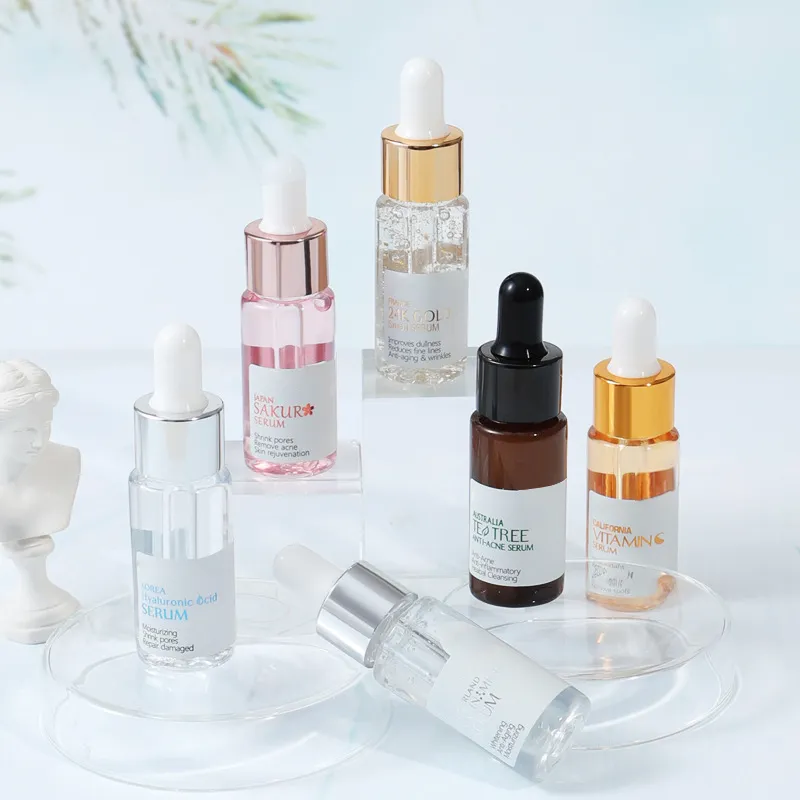
Most private label skincare projects start with formulas the manufacturer has already developed. You review the available products, request samples, decide whether anything needs to be adjusted, choose the packaging and branding, confirm what is required for the market where you plan to sell, and then move into production.
The process is usually much simpler than developing every formula from scratch, but that does not mean every project looks the same. A brand launching one moisturizer in a stock jar has very different decisions to make from a company building a five-product skincare collection with customized packaging.
So, what actually happens after you contact a private label skincare manufacturer?

With private label skincare manufacturing, you are usually starting with formulas that the manufacturer has already developed rather than asking a laboratory to create everything from the beginning. You select the products that fit your brand, test samples, decide whether any adjustments are needed, choose the packaging and branding, and confirm the requirements for your target market.
Once the formula, packaging and artwork are approved, the manufacturer produces the bulk product, fills it into the selected packaging, carries out quality checks, packs the finished goods and prepares them for shipment.
That shorter development path is one of the main reasons private label works well for brands that want to launch without taking on the cost and complexity of developing every product from zero.
Private label simply means that a manufacturer produces skincare products that another company sells under its own brand.
You do not need your own laboratory, mixing tanks, filling lines or production team. The manufacturer already has the equipment, technical staff and manufacturing systems needed to make the product, while your business focuses on the brand, market and customer.
The part that sometimes causes confusion is the word “private label” itself. Different manufacturers use it slightly differently.
For some suppliers, private label means choosing a completely finished stock formula and changing only the label and packaging. Other manufacturers allow more flexibility, such as changing the fragrance, adjusting the texture, adding selected ingredients or choosing from different packaging options.
That is why one of the first questions worth asking is not simply, “Do you offer private label?”
Ask instead:
What can actually be customized?
That answer tells you much more about how the manufacturer works.
One thing we see quite often is brands beginning with a long list of products before they have really decided who the products are for.
They may ask for a cleanser, toner, serum, cream, eye cream and mask because that feels like a complete skincare line. But six products do not automatically make a good collection.
A better place to start is the customer.
Who are you trying to sell to? What is the main skin concern? What price range are you aiming for? Are you building a simple everyday routine or a more premium active skincare line?
A brand asking for “a hydrating serum” still leaves plenty of questions unanswered. Should it be very watery or slightly gel-like? Does it need to sit comfortably under makeup? Should it be fragrance-free? Do you want hyaluronic acid to be the hero ingredient, or are you building a broader hydration story?
Even the target price matters. There is little value in creating a beautiful serum in expensive custom packaging if the finished cost makes it impossible to reach your intended retail price.
The clearer these decisions are before development begins, the easier the rest of the process becomes.

Once the manufacturer understands the direction of the brand, you can begin looking at formulas.
This is where many new brands get distracted by ingredients.
Niacinamide. Peptides. Ceramides. Vitamin C. Hyaluronic acid.
These ingredients can all be useful in the right product, but an ingredient name does not tell you what the finished formula will feel like.
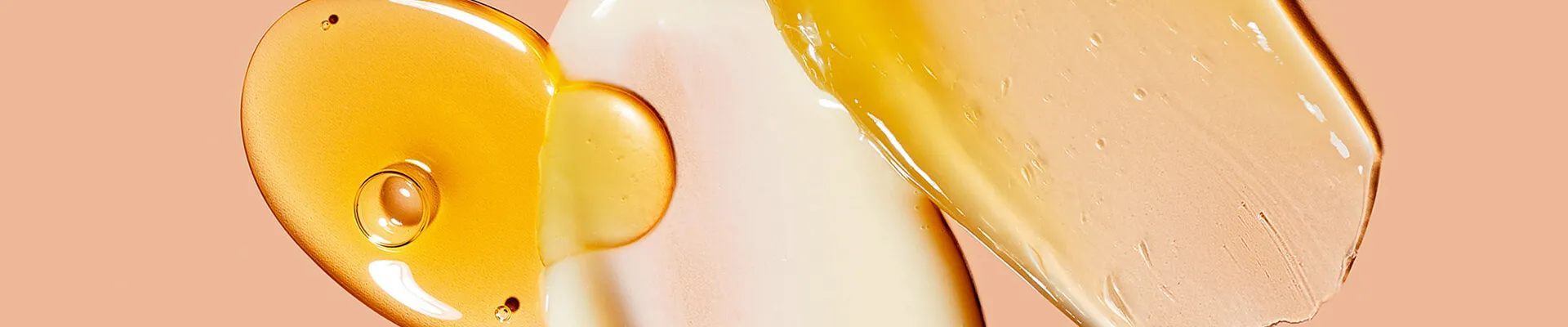
Two niacinamide serums may look very similar on a product list and feel completely different when you actually use them. One might absorb quickly with almost no residue, while another may feel thicker and slightly tacky. Neither is necessarily wrong; they are simply designed for different product experiences.
That is why we normally encourage brands to judge formulas as finished products rather than ingredient lists.
Think about texture, absorption, fragrance, after-feel and how the product fits into the rest of the routine. These are the things your customer notices every day.
Sampling is where the project becomes real.
A formula can sound perfect in an email and still feel wrong when you put it on your skin. That is completely normal.
When you receive samples, use them the same way your customer would. Do not test a moisturizer once on the back of your hand and approve it immediately. Use it for several days. Try the serum under the moisturizer. Apply sunscreen or makeup afterward. Pay attention to how the products behave together.
For a serum, you may notice that it absorbs well but becomes sticky when layered. A cream might feel luxurious on its own but become too heavy when used after your chosen serum.
These are exactly the kinds of details you want to discover during sampling rather than after production.
If something does not feel right, explain the problem as specifically as possible. “I don't like it” is difficult for a formulator to work with. “The serum feels too tacky after about 30 seconds and I want a lighter finish” gives the R&D team something much more useful.
Good product development is usually a conversation, not a one-time sample approval.
Sometimes the first sample is already close to what the brand needs. In that case, there may be little reason to change the formula.
Other projects start with an existing formula but require a few adjustments. A brand might want a different fragrance, slightly lighter texture or a specific ingredient added to support the marketing concept.
There is a point, however, where changing an existing formula becomes much closer to custom formulation.
If you want to replace several ingredients, completely change the texture, introduce a new active system and create a very specific sensory profile, the laboratory may need to redevelop and retest the formula rather than simply make a small adjustment.
This matters because deeper customization usually means more sample rounds, more testing and a longer development schedule.
It can also affect MOQ and cost.
For brands launching their first product, it is worth asking whether every change is genuinely important. Sometimes an existing formula already performs well, and the real opportunity for differentiation is in the packaging, positioning, customer experience or way the products are combined into a routine.
Being different does not always mean rebuilding the formula.
Packaging often looks like a branding decision, but in manufacturing it is also a technical one.
A brand may fall in love with a certain pump bottle before choosing the formula, only to discover later that the cream is too thick to dispense properly. A very fluid serum might drip from a package that looked perfect in the design mock-up.
We have also seen brands focus heavily on the shape and color of a bottle without thinking about how the customer will actually use it.
Does the pump dispense too much product? Is the dropper easy to control? Does the bottle feel stable on a bathroom shelf? Will the packaging survive international shipping?
These questions become much more important once the product is in a customer's hands.
For a first launch, many brands choose existing packaging because it keeps the project simpler. Stock bottles, jars and tubes can still be customized through labels, screen printing, hot stamping, colors or outer boxes.
Fully custom packaging gives you more freedom, but it usually comes with higher minimum quantities and longer development times. Custom molds, special colors and complex decoration can also create delays that have nothing to do with the skincare formula itself.
So packaging should be discussed while the formula is still being finalized, not after everything else is finished.
Another mistake we sometimes see is a brand developing the entire product first and asking about compliance at the very end.
That can create unnecessary problems.
A skincare product intended for the United States may require a different compliance approach from one being launched in the European Union, the UK or another market.
Labels, product claims, documentation and notification requirements can all vary.
This does not mean brands need to become regulatory specialists before contacting a manufacturer. But the manufacturer should at least know where the product is going to be sold.
That allows the project team to prepare the right ingredient information, specifications, COA, SDS or other documents that may be needed later.
It also helps avoid packaging artwork being designed twice because the first version did not include the information required for the destination market.
Regulatory work is much easier when it is treated as part of product development rather than something added at the end.
Brands usually ask about MOQ very early, and understandably so.
But there is not always one simple number.
A manufacturer may be able to produce a relatively small batch of an existing serum formula, while the packaging supplier requires several thousand custom bottles. In that situation, packaging—not the formula—is what determines the practical MOQ.
Printing and decoration can affect it as well. A standard bottle with a label may be available at a much lower quantity than a custom-colored bottle with several printing processes.
This is why an MOQ such as 500, 1,000 or 2,000 units should always be viewed in context.
Ask what that quantity actually includes.
Is it based on the formula only? Does it include packaging? Is the packaging already in stock? Is the same quantity required for each SKU?
For brands trying to control early inventory, these questions matter just as much as the number itself.
Once the brand is happy with the formula, packaging and artwork, the project starts to look less like product development and more like manufacturing.
Before bulk production begins, the manufacturer should have a clear final version of everything that has been approved.
That includes the formula, fragrance, texture, packaging, printing, labels, cartons and other specifications.
This sounds obvious, but small misunderstandings are much more expensive once thousands of units have been produced.
After approval, raw materials and packaging components are prepared for the production batch. The skincare formula is then manufactured according to the required process, which may involve weighing, mixing, heating, emulsification, cooling or other steps depending on the product.
The bulk product is checked before filling.
Once it meets the required specifications, it moves into the selected bottles, jars, tubes or other packaging.
When brands first visit a cosmetics factory, they often think of quality control as someone looking at finished bottles at the end of the production line.
That is only one part of it.
Quality checks can happen at several points—from incoming raw materials and packaging components to the bulk formula and finished products.
For example, the manufacturer may check whether the packaging matches the approved specification before it reaches the filling line. The bulk formula may be reviewed for appearance, pH, viscosity or other relevant parameters before filling begins.
After filling and packing, the finished products may be checked again for leakage, printing, fill quantity, appearance and packaging condition.
The reason for all of this is simple: the product made in a large commercial batch should match what the brand approved during development.
A beautiful laboratory sample is not enough if the final production batch is inconsistent.
Shipping sometimes feels like the last small detail, but for international brands it can affect both cost and launch timing.
If you are ordering a few sample cartons, air freight may make sense. For a larger production order, sea freight is often more economical.
The right option depends on the destination, quantity, product type and how quickly you need the stock.
It is worth discussing shipping before production is finished so you already know who will handle freight, customs documents and delivery to the final warehouse.
A good launch plan should include the time it takes to manufacture the products and the time it takes to get them into the country where they will actually be sold.
This is one of those questions where manufacturers often give very different answers, and there is a reason for that.
A straightforward project can move relatively quickly if you choose an existing formula, approve the first or second sample and use packaging that is already available.
The timeline becomes longer when you add formula revisions, custom packaging, special printing, additional testing or regulatory work.
Packaging is often the biggest surprise. A formula may be ready while the custom bottle is still being produced.
This is why we normally recommend starting from the target launch date and working backward. If your marketing campaign is planned for September, do not assume you can start product development in August and still have stock ready on time.
Leave room for things to change.
Sampling may take longer than expected. A packaging component may need to be remade. Artwork may need corrections.
A realistic schedule is much safer than planning around the fastest possible production time.
Private label is generally less expensive to develop than creating a completely custom formula, but the final budget still depends on the type of product you want to build.
The formula is only one part of the cost.
Packaging can sometimes cost as much as—or more than—the product inside it. Printing, cartons, labels, testing, design, freight and import charges all need to be considered as well.
This is why comparing manufacturers only by the price of one bottle can be misleading.
One quotation may include the formula, filling and packaging. Another may show only the bulk product cost and add everything else later.
When comparing suppliers, ask for the complete project structure.
What are you actually paying for?
That makes it much easier to understand the real cost of bringing the product to market.

For a brand that wants to launch quickly, test a new product category or reduce initial development costs, private label is often the more practical starting point.
You are working from formulas that already exist, so much of the early laboratory development has already been completed.
Custom formulation becomes more attractive when the product itself needs to be a major point of differentiation.
Perhaps you want a very unusual texture, a particular ingredient system or a formula designed around a detailed technical brief. In that case, starting from scratch—or much closer to scratch—can give the brand more control.
We do not see these two models as competitors.
A brand can start with private label, learn which products its customers actually buy, and later invest more heavily in custom formulation for its strongest categories.
That is often a more commercially sensible path than spending heavily on a completely custom collection before knowing what the market wants.
A good skincare manufacturer should be able to talk about more than MOQ and price.
Ask how sampling works and how many changes are normally possible. Ask what the factory manufactures regularly rather than what it says it can manufacture.
Find out whether packaging is sourced directly by the manufacturer or whether you need to manage suppliers separately. Ask what happens if the packaging arrives defective or if the production batch does not match the approved sample.
It is also worth asking about documentation, quality systems and export experience if you are selling internationally.
You are not only buying a skincare formula.
You are choosing the company that will help turn your brand concept into thousands of physical products.
The way they communicate during development often gives you a good idea of what the production relationship will be like later.
The first is choosing the product because one ingredient is trending.
Trends can help identify opportunities, but they should not replace a real product concept. A serum still needs the right texture, price and customer experience even if the hero ingredient is popular.
The second is spending too much time on packaging before knowing whether it works with the formula. Packaging and formula development should happen together.
Another common issue is ordering too many products at once. A new brand does not always need eight or ten SKUs. A smaller, focused routine can often be easier to market and easier to manage from an inventory point of view.
And finally, do not rush the samples.
If the formula is something your customers may use every day for months or years, taking a little more time to make sure you actually like it is worth it.
At Xiran Skincare, we work with both brands that want to start from existing private label formulas and brands that need more customized OEM/ODM development.
The first conversation is usually less about choosing from a catalog and more about understanding what the brand is trying to build.
What is the product?
Who is going to buy it?
Which market are you selling in?
What price range are you trying to reach?
Do you want to move quickly with an existing formula, or does the product need more customization?
Once those questions are clear, it becomes much easier to recommend suitable formulas, prepare samples and discuss packaging.
Depending on the project, we can also support packaging sourcing, product design, sample development, manufacturing, quality control, documentation and international shipping.
Private label works best when both the brand and manufacturer are clear about what is being built from the beginning.
So, how does private label skincare manufacturing work?
You start with the product idea and the customer you want to serve. The manufacturer helps you identify suitable formulas, you test the samples, decide how much customization is really necessary, choose packaging, confirm the requirements for your market and approve the final product.
From there, the project moves into production, filling, quality control, packing and shipping.
The basic process is not particularly complicated. The harder part is making good decisions along the way.
The cheapest formula is not always the right one. The most expensive packaging is not automatically the most premium. And adding more ingredients does not necessarily make the product better.
A good private label skincare project is usually the result of a clear brand concept, realistic manufacturing decisions and a manufacturer that understands both the technical side of the product and what the brand is trying to achieve.
That is the real advantage of private label manufacturing. You do not have to build the entire manufacturing system yourself, but you still have the opportunity to create a skincare line that feels like your own.
Private label skincare manufacturing allows a brand to sell professionally manufactured skincare products under its own brand name without owning a cosmetics factory.
Depending on the manufacturer, a brand may choose an existing formula, make limited modifications to an established formula, select packaging and then add its own branding, labels and product positioning. More extensive formula development is normally treated as semi-custom, ODM or custom formulation rather than simple private labeling.
For a new beauty brand, the main advantage is that the manufacturer has already built much of the formulation and production infrastructure required to make the product.
A typical private label skincare project moves through several stages:
Product brief → Formula selection → Samples → Packaging → Artwork and labeling → Testing/document review → Bulk production → Filling and packing → Quality control → Shipment
Minimum order quantities (MOQs) for some private-label manufacturers are around 500 units per SKU, while others require 1,000 units or more, depending on the product type, production method, and packaging requirements. For instance, Xiran Skincare’s current private-label program—utilizing existing formulas and ready-stock packaging—sets an MOQ of 500 units, whereas Hong Shin requires an initial production run of 1,000 finished units per SKU.
Private label does not always mean the formula must remain completely unchanged.
Depending on the manufacturer and formula, brands may be able to modify elements such as:
However, significant changes can turn a simple private label project into a custom formulation project.
Existing formulas and standard packaging usually move faster. At Xiran Skincare, a standard OEM order typically takes around 25–35 working days after the formula, packaging and production details have been confirmed. A fully customized project will take longer because sampling, formula revisions, testing and custom packaging need to be completed before mass production begins.