Starting a skincare line has become easier in one sense and harder in another.
You no longer need to own a laboratory, hire your own chemist or launch ten products at once. A founder can work with a private label skincare manufacturer, start with an existing formula, customize the packaging and bring a focused product to market without building an entire manufacturing operation.
But easier access has also created more competition.
The global beauty market is expected to grow about 5% annually through 2030 and reach roughly $590 billion, according to McKinsey's 2026 beauty outlook. At the same time, consumers are becoming more selective about value, product performance and differentiation. That means simply putting niacinamide, peptides or another trending ingredient into an attractive bottle is not enough to build a sustainable skincare brand. McKinsey — State of Beauty 2026
If you are wondering how to start a skincare line, I would think about it as a sequence of business and product decisions rather than a formula-shopping exercise.
You need to understand who you are selling to, what problem your first product should solve, how much customization you really need, what you can afford to manufacture, where the product will be sold, and what has to be completed before the first commercial batch leaves the factory.
This is the roadmap I would use.

If I were starting a skincare brand today, I would focus on ten things:
The mistake I see most often is trying to solve all ten at the same time.
I would solve them in order.
Before I think about a serum formula or packaging color, I want to know who the customer is.
“Women who like skincare” is not a useful target market. Neither is “people who want better skin.”
I would go much narrower.
Maybe the brand is developing simple barrier-support skincare for people overwhelmed by complicated routines. Maybe it is lightweight skincare for consumers in warm, humid climates. It could be premium body care for spas, fragrance-free products for sensitive-skin routines, ingredient-led skincare for DTC customers, or practical treatment-focused products for salons.
This decision affects almost everything that follows: formula texture, ingredients, packaging, price, claims, sales channel and even the manufacturer you need.
I would look at three areas.
First, I would study the customer. What products are they currently buying? What complaints keep appearing in reviews? What price range feels normal to them? Are they primarily discovering skincare through TikTok, dermatologists, Amazon, salons, retail stores or Google?
Second, I would study competitors. I am not trying to find a product to copy. I want to understand what the category already does well and where there may still be room to differentiate.
Third, I would look at the actual customer problem behind the trend.
An ingredient can become popular quickly, but “contains Ingredient X” is rarely enough to support a brand for several years. McKinsey's recent beauty research describes consumers as increasingly value-conscious and skeptical of hype, with stronger attention to whether products genuinely deliver.
That is much closer to how I would approach the opportunity.
What frustrates the target customer about existing products?
Is the problem performance, texture, fragrance, packaging, price or routine complexity?
Which products are already crowded?
What would make somebody switch from the skincare they already use?
Can I explain the reason this brand exists in one or two sentences?
By the end of this step, I would want:
If I cannot define those things yet, I would not start choosing ingredients.
A skincare business plan does not need to be a 40-page investor document.
But I do think a founder needs to understand how the business is supposed to work financially before manufacturing begins.
I would at least document the target market, launch products, target retail price, expected product cost, marketing budget, sales channels, inventory plan and funding available for the first production cycle.
The reason is simple: manufacturing decisions consume cash.
A custom bottle may look better than a stock bottle but require a much larger packaging MOQ. A complicated active system may increase formula cost and testing requirements. Launching five SKUs instead of one can multiply packaging, samples, artwork, photography and inventory costs before the brand has made its first sale.
I would not budget only for “the factory.”
| Budget Area | What I Would Plan For |
|---|---|
| Formula / product development | Samples, formula selection or custom R&D |
| Testing | Stability, microbiological, compatibility and market-specific testing |
| Packaging | Bottles, jars, pumps, tubes, cartons, decoration and printing |
| Manufacturing | Bulk production, filling, assembly and QC |
| Compliance | Safety documentation, labels, Responsible Person or market-specific services where required |
| Freight & logistics | Shipping, import, warehousing, 3PL and fulfillment |
| Branding | Logo, artwork, product photography and website |
| Marketing | Content, samples, influencers, paid advertising and launch campaigns |
| Working capital | Reorders, unexpected component changes and inventory gaps |
This is where MOQ becomes a business decision rather than just a factory number.
Lower MOQ reduces inventory exposure but normally increases unit cost. Larger orders may improve cost per unit, but they lock more cash into inventory.
For mature private label formulas and standard packaging, some XIRAN skincare projects can begin around the low-thousands or below depending on the product and component, while custom formulas, special packaging and certain product types require higher quantities. The correct MOQ needs to be confirmed against the actual project rather than treated as one number for every skincare product.
Do not spend nearly all of your available money manufacturing inventory.
You still need to sell it.
A brand with 5,000 beautifully packaged units and no meaningful budget left for photography, content, advertising, samples or fulfillment has created an inventory problem, not a launch strategy.
By this point I would want:
This is where I would turn the market opportunity into an actual product concept.
One mistake I see from new founders is trying to look like an established 50-SKU skincare company from day one.
They want a cleanser, toner, essence, serum, moisturizer, eye cream, mask and sunscreen because a complete routine seems more professional.
I usually prefer the opposite approach.
Start with the product that gives customers the clearest reason to understand your brand.
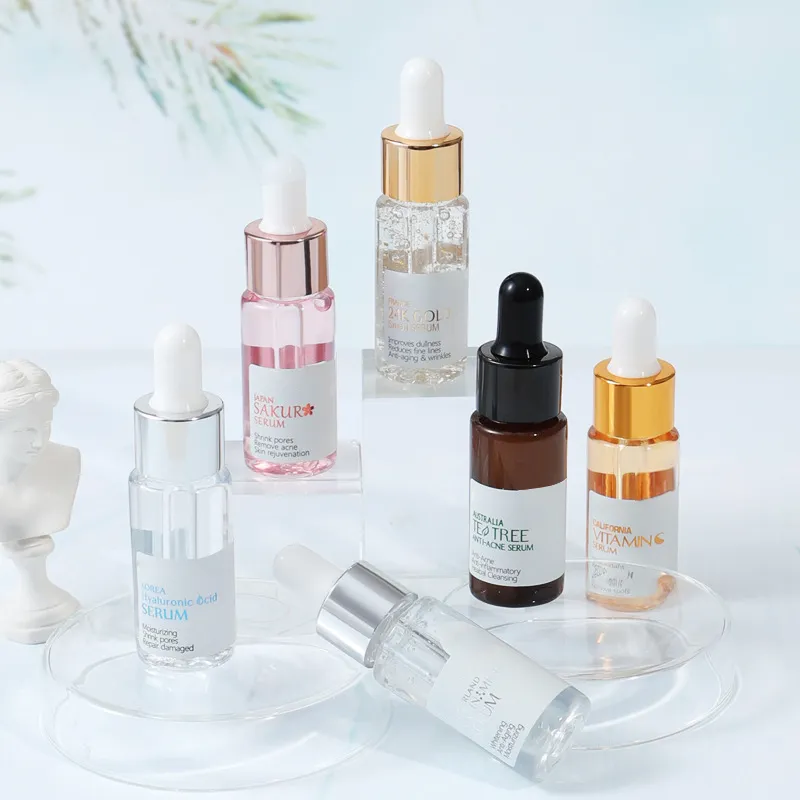
That could be one hero serum. XIRAN's existing private label range, for example, includes different face serum directions that can be useful when researching how broad one product category can become before defining your own positioning. XIRAN Private Label Face Serum Range
It could be a moisturizer plus cleanser. For a spa brand, it might make more sense to start with a professional facial product and complementary retail product.
The exact number matters less than whether every SKU has a job.
I would ask:
What product best expresses the brand's main promise?
Is it easy for the customer to understand?
Can it deliver a noticeable and repeatable product experience?
Does the retail price leave enough margin after manufacturing, packaging and fulfillment?
Can the first product naturally lead into future products?
A barrier-focused moisturizer, for example, can later lead into a cleanser, serum and mask. That creates a more logical product roadmap than launching five unrelated trending formulas.
I also would not build the concept entirely around a list of fashionable actives.
Ingredients matter.
But customers experience the finished product: the texture, absorption, fragrance, pump, residue, layering behavior and how it fits into their routine.
A trending ingredient can earn the click.
A good product is what earns the reorder.
At the end of Step 3, I would want:
Once the product concept is clear, I decide how much formulation development the brand actually needs.
There is no reason to custom formulate just because “custom” sounds more premium.
Private label generally starts from an existing manufacturer-developed formula. The brand applies its own identity and, depending on the project, may customize the packaging, fragrance, color, ingredient story or other elements.
I like this route when speed, lower development complexity and manageable initial investment matter.
It can be especially practical for first-time founders who need to validate the market before investing heavily in proprietary formulation work.
Custom formulation makes more sense when the brand has a specific texture, ingredient system, benchmark product, claim direction or consumer problem that existing formulas cannot adequately address.
The trade-off is more R&D.
You may need several sample rounds, ingredient sourcing, stability testing, packaging compatibility work and additional documentation before production.
For brands that need this level of differentiation, XIRAN's custom formulation service covers development from product requirements and formula design through sampling and optimization. XIRAN Custom Cosmetics Formulation
| If the Priority Is… | I Would Usually Explore… |
|---|---|
| Faster launch | Private label |
| Lower initial development cost | Private label |
| Proven formula platform | Private label |
| Unique sensory profile | Custom formulation |
| Specific ingredient combination | Custom formulation |
| Strong proprietary product positioning | Custom formulation |
| Testing market demand first | Private label |
| Established brand replacing an existing formula | Custom / OEM development |
Neither option is automatically better.
I want enough differentiation to make the product commercially meaningful without making the first launch unnecessarily difficult.
At this stage I want a clear answer to one question:
Are we selecting and adapting an existing formula, or developing a formula around our own technical brief?
Once that is decided, the manufacturer can give a much more meaningful development timeline and quotation.
You do not need to become a cosmetic chemist before contacting a manufacturer.
But “I want to make the best anti-aging serum” does not give an R&D team much to work with.
A useful brief should describe the customer experience and commercial requirements.
For example:
We want a lightweight daily facial serum for customers aged approximately 25–40 who dislike sticky skincare. It should absorb quickly, layer well under sunscreen and feel suitable for warm climates. We are interested in niacinamide, panthenol and hyaluronic acid, with a clean modern airless package and an accessible-premium retail position.
That brief gives me something I can develop.
It defines customer, texture, usage environment, ingredient direction, packaging and price positioning without telling the chemist exactly how to formulate it.
I would give the manufacturer:
The clearer the brief, the less likely the first sample is to miss the point completely.
At the end of this step, I would want a one- or two-page product brief that both the brand and manufacturer can use as the development reference.
I would not choose a skincare manufacturer based only on the lowest quotation or the longest certificate list.
I want to know whether the factory can actually support the type of product and business I am building.
A good manufacturing partner affects formula quality, packaging, testing, documentation, production consistency and the ability to reorder the same product later.
I would ask about:
Product capability. Does the manufacturer regularly produce the product type I am developing?
R&D support. Can its laboratory explain formulation trade-offs rather than simply say yes to every ingredient request?
MOQ. Can the production model support the brand now and as it grows?
Sampling process. How are sample revisions documented and approved?
Packaging support. Can formula/package compatibility be considered before production?
Quality systems. How are raw materials, bulk production, filling, finished products and batch records controlled?
Documentation. Can the manufacturer provide the information required for the intended sales market?
Export experience. Does it understand the markets where I intend to sell?
Reorder consistency. Can I reasonably expect Batch 5 to match the approved Batch 1?
Your manufacturer is not simply the company that fills the bottle.
It becomes part of your supply chain.
If you are comparing potential partners for the first time, this guide on how to work with private label skincare manufacturers goes deeper into the manufacturer–brand relationship and development process. How to Work With Private Label Skin Care Manufacturers
At XIRAN Skincare, the private label process can include formula selection or custom formulation, sample development, packaging coordination, production, quality control, documentation and international shipment. The objective is to move a brand from an idea or existing brief into a finished product rather than treating formula, packaging and production as unrelated purchases.
Before choosing a manufacturer, I would want:
This is the point where the idea becomes something you can actually touch.
I do not judge the sample only by whether I personally “like it.”
I go back to the product brief.
Does the texture match the target customer?
Is the serum sticky?
Does the cream spread too slowly?
Does fragrance linger longer than intended?
Does the product work underneath sunscreen or makeup if that is part of normal use?
Does the pump deliver the right amount?
Does the product still make sense at the target retail price?
I also like having a small number of people who genuinely resemble the target customer evaluate the prototype.
Do not ask only:
“Do you like it?”
Ask what they expected before using it, what they noticed first, whether they would use it regularly, what they found annoying, and whether the experience matches the intended price.
Repeated feedback matters much more to me than one person's opinion.
A nice sample is not yet a production-ready product.
Depending on the formula and market, the development program may also need stability work, microbiological testing, preservative-efficacy evaluation, formula/package compatibility and other safety or performance substantiation.
The exact test plan should follow the product rather than a generic checklist. FDA similarly states that there is no single mandatory testing regimen for every cosmetic product or ingredient, while manufacturers and responsible persons remain responsible for ensuring and substantiating product safety. FDA — Product Testing of Cosmetics
Once formula, color, fragrance and packaging are approved, I keep an approved reference sample.
That sample becomes extremely useful when production begins because everyone has a physical reference for what the brand actually accepted.
Before moving forward I would want:
I would involve packaging early, but I would not print thousands of cartons before the formula and regulatory information are settled.
Packaging must work technically as well as visually.
A thick cream may struggle through the wrong pump. An oxidation-sensitive formula may need additional protection. A glass bottle might look more premium, while a tube may be more practical for e-commerce and everyday use.
The formula and container need to work as a system.
Brands that need help turning that packaging direction into an actual commercial component can review XIRAN's custom packaging options, including stock containers and customized component/decoration directions. XIRAN Custom Cosmetic Packaging
But packaging also becomes part of regulatory preparation because artwork contains product identity, net contents, ingredient information, business details, warnings and other market-specific information.
Under MoCRA, companies need to understand responsibilities around safety substantiation, serious adverse-event reporting and, where applicable, facility registration and cosmetic product listing.
One point I would make especially clear to founders: FDA registration or product listing is not FDA approval.
FDA currently states that required cosmetic facilities generally renew registration every two years, while the responsible person must list marketed cosmetic products and update product listings annually. FDA also explicitly says that registration or listing does not indicate agency approval. FDA — Registration & Listing of Cosmetic Product Facilities and Products
For the EU, the framework is different.
Regulation (EC) No 1223/2009 requires a Responsible Person, a cosmetic product safety assessment and Cosmetic Product Safety Report, a Product Information File and product notification before the cosmetic is placed on the EU market. EUR-Lex — Regulation (EC) No 1223/2009 on Cosmetic Products
This is why I ask about sales markets during product development rather than after manufacturing.
The destination market can affect formula ingredients, claims, label text, safety documentation and packaging.
Before production, I would want:
Once the sample, packaging and artwork are approved, the project moves from development into operations.
This is where details that seemed small during sampling become important.
The factory should be working from the same approved formula, packaging specification, artwork file, color reference and golden sample that the brand approved.
I want raw-material control, batch documentation, bulk manufacturing controls, filling checks, packaging inspection and finished-product QC to be part of the process rather than relying only on a final visual inspection.
For brands that want to understand what happens after development is approved, XIRAN's skincare production process shows how manufacturing moves through production and quality-control stages before finished goods are released. XIRAN Skincare Production Process
I do not promise every skincare brand a “90-day launch.”
An existing private label formula with available packaging can move much faster than a fully custom formula with unique packaging and a more extensive test program.
Instead, I would create a launch schedule around actual dependencies:
| Phase | Key Work |
|---|---|
| Concept | Market, customer, hero product |
| Development | Formula choice/custom formulation and samples |
| Validation | Testing and packaging compatibility |
| Pre-production | Packaging order, artwork and documentation |
| Production | Bulk manufacturing, filling, QC and packing |
| Logistics | Export, freight, warehouse/3PL |
| Launch | Product content, inventory live, marketing activation |
The most common timeline mistake is treating every stage as sequential.
Some work can overlap. Brand design can develop while samples are being refined. Product photography planning can begin before inventory arrives. Compliance documents and packaging artwork can progress while final production scheduling is being confirmed.
What should not happen is printing final packaging around information that is still changing.
Before the batch begins I would want:
A product is not launched because the factory has finished making it.
It is launched when customers can discover, understand, purchase and receive it.
I would start marketing before inventory arrives.
That does not mean making unsupported claims about a product that has not been finalized. It means building the brand's audience and helping potential customers understand the problem the product is being created to solve.
You do not need to sell everywhere.
| Channel | Why I Might Use It |
|---|---|
| DTC website | Strong control of story, margin and customer data |
| Amazon / marketplaces | Existing buying traffic and product discovery |
| TikTok Shop / social commerce | Strong for demonstration-led products and creator content |
| Salons / spas | Useful for professional or treatment-oriented skincare |
| Distributors | Useful for geographic expansion |
| Boutiques / retail | Adds physical discovery and credibility |
The right choice depends on the customer from Step 1.
McKinsey's 2026 research shows how strongly beauty discovery and sales continue to shift toward e-commerce, social platforms and marketplaces. The lesson I take from that is not “sell everywhere online,” but that brands need to decide deliberately where discovery and purchase should happen.
For brands working with an overseas manufacturer, the operational side does not end when production finishes. Warehousing, export preparation and international shipment also need to fit the launch plan. XIRAN Warehousing & Logistics Services
The first 30–90 days should answer questions.
Which message produces the highest conversion?
Which objections appear repeatedly?
Are customers finishing the product?
Are they coming back?
Is one sales channel profitable while another looks busy but loses money?
Which customer segment is buying that I did not originally expect?
Which complementary product are customers already asking for?
That information should influence the next production order.
After launch, I want a dashboard containing at least:
Most early problems are not caused by one terrible decision. They come from several reasonable-looking decisions stacking up.
| Common Mistake | Why It Causes Problems | What I Would Do Instead |
|---|---|---|
| Launching too many SKUs | Spreads cash, content and inventory too thin | Start with a hero product or focused range |
| Choosing ingredients before positioning | Produces a generic trend-led product | Define customer and benefit first |
| Picking manufacturer only by unit price | Ignores testing, QC and reorder consistency | Evaluate total manufacturing capability |
| Customizing everything immediately | Raises MOQ, tooling and development risk | Customize where customers will notice |
| Printing packaging too early | Formula/INCI/compliance changes create rework | Finalize technical information first |
| Ignoring packaging compatibility | Formula can leak, oxidize or dispense poorly | Test formula and final pack together |
| Treating FDA listing as approval | Creates inaccurate compliance claims | Understand the actual MoCRA obligations |
| Spending all capital on inventory | Leaves no budget for customer acquisition | Preserve marketing and reorder cash |
| Copying a competitor's formula story | Creates weak differentiation | Build around your own customer problem |
| Expanding before the first SKU is proven | Multiplies operational complexity | Use sales and retention data first |
I would keep this table visible throughout development.
Every time the project becomes more complicated, I would ask whether that complication actually helps the customer or improves the commercial product.
The first successful SKU is not the signal to immediately launch ten more.
I would look for evidence first.
If customers repeatedly buy the moisturizer but also ask for a gentler cleanser, the next product becomes fairly obvious. If people love the product but complain that the 30 ml package finishes too quickly, perhaps size architecture should be addressed before expanding the formula range.
I would use the first product to learn three things: what customers value, what they repurchase and what naturally comes next in the routine.
Then expansion becomes much less speculative.
Operationally, I would also start looking at reorder lead times, packaging availability, second-source options for critical components, forecast accuracy and whether the manufacturer can support higher production volume without changing the approved experience.
A scalable skincare brand is not simply a brand that can sell more.
It is one that can make the same good product again when demand increases.
If I had to reduce manufacturer selection to one idea, it would be this:
Do not look only for a factory that can make skincare. Look for a partner that fits the product and business you are actually building.
A first-time DTC founder, a salon brand and an established skincare company replacing its current supplier do not need exactly the same manufacturing relationship.
I would ask potential manufacturers about product specialization, formulation support, MOQ, samples, testing, packaging compatibility, QC, regulatory documentation, export markets, lead times and how they manage reorders.
I also pay attention to the questions the factory asks me.
A manufacturer that immediately sends a price without understanding market, formula type, packaging, quantity or product positioning may be treating the project as a commodity order.
A better development conversation usually involves questions.
At XIRAN Skincare, I do not think a first-time founder needs to arrive with every technical decision already made.
A useful starting point is a clear product idea.
Tell us who the customer is, what kind of product you want, which market you plan to sell in, what texture or ingredients matter to you, your packaging direction, expected first quantity and budget position.

From there, the project can move through existing private label formulas or more customized formulation development, followed by samples, packaging coordination, production, quality control, documentation and shipment. XIRAN's current service model covers those stages for private label and custom skincare projects.
What I would not recommend is trying to make every possible decision before speaking with the manufacturer.
You need enough clarity to give direction.
You do not need to solve cosmetic chemistry, packaging engineering, production and international compliance alone before asking for help.
Starting a skincare line is not about making every decision at once.
It is about making the important decisions in the right order.
I would start with the customer, find a product worth building, create a realistic business model, decide how much formulation customization is actually necessary, choose a manufacturing partner carefully and treat testing, packaging and compliance as part of product development rather than problems to solve after production.
Then I would launch at a scale the business can support and use real customer behavior to decide what comes next.
The first product does not need to look like a global skincare company.
It needs to give the right customer a clear reason to try it—and enough product quality and experience to make them want to buy it again.
Generally speaking, the cost of launching a skincare line ranges from approximately $2,000 to $30,000 for private-label products, whereas custom formulations can cost anywhere from $30,000 to $100,000. These figures depend on factors such as formula development, packaging, MOQs, testing, compliance, shipping, and marketing. Compared to custom formulations and exclusive packaging designs, utilizing existing private-label formulas and standard packaging typically requires less investment in research and development.
Yes. In many cases I prefer one strong hero product to a large first collection. It reduces inventory and content complexity and gives the brand a clearer way to test demand. Once sales and customer feedback reveal what people want next, the range can expand more intelligently.
The Minimum Order Quantity (MOQ) depends on the formula, packaging, and customization requirements. For existing or established formulas paired with standard packaging, the MOQ typically ranges from 500 to 3,000 units; however, if custom packaging is used, the MOQ is usually 5,000 units or more.
No. Private label normally starts with an existing manufacturer-developed formula, while custom formulation is developed or adjusted around a more specific technical brief. Private label can be faster and less development-intensive; custom formulation gives the brand more control over the product concept.
Generally, the timeframe ranges from 3 to 18 months, depending on the project's development requirements. A private-label approach typically allows for a market launch within 2 to 5 months; however, custom formulations take longer, as they involve additional steps such as formula approval, testing, packaging procurement, regulatory compliance, production, and shipping.
At minimum, I would provide the product type, target customer, target market, formula direction, preferred ingredients or claims, packaging preference, fill size, expected order quantity and target price position. A short, useful brief usually produces a much more accurate quotation than simply asking, “How much does a serum cost?”