It's not too hard to find a skincare contract manufacturer. Finding one that can develop your formula, manufacture it consistently, work with your budget and support your brand as it grows is another story.
Some factories are structured around large, repeat production orders. Some have smaller private label programs where a new brand can be launched with an existing formula. Some can handle almost anything, from early formulation work to filling, packaging and shipping.
On a manufacturer's homepage those differences are more important than one might assume.
Let’s say you’re developing a facial serum. You need to know if the manufacturer can create a new formula or if they can only make minor changes to an existing one. If you are moving an existing moisturiser to another factory, product development services might be less important than formulation ownership, process validation and batch consistency.
I also pay a lot of attention to minimum order quantities. A supplier touting a low MOQ may only be applying that number to off-the-shelf formulas, with its custom manufacturing program demanding significantly more inventory.
While preparing this guide, I researched 10 skincare contract manufacturers in China, the US, the UK, France, South Korea and European manufacturing networks. I’ve looked at their public production capacities, manufacturing services, ordering conditions, and how they fit brands at different stages.
I want to help you know which companies should be on your shortlist – and what you need to check before you ask for a quote.

Here are 10 skincare contract manufacturers to consider: XIRAN Skincare, Cosmetic Solutions, Dynamic Blending, RainShadow Labs, THG Labs, Orean, Laboratoires BEA, COSMAX, Kolmar Korea and Made By Nature Labs. They provide custom formulation, private label manufacturing, filling, packaging, and product development in a wide range of combinations.
For startups, suppliers with established formulas and manageable minimums might be more practical. Established brands can benefit from manufacturers with dedicated R&D teams, technology transfer services and scalable production. The right choice depends on product type, order volume, formulation ownership, target market and long term manufacturing needs.
When I evaluate a contract manufacturer I don’t look at the number of products in its catalogue.
Having a wide range of skin care products is nice, but it doesn't tell me if the company can actually make a formula developed elsewhere, solve a packaging compatibility problem, or ensure consistent quality between production batches.
For a skincare project I would want to know five things: formulation capabilities, manufacturing and filling equipment, quality-control procedures, packaging arrangements and commercial requirements of the manufacturer.
I also distinguish between contract manufacturing and simple private labelling.
A classic private label program could mean selecting an existing serum or cream, branding it with your own label and ordering finished products. Contract manufacturing may involve the production of a custom or customer-owned formula, the development of a new product, the sourcing of ingredients, the filling of customer-supplied packaging, or the transfer of production from another facility.
The models often overlap and the terminology varies between vendors.
It’s the actual scope of work that counts.
If you are not familiar with the different types of production arrangements, our OEM and ODM skincare manufacturing services provide an overview of how product development, packaging and manufacturing can all be combined together.
The following table summarizes each company's published manufacturing model and ordering requirements.
| Manufacturer | Location | Manufacturing Capabilities | Published MOQ | Best Suited For |
|---|---|---|---|---|
| 1. XIRAN Skincare | China | Custom formulation, OEM/ODM, filling, packaging and finished skincare | when using existing packaging materials is in the range of 500 to 1,000 units. | Startups and growing international brands |
| 2. Cosmetic Solutions | USA | Custom R&D, skincare manufacturing, filling and turnkey packaging | 500 units/SKU for private label; custom batches from 100 kg; first-order minimum $20,000 | Professional and growing skincare brands |
| 3. Dynamic Blending | USA | Product development, custom manufacturing, packaging and brand support | From 2,500 finished units | Funded startups and growing brands |
| 4. RainShadow Labs | USA | Stock formulas, semi-custom, full custom and bulk filling | Stock: 10 gallons; custom: 25 gallons | Spa brands, DTC businesses and bulk buyers |
| 5. THG Labs | UK | Bespoke formulation, testing, production and filling | No fixed MOQ; project-specific quotation | Premium and formulation-driven brands |
| 6. Orean | UK / USA | Custom formulation, technology transfer, bulk production and filling | 10,000 units | Established brands and production transfers |
| 7. Laboratoires BEA | France | Custom cosmetics, bulk manufacturing, filling and full service | 5,000 units with customer packaging; 10,000 full service | French-made and medium-to-large projects |
| 8. COSMAX | South Korea / Global | ODM, R&D, product innovation and large-scale manufacturing | Not publicly specified | Innovation-led and scaling brands |
| 9. Kolmar Korea | South Korea | OEM/ODM, skincare research, production and quality management | Not publicly specified | R&D-driven and established skincare brands |
| 10. Made By Nature Labs | EU manufacturing advertised | Existing formulas, custom R&D, packaging and finished skincare | 500 units stock; custom from 1,000 units | Startups and natural skincare brands |
Minimums may differ by formula, packaging, fill size, factory, and customization level. The figures should be verified in a current quotation.
Best for: Startups and growing brands seeking custom skincare development and manufacturing in one place.
XIRAN Skincare is a China based skincare manufacturer offering private label, OEM, ODM, custom formulation and finished product manufacturing services.
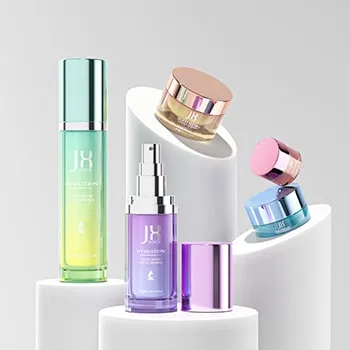
In our facial skincare product range we offer cleansers, toners, serums, moisturisers, facial oils, eye care and masks. We also assist with packaging selection, label design, sampling and production preparation so that brands can coordinate multiple development activities with one manufacturing partner.
If a brand doesn’t have a formula we can start with an existing formula and discuss changes to ingredients, texture, fragrance or packaging. Our laboratory and production services also offer custom development for brands that have more specific requirements.

As a general rule, the minimum order quantity (MOQ) for Xiran Skincare products is usually 500-1000 pcs per item. This MOQ may be subject to adjustment in case custom packaging or special materials are needed.
I would say XIRAN is especially relevant to independent DTC brands, international skincare startups and growing businesses planning coordinated product ranges rather than isolated SKUs.
Before quoting a project, I would want to see the target market, route of formulation, intended claims, packaging and expected reorder volume. Those details decide whether an existing formula is practical or needs further development.
For international customers the manufacturing documentation, testing responsibilities, shipping terms and market specific regulatory requirements should be agreed prior to the start of production.
Best for: Professional skincare brands, medspas, and growing companies with a fixed manufacturing budget.
Cosmetic Solutions is a skin-care development and manufacturing company based in Boca Raton, Florida. Services provided include custom formulation, contract manufacturing, filling, packaging, labelling and delivery.
The company’s published manufacturing capabilities include liquids, gels, creams, oils and emulsions and are supported by mixing equipment and automated or semi-automated filling systems.
I think that is very relevant to brands developing multiple facial skincare formats. A business planning a cleanser, treatment serum and moisturiser can consider if the formulations and packaging can be managed in one manufacturing program.

Its published commercial terms are worthy of careful attention.
Cosmetic Solutions requires a minimum order of 500 units per SKU for private label orders and custom formulation batches begin at 100 kilograms. Also, its inquiry information shows a minimum first-time opening order of $20,000.
That last number is important. While a product may have a low MOQ, the overall project may not be inexpensive.
Cosmetic Solutions would be on my shortlist for a funded skincare startup, professional treatment brand or growing business looking for US manufacturing with formulation and packaging support.
Before moving forward I would ask if the opening-order threshold applies to the proposed project, how the custom development fees are structured and what documentation is included.
I would also verify ownership of formula and the ability to transfer future production if the brand changes manufacturers.
Best for: Brands that need help with product development, manufacturing and commercialisation.
Dynamic Blending is a US-based contract manufacturer that provides research & development, product manufacturing, packaging-related services, brand design and fulfilment coordination.
Its skincare capabilities consist of creams, lotions, serums, cleansers, gels and other topical formulations. The company works with clients who come with an early product concept or a developed formulation.
That flexibility is one reason I would consider it for a founder who knows the product they want to sell, but hasn't quite worked through the formulation and manufacturing requirements yet.
On Dynamic Blending’s published turnkey service page, the manufacturing minimum is 2,500 market-ready units.

I would consider that to be the first commercial reference, rather than earlier material that may reflect a different amount.
If you have a brand that the retailers want, an online audience, or enough startup capital to support a larger first order, then this manufacturing model may be worth investigating.
But when there are multiple SKUs involved, 2,500 units can be a significant inventory commitment.
Before asking for samples I would ask if the minimum is per formula and per package size and what is included in the quoted price.
I would also ask how development, stability testing, packaging sourcing, artwork approval and fulfilment coordination are charged, as turnkey support doesn't automatically mean every service is included in the production price.
Best for: Spa brands, independent skin care businesses and companies that buy formulas in bulk.
RainShadow Labs is an Oregon-based skincare manufacturer that provides ready-made formulations, semi-custom development, fully custom formulations and filling services.
Its published skincare catalogue contains facial cleansers, serums, moisturisers, toners, oils and masks.
One rather useful feature of RainShadow’s offering is the way it differentiates between its purchasing models.
The direct purchase program enables brands to order samples and specific ready-made products, whereas private label stock formulations are available with a 10-gallon minimum. Custom and semi-custom formulations start at 25 gallons.

RainShadow, unlike manufacturers who quote a fixed number of bottles, uses bulk-volume minimums.
That means the number of finished units is dependent on the fill size you are aiming for. The company also shows examples of how bulk can be converted into retail products for buyers to view.
RainShadow would be a consideration for a spa or an emerging DTC brand looking to trial existing formulas before committing to exclusive development.
Its packaging arrangement is also worth mentioning. Customers can use their own packaging or recommended vendors, and components are evaluated before filling, the company says.
I would ask about changes to the formula , compatibility testing with the packaging , minimum bulk quantities and how many finished units would be expected from the batch you chose , before asking for a quote .
These details are more useful than comparing its gallon-based MOQ directly with a competitor's per unit minimum.
Best for: Premium skin care brands and businesses that need specialised formulation development.
THG Labs is a UK based cosmetics manufacturer and development company with extensive published capabilities in skincare formulation.
Its product range comprises cleansing gels, balms, oils, micellar waters, facial serums, moisturisers, eye treatments and specific dermocosmetic products.
Targeted skincare applications are also described by the company, including products developed around hydration, pigmentation, blemishes and other cosmetic concerns.

I find THG Labs particularly useful when a brand has a detailed product brief and requires something more than a lightly modified catalogue formula.
It offers formulation research, regulatory support, packaging, compounding, production and quality assurance.
THG Labs says it does not have a specific MOQ for all projects. Instead, the order requirements are checked against the suggested product and manufacturing set-up.
I would not read that as a promise that any amount would be accepted.
Complex active serum, conventional moisturiser and specialised cleansing product may have different production and development needs.
I would consider THG Labs as a manufacturer for premium skincare brands, established DTC businesses and companies developing technically demanding product concepts.
Before putting it on the short list, I would want to see a project specific minimum, expected development milestones, testing responsibilities and packaging requirements.
I would also like to clarify the manufacturing location for sheet masks and hydrogel masks: THG Labs states that these formats are purchased through overseas partners and are not manufactured in-house.
Best for: Established skincare brands seeking custom formulations, technology transfer, or larger production runs.
Orean has operations in the United Kingdom and United States and provides skincare and personal-care contract manufacturing.
Its services are more than just product development. The company lists custom formulation, technology transfer, bulk manufacturing, filling and packaging, and regulatory support.
I think the technology-transfer service is most relevant for brands who are thinking about changing manufacturers.
Moving a formula from one facility to another is more than just a list of ingredients. The new manufacturer must understand the original product specification, manufacturing process, packaging and acceptance criteria.

Orean also describes a phased sample approval process from lab development to representative packaging and production validation.
The minimum order quantity on its current service page is 10,000.
Which makes Orean more relevant for businesses with existing demand, retailer commitments or the resources to support a sizeable first production order.
But I would consider it for a skincare company that knows what products are selling, and wants to increase their manufacturing capacity, or combine production.
Before asking for a quote, I would verify whether the MOQ applies per SKU, per formula or per production project.
Given Orean is operating in more than one country, I would also specify the intended manufacturing facility, especially if UK production or product origin is important to the brand.
Best for: Brands looking for French manufacturing, custom facial skincare, and medium to large production volumes.
Laboratoires BEA has cosmetics production sites in Provence, France, and offers existing formulas and custom product development.
Its published facial skincare line includes serums, toners, make-up removers, creams, milks, masks and other treatment products.
The company also describes equipment for emulsification, mixing, hot processing, filling, labelling and secondary packaging manufacturing.
I am interested in the difference between bulk supply and the making of finished products.

For facial cosmetic formulas delivered in bulk, BEA sets a minimum batch volume of 300 litres.
Minimums on finished products are 5,000 units when the customer supplies the packaging and 10,000 for full-service manufacturing.
These are vastly different purchase arrangements.
I’d consider BEA for a brand that values making in France, requires custom skincare development, or wishes to produce a larger collection.
It may also be attractive to companies looking to position themselves around natural or organic products, provided the exact formula and certification requirements are confirmed.
Before going further, I would ask if the proposed formula is a pre-existing catalogue option or requires custom development.
BEA states it takes 6-12 months to develop a custom cosmetic formula. Brands with firm launch dates should set milestones early on.
I would also verify the purchase of packaging, the extent of certification, testing costs and the real minimum for each proposed product.
Best for: Innovative skincare brands looking for advanced ODM development and scalable manufacturing.
COSMAX is a leading South Korean cosmetics ODM manufacturer with R&D and manufacturing facilities in several countries.
Its official website lists original development manufacturing, original branding manufacturing, research and innovation services and global production capabilities.
COSMAX has production bases in South Korea, China, the United States, Indonesia and Thailand. The correct facility for a skincare project should therefore be identified at the time of the supplier inquiry.
When a brand wants more than just a standard cleanser or moisturiser, I turn to COSMAX.

Businesses looking to differentiate textures, ingredient systems, product delivery formats or a broader skincare range requiring significant technical support may be interested in its development model.
But a vast global manufacturing network might not be the right fit for every startup.
The official pages viewed for this guide do not list a general skincare MOQ for COSMAX.
I would avoid assuming it needs a specific quantity just because it is small, but I would also avoid calling it a low-MOQ manufacturer without evidence.
If I was working with an established or growing brand I would look into their development program, manufacturing site, sample approval process and production requirements.
I would also enquire about intellectual property ownership, exclusivity, technology transfer, and if reorders need to be done at the original production facility.
Best for: Skin care brands that are R&D focused, companies creating technically differentiated product lines.
Kolmar Korea is a South Korean ODM manufacturer providing skincare research, product development, manufacturing and quality-management services.
Official business data lists toners, lotions, emulsions, creams, essences, facial masks and cleansers among its manufacturing categories.
Kolmar describes an ODM model which includes market research, product planning, development, production, and shipment of finished products.
This makes it a relevant candidate for brands looking for support on formulation and industrial production.

I would be very interested in Kolmar for a skincare company that knows its target market and wants to develop a series of related formulas.”
For example, creating a treatment serum as well as a moisturiser and cleanser requires thinking about how the products will work together, rather than treating each formula as an unrelated project.
Kolmar does not mention a published MOQ for all skincare projects on its official English pages.
Its business information does include facilities capable of handling various batch sizes but this should not be taken as a guarantee of a low minimum.
I would shortlist Kolmar for growing and established brands with specific product requirements and an interest in South Korean development capabilities.
I would clarify production facility, formula ownership, minimum per SKU, testing scope and arrangements for ongoing production and reorders before you ask for a quote.
Best for: Indie beauty brands, natural skin care startups and smaller custom formulation projects.
Made By Nature Labs is a private label skincare and custom formulation company. According to the website, manufacturing is EU-based.
Its catalogue includes facial cleansers, toners, serums, moisturisers, creams, masks and skincare products.
The company has more than 400 personal-care formulations off the shelf, giving a startup several directions to evaluate before commissioning an entirely new product.
Its published minimum on select current private label products begins at 500 units per product.

According to the company’s separate development page, the MOQ for fully custom formulation starts at 1,000 units per product, depending on the formula and product volume.
This is an important distinction. A brand that buys an existing serum may have different costs and development needs than a brand that orders a proprietary treatment formulation.
If you are a naturally positioned DTC brand looking to release a small collection of products or test demand before growing, I'd look at Made By Nature Labs.
The company also provides packaging, labelling and custom formulation services.
I would ask for samples, verify the actual manufacturing facility and compare commercial terms for existing and exclusive formulations before moving forward.
Its sales materials refer to EU production but its legal business information indicates a Bulgarian company. Brands making specific country of origin claims should seek confirmation of the locati0n of production of their order.
Not a single manufacturer on this list that I would recommend to every beauty brand.
A first-time founder launching one facial serum has different needs than an established retailer planning 20 products across multiple categories.
I would begin by narrowing down the list to manufacturers that have a production model that suits the busines
| Your Brand's Situation | Manufacturers Worth Investigating |
|---|---|
| First skincare launch, around 500–1,000 units | XIRAN Skincare, Made By Nature Labs |
| US manufacturing with existing formulas | RainShadow Labs, Cosmetic Solutions |
| Funded startup needing development and brand support | Dynamic Blending, Cosmetic Solutions |
| Premium skincare with specialized formulation requirements | THG Labs, COSMAX, Kolmar Korea |
| Established brand requiring technology transfer | Orean |
| French-made skincare and larger production runs | Laboratoires BEA |
| Growing international DTC brand planning several SKUs | XIRAN Skincare, RainShadow Labs |
| Brand seeking Korean ODM manufacturing | COSMAX, Kolmar Korea |
These are suggested starting points based on published capabilities, not a quality ranking.
I would contact two or three manufacturers with the same product brief and compare their responses rather than immediately choosing the lowest advertised MOQ.
One of the most common problems with manufacturer searches is language for production services.
Some suppliers use private label and OEM interchangeably. Some make the distinction between established formulas and custom development and manufacturing products using customer-owned intellectual property.
I find it more useful to look at the practical responsibilities for procurement.
| Manufacturing Model | What It Typically Involves | When It Makes Sense |
|---|---|---|
| Private Label | Select an existing formula and apply brand-specific packaging or labels | Testing a product category or launching quickly |
| OEM Manufacturing | Manufacture products to agreed customer specifications | Brands with defined technical requirements |
| ODM Manufacturing | Manufacturer contributes to product design, formulation, and production | Brands requiring development support |
| Contract Manufacturing | Manufacture products under a defined production agreement | Custom, recurring, or outsourced manufacturing projects |
| Toll Manufacturing | Manufacture or process products using some customer-provided materials, formulas, or components | Brands controlling more of the supply chain |
If your brand already owns the formula and only needs production capacity, our separate guide to skincare toll manufacturers explores that manufacturing model in more detail.
For brands that have not yet selected a formula, I would first examine whether an existing private label product meets the brief or whether custom development is necessary.
Once you have a short list of potential suppliers, I would focus on the details that are easy to miss when comparing introductory quotations.
Just because the brand paid a development fee doesn’t automatically mean the brand owns a custom formula.
The agreement should clarify who owns the formulation, if it is exclusive, what technical documents the brand can access, and what happens if manufacturing is moved to another facility.
If you are transferring an existing product, make sure you have legal authority to provide the formulation and manufacturing information to another company.
Ask the manufacturer to quote you both the initial production minimum and the reorder minimum.
These may be different.
For 1,000 serum bottles project, you may need to purchase a larger amount of custom components especially if the brand requires special pumps, decoration or moulded packaging.
For example, three different formulae at 1,000 units each total 3,000 finished goods, not considering packaging variations.
Also I would know who has the unused bottles, cartons and closures after the first production run.
I would ask what the factory's procedures are for receiving raw materials, batch documentation, in-process controls, specifications for finished product and release of product.
Appropriate testing may include microbiological quality, preservative efficacy, stability, compatibility and support of specific performance claims, depending on the product.
The manufacturer should disclose which tests are done in-house, which are outsourced, and what documentation the brand receives.
A quality certificate does not tell you whether a given formula has done all the work required for its target market.
A skincare manufacturer may be experienced with serums and creams, but airless pumps, highly viscous balms, tubes or sheet masks all have different equipment requirements.
I would also like to know if the proposed packaging has been tested with the actual formula and whether the production will be in-house.
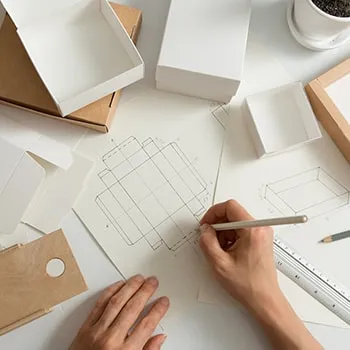
If you are a brand that is considering customised containers, our skincare packaging customisation service will explain some of the available packaging directions.
Packaging decisions should be made along with formulation development, not after the bulk product has already been approved.
There must be a written understanding between the manufacturer and the brand as to who is responsible for product safety, documentation, notification and labelling.
For products marketed in the U.S., the FDA’s Modernisation of Cosmetics Regulation Act guidance sets out applicable requirements, including safety substantiation and certain facility registration and product listing requirements, with applicable exemptions.
Regulation (EC) No 1223/2009 sets the basic framework for cosmetics in the European Union.
A product manufactured in a particular country is not necessarily sold in all destination markets.
I would clarify these responsibilities before agreeing to bulk production, particularly for brands that sell across multiple regions.
A skincare contract manufacturer should do something more than just transform ingredients into finished products.
The right partner needs to understand your product requirements, support a proper manufacturing process, and help you plan production around the realities of your business.
For a startup that could mean using an existing formula and keeping the first order manageable. For a growing brand, that might mean creating proprietary formulas, improving packaging or building out more robust production capacity.
For a well-established skin care company, formula ownership, quality consistency, technical transfer, and supply planning can be the deciding factors.
I would start with a brief product brief and compare manufacturers against the same requirements. Ask about specific production terms, what is included in the quoted price, and ensure that responsibilities are documented before placing an order .
XIRAN Skincare offers private label and custom skincare manufacturing services, providing support for formulation, packaging development, and finished product manufacturing.
If you are working on a skincare project, please contact our team with details on your product type, target market, expected quantity, and preferred manufacturing model.
The best way to start looking for a manufacturing arrangement that works is with a clear brief, not just for the first order, but for the products you will need to manufacture later.