Moisturizer is one of the most important products in just about every skin care line. A good moisturizer can be a repeat purchase product and a core part of the customer’s routine if a brand is focused on sensitive skin, anti-aging, barrier repair, brightening, acne prone, clean beauty or daily hydration.
I have learned that making a private label moisturizer is not just about choosing a cream base and putting a logo on it. The successful moisturizer needs a clear product direction, suitable formula concept, comfortable texture, stable ingredients, packaging selection, sample testing, MOQ planning, lead time control, bulk production and documents support.
The question for skincare brands and startup founders is not just, “Can this manufacturer make a moisturizer?The better question is “Can this manufacturer help me get my moisturizer idea to market and make it right for my target customer?”
In this guide, I’ll walk you through how I would go about developing a private label moisturizer, and I’ll introduce 8 manufacturers that skincare brands can look at when they’re looking for moisturizer manufacturing support.
Moisturizer is a useful skincare product that is in high demand in the market. It's something customers use everyday and if the texture, skin feel and results are right for them they are more likely to buy again.
I like this category also because moisturizer can be developed in many directions. One brand may introduce a lightweight gel cream for oily skin, a ceramide barrier cream for sensitive skin, a rich nourishing cream for dry skin, a brightening moisturizer for dull skin or an anti-aging cream for mature skin.
That gives brands a lot of flexibility. A moisturizer can be sold on its own as a hero product or as part of a full skincare routine with a cleanser, toner, serum, sunscreen or mask.
Moisturizer is also easier for customers to grasp than a lot of niche skincare products, so it’s a good choice for startups. The trick is making the formula direction, texture, packaging and claims clear enough to the target market.
If I was creating a moisturizer, the first step I would take is to decide what direction the product will go. This step impacts the whole project.
An oily skin moisturizer should not feel heavy or greasy. When purchasing a moisturizer for dry skin, make sure it doesn’t evaporate too fast. Moisturizers for sensitive skin should focus more on comfort and barrier support. A luxury anti-aging cream might need a richer texture, an active ingredient story, and fancier packaging.
Brands can make moisturizer products based on various themes such as daily hydration, skin barrier care, lightweight oil-free moisturizing, anti-aging support, brightening care, post-treatment comfort, men’s skincare, teen skincare, or clean beauty.
Once the product direction is set, the manufacturer can assist with formula concept, active ingredient direction, texture options, packaging choice, MOQ, lead time and testing plan.
A good moisturizer formula should be well balanced. It needs to hydrate the skin, support the product claim and still feel comfortable enough to use daily.
A basic hydrating moisturizer formula might highlight humectants like glycerin, hyaluronic acid, betaine, or trehalose. A barrier repair moisturizer formula can contain ceramides, cholesterol, fatty acids, squalane or panthenol. The formula might include niacinamide, vitamin C derivatives, licorice extract or other tone-evening ingredients for a brightening moisturizer.

If you're in the business of anti-aging, think peptides, antioxidants, and nourishing emollients.
But I wouldn’t choose things just because they’re trendy. The manufacturer should help the brand think through ingredient compatibility, stability, skin feel and target price and claim language.
The more ingredients, the better the moisturizer is not always true. It’s the formula that meets the customer’s need and feels good enough to use daily.
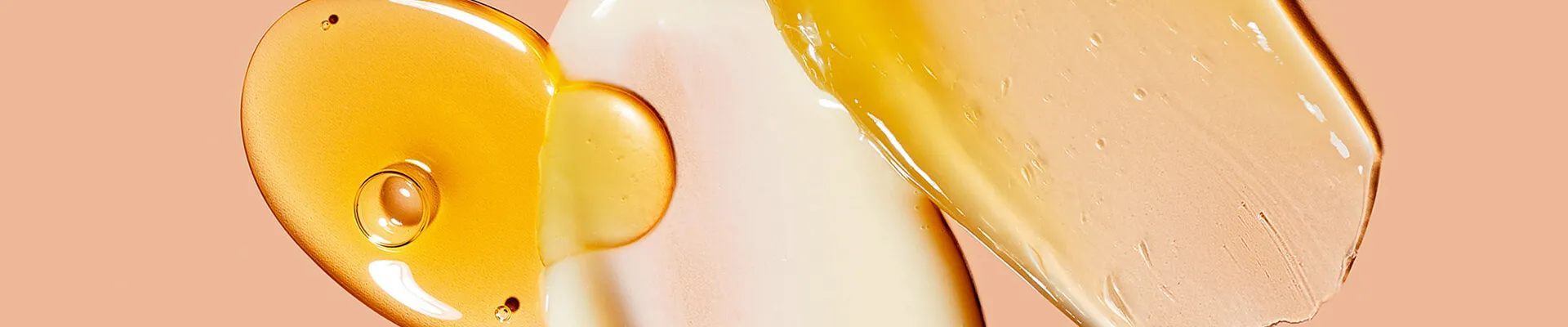
Texture is one of the top reasons why customers either love or hate a moisturizer. Texture can make a huge difference to the feeling of the same formula concept.
A light gel cream or lotion formula might be better for oily or combination skin. A richer cream or balm-cream may work better on dry skin. If I had sensitive skin I would look for something soft, non-sticky and fragrance-free or low fragrance. For premium brands, texture should be elegant, smooth and refined.
Sample testing, I would look at absorption speed, stickiness, after-feel, layering with sunscreen or makeup, scent, color, packaging compatibility.
A good manufacturer can calibrate the texture based on feedback. For example, the brand may want the cream to feel lighter, richer, less sticky, more cooling, more matte or more suitable for humid climates.
Packaging is more than just appearance. The impact of MOQ, product stability, filling process, customer experience and brand positioning.
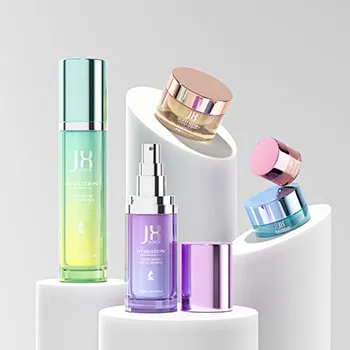
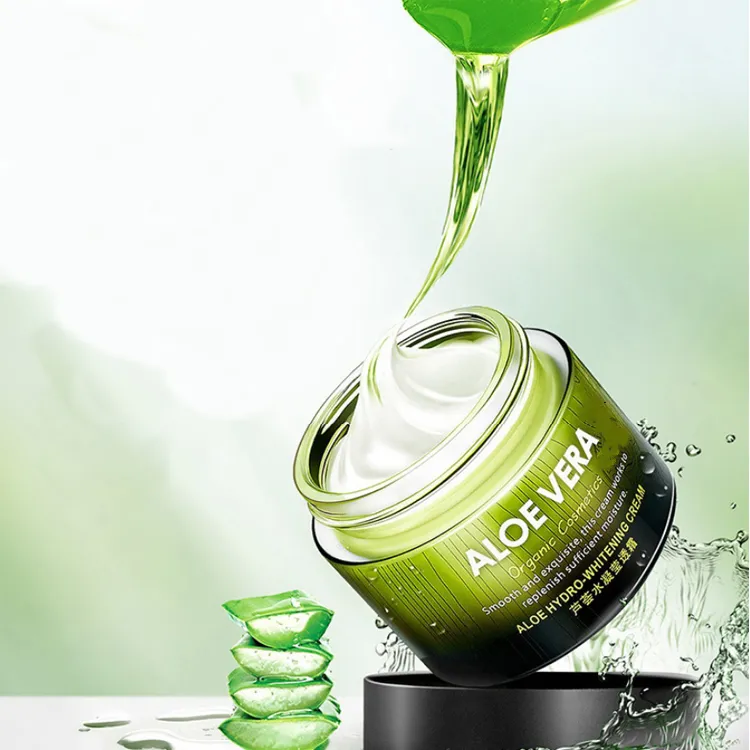
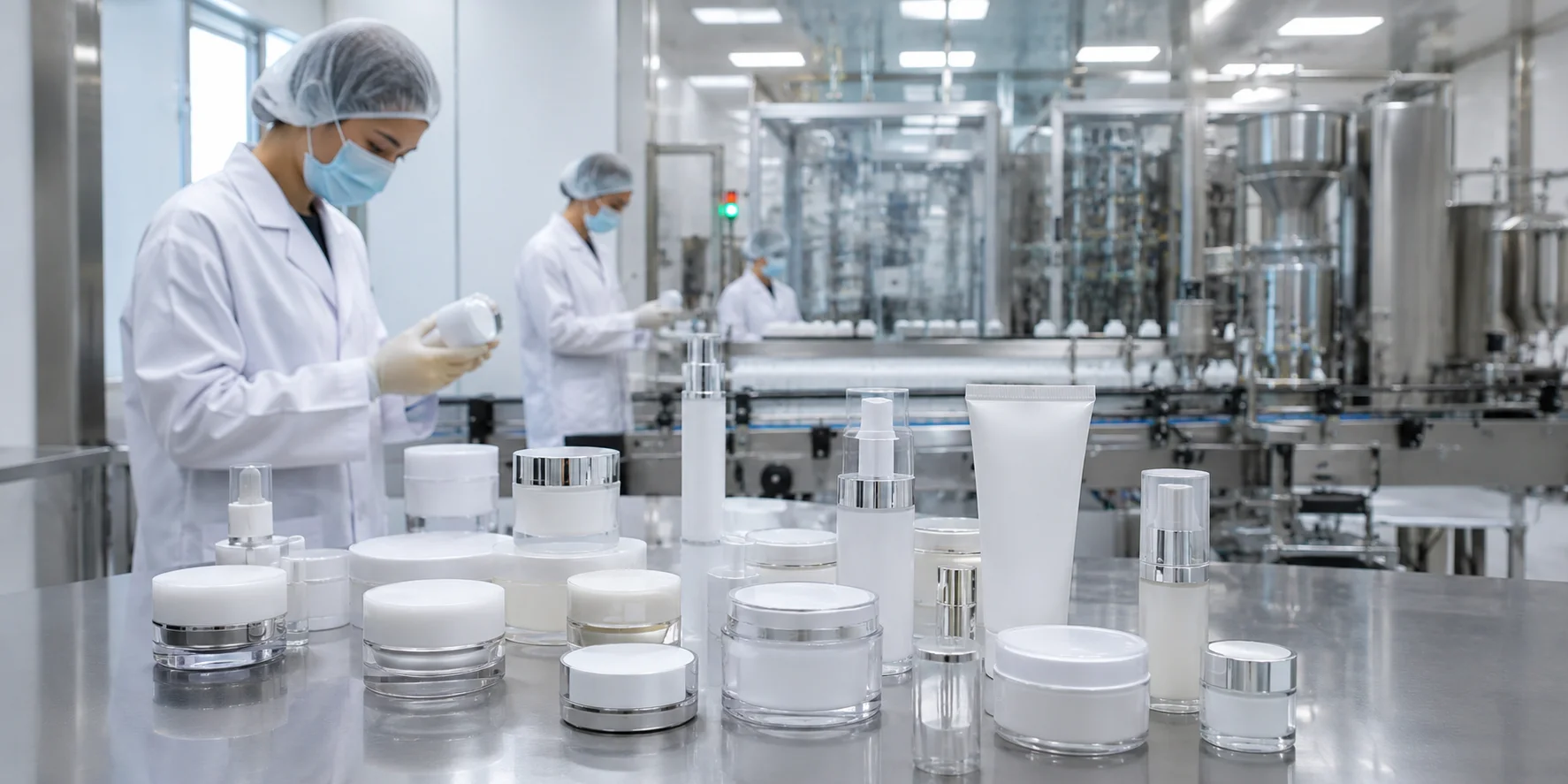
Common moisturizers are sold in jars, airless pump bottles, airless jars, tubes, pump bottles, and travel size packaging. A rich cream may look luxurious in a jar, but an airless pump may feel cleaner and more practical for a clinical-style brand. A light weight moisturizer in a tube or pump bottle may work well. A travel size moisturizer can be useful for trial kits or starter sets.
For startups, packaging needs to make sense. The most beautiful packaging isn't always the best choice if the MOQ is too high, the cost is too expensive or the formula doesn't match the container.
A good manufacturer should assist the brand in selecting packaging that fits the texture of the formula, the filling needs, the desired price point, and the image of the market.
I would never go from idea to bulk production without sample testing.
For a private label moisturizer, sample testing is important to confirm texture, scent, color, absorption, spreadability, skin feel, packaging match and product appearance. If a moisturizer is too greasy, too thin, too sticky, or too heavily scented, the manufacturer should change the formula before it goes into mass production.
The brand should be specific in its feedback. It’s more useful to say “make the texture lighter,” “reduce the fragrance,” “increase the rich skin feel,” “make it less sticky,” or “make it absorb faster” than “make it better.”
This helps the manufacturer to enhance the sample more effectively.
The MOQ and lead time should be discussed at the beginning of the project. A mature base formula could enable a quicker launch, while a fully custom moisturizer may require more development time and sample rounds.
MOQ can also vary depending on packaging, formula type, label printing, carton customization and ingredient selection. My usual suggestion for startup brands is to begin with a manageable MOQ and a clear product focus, rather than introducing too many moisturizer variations at once.
Support of documents is also important especially for export brands. Depending on the target market, the brand may require COA, MSDS, ingredient list, product specification, stability information, microbial testing, CPSR, CPNP, PIF support or other local compliance documents.
A professional manufacturer should be able to tell you what they can provide, what needs to be tested by a third party and what needs to be confirmed with local regulatory partners.
When I choose a private label moisturizer manufacturer, I’d look for development support, not just price.
A good manufacturer should be able to help with product direction, formula concept, texture options, active ingredient direction, packaging selection, sample testing, MOQ, lead time, bulk production, quality control and documents support.
I’d also check if the manufacturer has experience with facial creams, gel creams, barrier creams, body moisturizers, sensitive skin moisturizers, anti-aging creams, brightening creams, and clean beauty formulas.
Brands should create a basic product brief before they talk to manufacturers. The brief should include target market, customer skin type, product direction, texture preference, key ingredients, packaging style, expected MOQ, claim direction, target price and launch timeline.
The clearer the brief, the more accurate the solution the manufacturer can offer.
Here are 8 manufacturers skincare brands can use when creating private label moisturizers, face creams, body lotions, or other skin care products: They’re not the only options around, but they do cover different areas of manufacture and styles of service.
Xiran Skincare is a China-based OEM/ODM Skincare Manufacturer, offering private label facial cream, body care, skincare, hair care and related personal care categories. When it comes to projects around moisturizers, Xiran can assist with product direction, custom formulation, texture adjustment, packaging customization, sample development, production support, and export documents.
I would recommend Xiran to brands looking for flexible OEM/ODM support, especially if they are looking for facial creams, hydrating moisturizers, barrier repair creams, brightening creams, body lotions or complete moisturizer product lines.
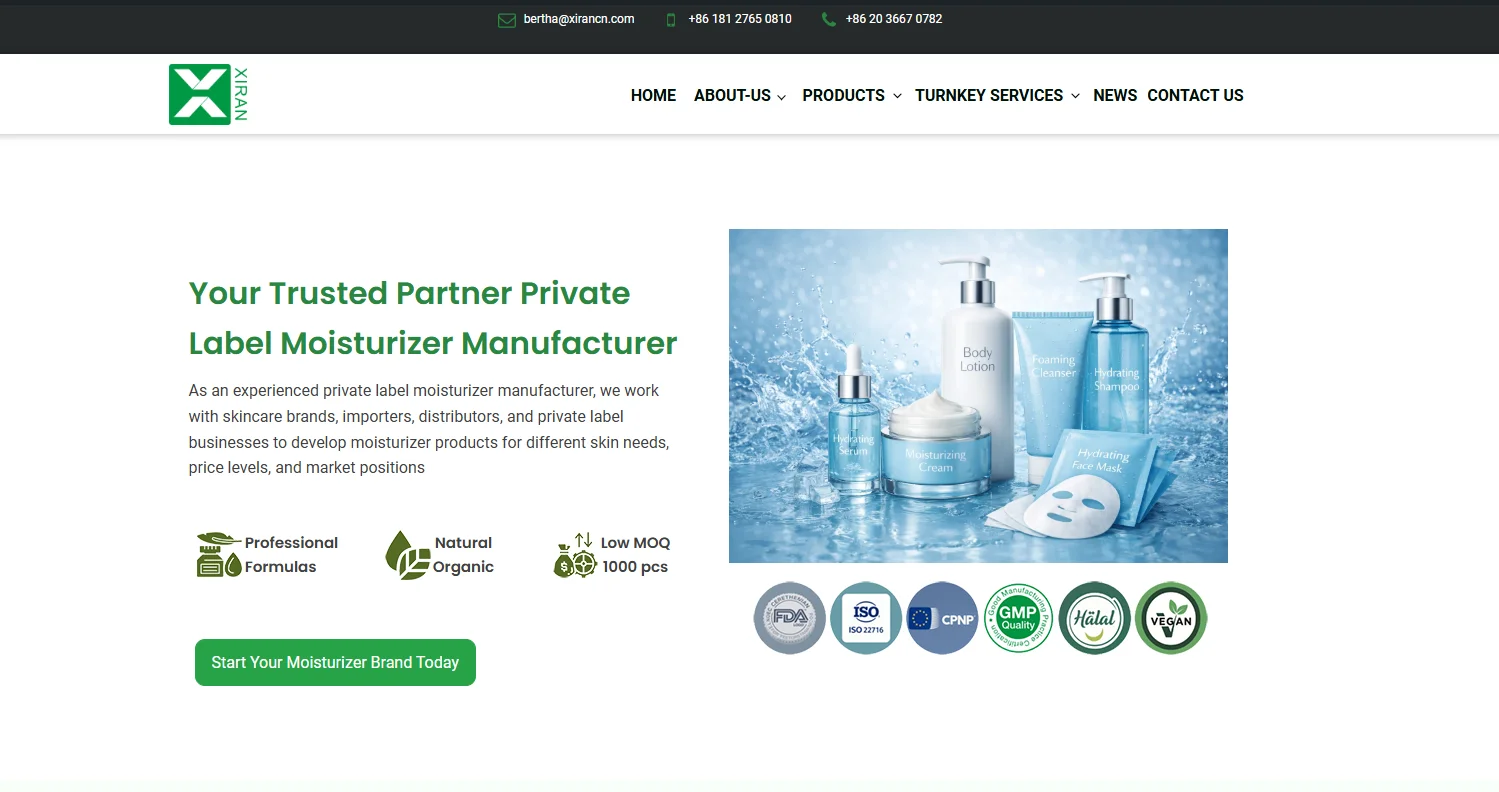
Xiran can help startup brands take a product idea and develop a viable private label development plan. It can assist established brands with formula upgrades, packaging matching and category expansion.
Suitable for: private label face cream, body moisturizer, barrier repair cream, hydrating cream, formula customization, China OEM/ODM support.
RainShadow Labs is a U.S. private label manufacturer of skincare products with moisturizer and lotion options. It provides stock formulas, private label support and custom formulation for brands, spas, salons and retailers.
I recommend RainShadow Labs to brands looking to go the private label route in the U.S. with ready-to-use moisturizer formulas. It could be especially useful for brands that want to start with proven base formulas and get into the market faster.

Best for: US private label body & facial moisturizers, stock formulas, spa brands, salons, and low complexity launch projects.
Dynamic Blending is a US-based contract manufacturer supporting private label skincare, creams, lotions, balms, cleansers, masks, scrubs and serums. It bills itself as a turnkey manufacturing partner, which can be helpful for brands that need more than basic filling.
For brands looking to create a custom moisturizer and need help with formulation, packaging, branding, manufacturing and fulfillment, I’d look at Dynamic Blending.

Best for: custom skincare, creams, lotions, balms, turnkey manufacturing and product development in the U.S.
Tropical Products is a United States based private label manufacturer of skincare, lotions, face and body creams, hand and feet moisturizers and other personal care products. It provides turnkey support from product conception and development to manufacturing and packaging.
I think Tropical Products would be a great fit for brands looking for lotion or moisturizer manufacturing with a U.S. based manufacturer, particularly for body care, face and body creams, retail skincare or personal care lines.

Best for: Private label lotions; face and body creams; body moisturizers; hand and feet moisturizers; and U.S. turn key manufacturing.
Vitelle Labs is a private label and OEM skincare manufacturer for the professional skincare market operating out of Canada. It develops natural source, plant based formulations with addition of cosmeceutical ingredients.
I would recommend Vitelle Labs to brands that want a professional line or a spa type of moisturizer line. It may be well suited for brands that want to focus on natural skin care, clinical style care or premium treatment products for spas and professional channels.
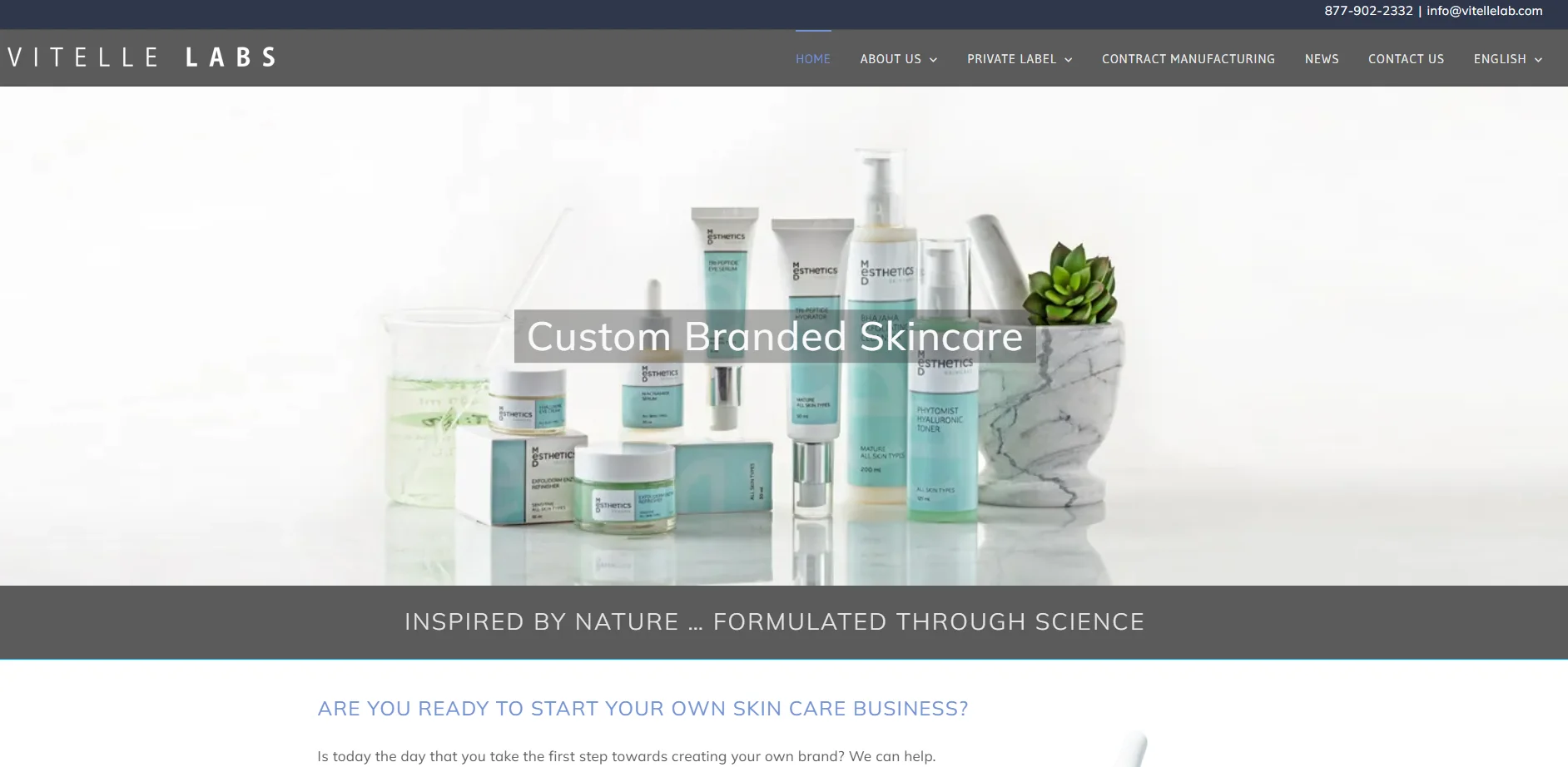
Best for: professional skin care, spa moisturizers, plant-based formulas, cosmeceutical creams and private label/OEM support based in Canada.
HSA Cosmetics is an Italy private label cosmetics manufacturer with experience in hair and skincare. It offers private label development R&D to packaging design, custom formulation, natural skincare & creams.
“HSA Cosmetics would be more for brands that are looking for a European manufacturing partner and a more premium beauty positioning.” That could come in handy for brands developing moisturizers with an Italian beauty, natural skincare or elevated retail aesthetic.

Great for: European private label skincare, creams, natural skincare, premium moisturizer lines and full R&D-to-packaging support.
COSMAX is a Korean cosmetics ODM manufacturer with strong capabilities in research, manufacturing, production, and international facilities. It is ideal for brands looking for large scale development, K-beauty innovation and strong ODM support.

I would recommend COSMAX to established brands or fast growing brands that need advanced formulation support, trend-led skincare development and scalable manufacturing. May be relevant for gel creams, emulsions, barrier creams, functional skincare and K-beauty inspired products for moisturizer projects.
Best for: K-beauty moisturizers, large scale ODM projects, innovative skincare formulas, global production support and established beauty brands.
Kolmar Korea is a Korean cosmetics ODM company with a strong skin care R&D capability and a total ODM service model covering trend suggestion, product development, manufacturing and logistics management.
‘If I was looking for a partner, I would consider Kolmar Korea a good fit for brands that want strong K-beauty R&D, reliable process depth and broad support for skin care development. This can be especially relevant for brands developing moisturizers with functional skin care, barrier repair, brightening, anti-aging or texture driven concepts.

Ideal for: K-Beauty moisturizer development, functional skin care cream, ODM projects, advanced R&D, and brands looking for scalable Korean manufacturing support.
If you want to customize your packaging and need export documents, I would look at Xiran Skincare and other manufacturers in Asia for flexible OEM/ODM support. If I were looking for a U.S. based private label option I would compare Rainshadow Labs, Dynamic Blending and Tropical Products. If I needed professional spa skincare, I'd check out Vitelle Labs.
I would consider HSA Cosmetics if I wanted a European premium positioning. For me, if I wanted advanced K-Beauty ODM development and larger-scale production, I would compare COSMAX and Kolmar Korea.
There is not one best moisturizer manufacturer for every brand. The right one depends on your targeted market, moisturizer concept, texture requirements, packaging style, MOQ, lead time, budget and documents support needed.
One of the most practical ways to build a skincare brand is by developing a private label moisturizer. Moisturizers are easy for customers to understand, good for daily use, and versatile enough to fit many skincare positions.
But a successful moisturizer takes more than a pretty jar or a popular ingredient. Brands should carefully consider product direction, formula concept, active ingredient direction, texture options, packaging selection, sample testing, MOQ, lead time, bulk production, documents support.
The right manufacturer should help you move from idea to a market-ready product. Whether you need a light-weight gel cream, a rich barrier cream, a clean beauty moisturizer, a body lotion, or a high-end anti-aging cream, having the right manufacturing partner can greatly simplify the development process.
For founders of startups and skincare brands, a powerful moisturizer can be the foundation of a stronger private label skincare line.