Hair care is no longer only about shampoo, conditioner, and styling products. More beauty brands are now treating the scalp as an extension of the skin.
That is why ingredients once used mainly in facial skincare are moving into scalp care. Peptides, niacinamide, hyaluronic acid, caffeine, rosemary extract, and copper peptides are now common in premium scalp serum concepts.
Among these ingredients, GHK-Cu has become especially interesting for brands that want to develop products around hair growth support, scalp repair, and stronger-looking hair.
GHK-Cu is also known as copper tripeptide-1. It is a copper-binding peptide complex that has been studied for skin repair, wound healing, anti-inflammatory activity, and tissue-supporting functions. Research reviews describe GHK-Cu as a regenerative peptide with potential skin and repair-related benefits, although direct cosmetic hair growth claims should still be made carefully.
For private label scalp care brands, this creates a useful product opportunity.
A GHK-Cu scalp serum does not need to be positioned as a drug-like hair loss treatment. It can be positioned as a premium scalp care product that supports a healthier scalp environment, stronger-looking roots, fuller-looking hair, and a more advanced hair care routine.
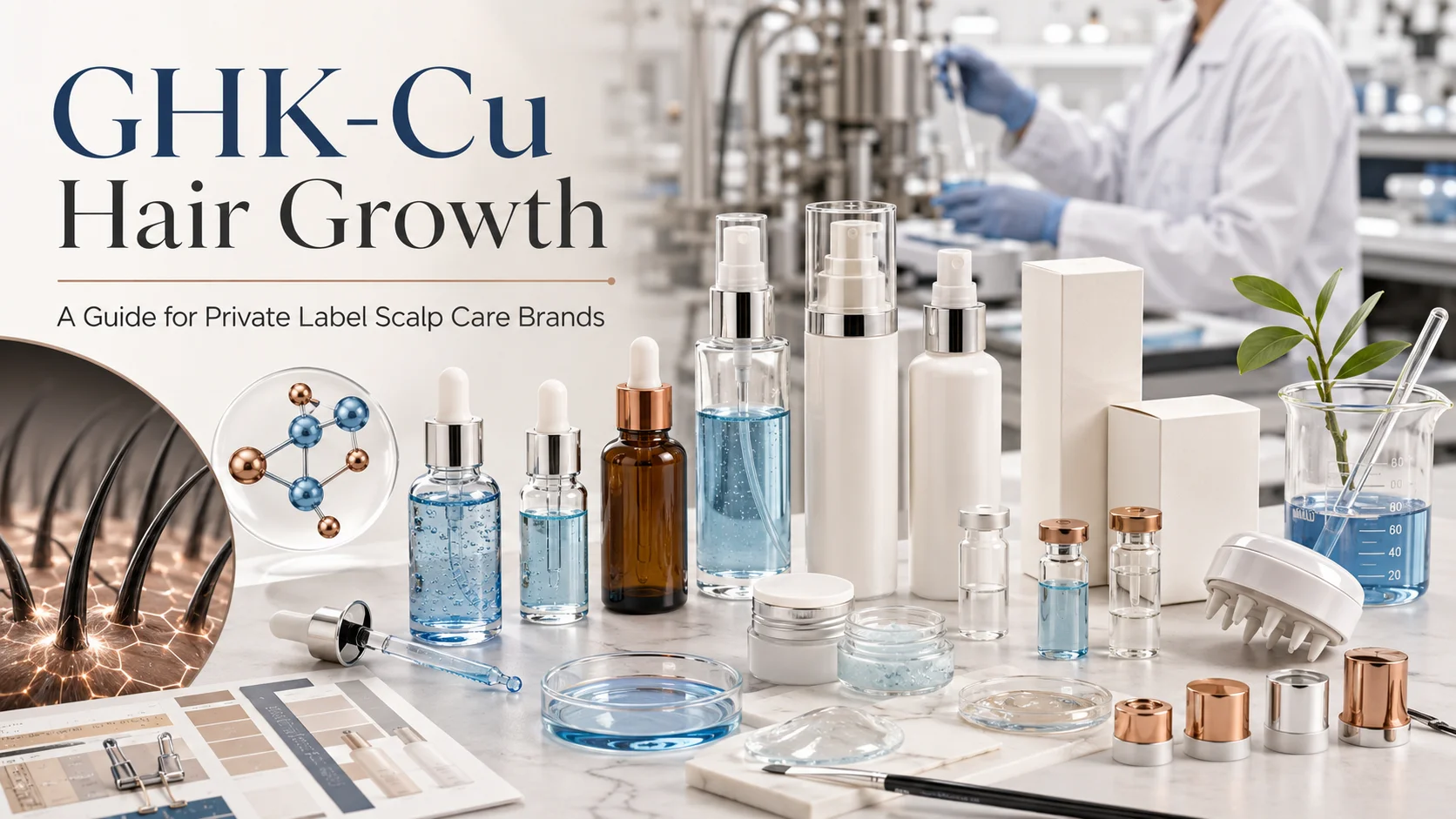
GHK-Cu stands for glycyl-L-histidyl-L-lysine copper complex. In cosmetic ingredient language, it is often related to Copper Tripeptide-1 or copper peptide ingredients.
In simple terms, GHK-Cu is a small peptide that can bind with copper ions. Peptides are short chains of amino acids, and they are widely used in skincare because they can support skin-conditioning and repair-focused product concepts.
GHK-Cu became known first in the skincare field. It is often discussed for skin firmness, visible repair, post-treatment care, and anti-aging skincare concepts. A scientific review on GHK-Cu describes its role in tissue repair and skin-related regenerative pathways, which helps explain why it has become popular in advanced cosmetic formulations.
For hair care, the same idea is now being applied to the scalp.
Instead of only cleaning the hair shaft, brands are building products that care for the scalp barrier, scalp comfort, follicle environment, and the appearance of hair density.
That is where GHK-Cu fits.
There are a few reasons GHK-Cu is becoming more attractive for private label hair care brands.
First, consumers already understand peptides from skincare. Peptides are associated with advanced, science-backed, anti-aging, and repair-focused formulas. When a brand uses GHK-Cu in scalp care, it can borrow some of that skincare credibility.
Second, the “skinification of hair care” trend is changing how brands develop hair products. Consumers are becoming more comfortable with scalp serums, scalp tonics, exfoliating scalp treatments, barrier-support products, and leave-on hair density products.

Third, GHK-Cu gives brands a more premium ingredient story. Compared with basic hair strengthening ingredients, copper peptides feel more technical and high-value. This makes them suitable for brands that want to develop a professional-looking scalp serum or hair growth support product.
Fourth, peptide-based hair products are now appearing more often in beauty media and consumer product recommendations. Beauty editors and dermatology-focused content have discussed peptides, including copper peptides, as part of the growing interest in scalp serums and fuller-looking hair routines.
For a private label brand, this means GHK-Cu can help build a product that feels more advanced than a simple botanical hair tonic.
This is the part brands need to handle carefully.
GHK-Cu is often discussed online in connection with hair growth, hair density, and scalp health. Some scientific and formulation discussions suggest that copper peptides may support the scalp environment and may be useful in hair-related applications. One 2023 study on microemulsions for topical delivery refers to GHK-Cu as a hair growth promoter in the context of formulation research.
However, for cosmetic brands, it is important not to overstate the claim.
A private label scalp serum should not be promoted as a guaranteed treatment for baldness, androgenetic alopecia, or medical hair loss unless the product is registered and supported as a drug or therapeutic product in the target market.

A safer cosmetic positioning would be:
This type of language is more suitable for cosmetic scalp care products.
The key point is this: GHK-Cu can be a strong ingredient story for hair growth support, but brands should build claims around scalp care, hair vitality, and appearance-based benefits rather than medical treatment claims.
GHK-Cu is not just another trendy ingredient. It gives brands several practical advantages when developing a new scalp care product.
Copper peptide sounds more advanced than many basic hair care ingredients. This makes it useful for brands that want to create a higher-value product.
A GHK-Cu scalp serum can be positioned as:
This type of positioning works especially well for DTC brands, salon brands, derma-inspired hair care brands, men’s grooming brands, and premium e-commerce beauty brands.
Many consumers already use peptide serums on their face. A scalp serum with GHK-Cu feels like a natural extension of that routine.
This gives brands a clear story:
“The scalp is skin too, and it needs targeted care.”
That story is easy to understand and works well for product pages, ads, social content, and educational blogs.
GHK-Cu is more suitable for leave-on products than rinse-off products.
A shampoo may only stay on the scalp for a short time. A scalp serum, tonic, or spray has more time to sit on the scalp and fit the product story.
For this reason, private label brands should usually consider GHK-Cu for:
GHK-Cu can be part of a more complete formula concept. It does not need to work alone.
For example, a brand can build a formula around copper peptide plus hydration, soothing, barrier care, and hair vitality ingredients.
This makes the product more flexible and easier to customize for different markets.
If a brand wants to develop a GHK-Cu hair growth support product, the product concept should be clear from the beginning.
Here are several product directions that work well.
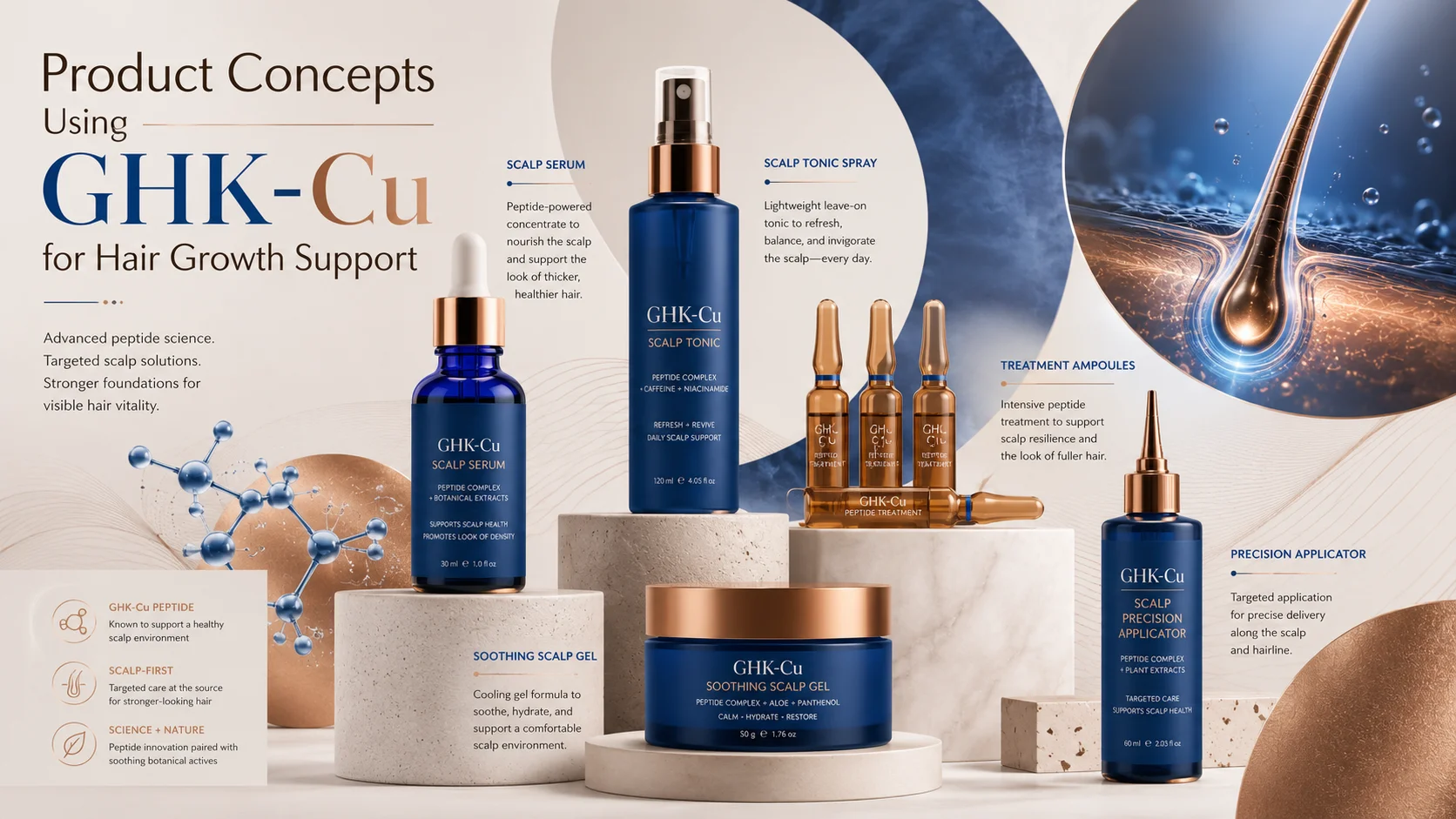
This is the most direct product concept.
It can be a lightweight, watery serum applied directly to the scalp with a dropper or nozzle. The formula can focus on scalp vitality, stronger-looking roots, and fuller-looking hair.
This product works well for premium skincare-inspired hair care brands.
A spray format is easier for daily use, especially for consumers who do not like oily scalp products.
This product can be positioned for thin-looking hair, weak-looking roots, or flat hair that needs scalp care support.
The texture should be light, non-greasy, and quick-drying.
Caffeine is already common in hair care and has strong consumer recognition.
A formula that combines GHK-Cu with caffeine can be positioned as an energizing scalp tonic for daily hair vitality support.
This concept works well for men’s hair care, oily scalp care, and active lifestyle brands.
Niacinamide is familiar from skincare and works well in scalp care concepts.
This type of formula can focus on scalp barrier support, oil balance, comfort, and a healthier-looking scalp.
It is suitable for brands that want a derma-inspired scalp serum instead of a purely “hair growth” product.
Rosemary has become popular in natural hair care content.
Combining GHK-Cu with rosemary extract or rosemary water can create a bridge between botanical hair care and peptide-based scalp care.
This can work well for clean beauty, natural-inspired, and social-media-driven hair care brands.
This is a more premium and less crowded product angle.
The product can target mature consumers who are concerned about weak-looking hair, scalp dryness, thinning-looking hair, and loss of hair vitality.
This angle is especially useful for brands that already sell anti-aging skincare.
A good GHK-Cu scalp serum should not rely on one ingredient alone. The formula should support the full user experience.
Here are ingredient directions that can pair well with a GHK-Cu concept.
| Ingredient | Why It Fits a GHK-Cu Scalp Product |
|---|---|
| Niacinamide | Supports scalp barrier care and oil balance positioning |
| Panthenol | Adds hydration and comfort for scalp and hair |
| Caffeine | Fits energizing and hair vitality concepts |
| Biotin | Strong consumer recognition for hair strengthening |
| Hyaluronic Acid | Adds hydration and a skincare-inspired feel |
| Zinc PCA | Useful for oily scalp and balance-focused formulas |
| Centella Asiatica | Supports soothing and sensitive scalp positioning |
| Rosemary Extract | Adds botanical hair care appeal |
| Peptide Complex | Builds a more advanced multi-peptide formula story |
| Amino Acids | Supports hair conditioning and strengthening claims |
For a private label brand, the best formula depends on the target customer.
A premium women’s scalp serum may use GHK-Cu, hyaluronic acid, panthenol, and botanical soothing ingredients.
A men’s hair care product may use GHK-Cu, caffeine, zinc PCA, and lightweight hydration.
A derma-inspired scalp serum may use GHK-Cu, niacinamide, panthenol, and centella.
The product format matters as much as the ingredient.
GHK-Cu works best when the product feels easy to use, clean on the scalp, and suitable for daily routines.
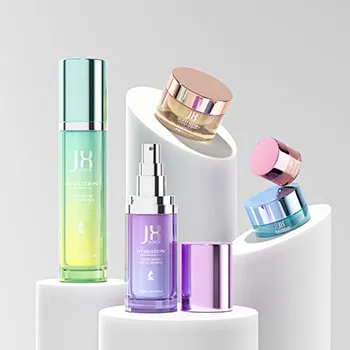
This format feels premium and skincare-like.
It works well for brands that want a high-end product image. Amber glass, frosted glass, or matte airless-style packaging can make the product look more professional.
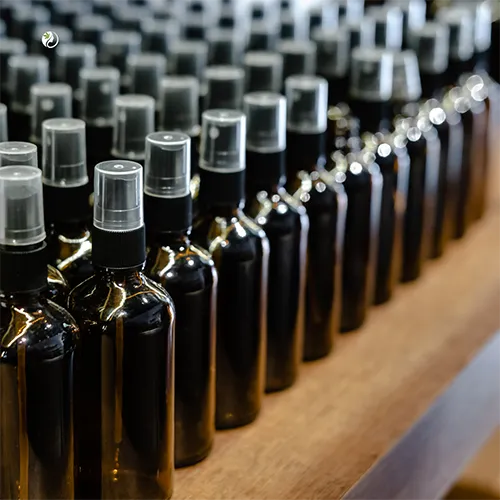
A spray is more convenient for large scalp areas.
It is suitable for daily users, men’s grooming brands, and consumers who want a fast routine.
A nozzle bottle allows direct scalp application without using the fingers too much.
This format is practical for hair density serums and scalp tonics.
Ampoules can create a professional or salon-style image.
This format is useful for intensive care sets, 7-day scalp care programs, or premium hair repair kits.
A scalp essence can be positioned between skincare and hair care.
It works well for brands that want a soft, hydrating, Asian-beauty-inspired hair care concept.
Texture is very important for scalp care.
Consumers usually do not want greasy, sticky, or heavy scalp products. If the product makes the hair look oily, they may stop using it even if the formula story is strong.
For a GHK-Cu scalp serum, the best texture directions are:
A brand can choose between a watery serum, gel-serum, light tonic, or mist texture.
For most private label hair growth support products, a water-based lightweight serum is the safest direction.
Packaging should match the premium ingredient story.
GHK-Cu products usually look better when the packaging feels clinical, derma-inspired, or high-end.
Good packaging options include:
For a copper peptide product, many brands choose blue, copper, amber, white, or silver tones. These colors can make the formula feel more scientific and premium.
However, the design should not look too medical unless the brand has the compliance support for stronger claims.
Many consumers compare hair growth ingredients with minoxidil. But private label brands need to be careful with this comparison.
Minoxidil is a drug treatment for hair loss in many markets. GHK-Cu scalp care products are usually cosmetic products unless they are developed and registered under a drug or therapeutic pathway.
So the difference is simple:
| Category | GHK-Cu Scalp Serum | Minoxidil Product |
|---|---|---|
| Common Positioning | Cosmetic scalp care / hair vitality support | Drug or treatment for hair loss |
| Claim Style | Appearance and scalp care claims | Hair regrowth treatment claims |
| Product Feel | Premium serum, tonic, spray, essence | Treatment foam or solution |
| Brand Fit | Beauty, scalp care, derma-inspired hair care | Medical hair loss category |
| Compliance Need | Cosmetic claim control | Drug/OTC registration rules |
For most private label beauty brands, GHK-Cu is better positioned as a premium cosmetic scalp care ingredient, not as a minoxidil replacement.
A GHK-Cu hair growth support product can work for many types of brands.
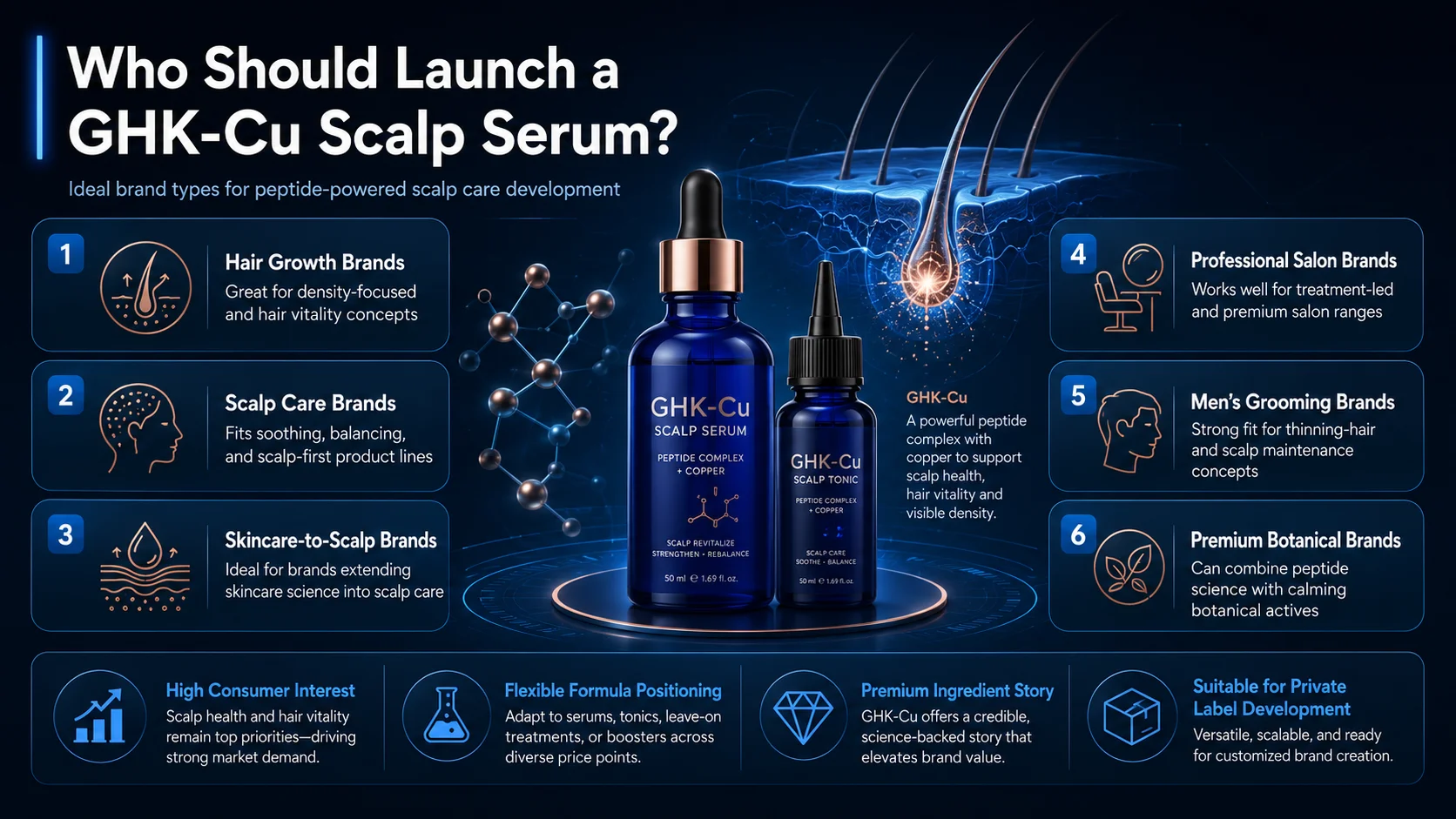
It is especially suitable for:
If a brand already sells peptide serums, anti-aging products, or barrier repair products, a GHK-Cu scalp serum is a natural extension.
The brand can tell a clear story: skincare science for the scalp.
A shampoo and conditioner line can become more complete with a scalp serum.
This can raise average order value and give the brand a stronger routine-based product system.
Men are often interested in hair density, scalp care, and thinning-looking hair support.
A lightweight GHK-Cu scalp tonic can fit a men’s grooming line very well.
GHK-Cu can help create a more premium professional treatment image.
A salon brand can use it as part of a scalp care program or post-wash treatment system.
A peptide hair serum is easy to explain in content, ads, and landing pages.
It also works well for before-and-after style education, although brands must be careful with proof and claim compliance.
If a brand wants to develop a private label GHK-Cu hair growth support product, the process should start with positioning, not only ingredients.
Here is a practical development path.
Before choosing a formula, decide what the product should become.
Is it a premium scalp serum? A men’s hair tonic? A hair density spray? A derma-inspired scalp barrier serum? A natural-inspired rosemary peptide formula?
Clear positioning will decide the formula, texture, packaging, claims, and price range.
A basic GHK-Cu product may focus on copper peptide and hydration.
A more advanced formula can include caffeine, niacinamide, panthenol, zinc PCA, hyaluronic acid, amino acids, rosemary extract, or a peptide complex.
The formula should match the target market.
Most scalp care products should be lightweight and non-greasy.
A water-based serum, scalp tonic, or mist is usually easier to sell than a heavy oil.
The packaging should support daily application.
Dropper bottles look premium, but nozzle bottles and sprays can be more practical for scalp use.
A brand can also develop a set, such as a scalp serum plus shampoo, conditioner, and hair mask.
Sample testing is important because scalp products need to feel good in real use.
Brands should check:
Claims should be written carefully for the target market.
A cosmetic product can discuss scalp care, hair vitality, stronger-looking hair, and fuller-looking appearance. It should avoid drug-like hair regrowth promises.
Once the formula and packaging are approved, the manufacturer can move into bulk production, filling, labeling, packing, and export support.
For international brands, documentation and compliance support are also important.
For brands that want to develop a GHK-Cu hair growth support product, working with an experienced OEM/ODM manufacturer can make the process easier.
At Xiran Skincare, we can support private label scalp care development from concept to finished product. This includes formula direction, ingredient selection, texture adjustment, packaging sourcing, sample development, bulk production, filling, labeling, final packing, and export support.
For GHK-Cu scalp care products, we can help brands develop different formula concepts, such as lightweight peptide scalp serums, hair density sprays, copper peptide scalp tonics, anti-aging scalp essences, and men’s hair vitality products.
We can also support customized packaging directions, including dropper bottles, scalp nozzle bottles, spray bottles, airless packaging, ampoules, cartons, and label design support.
This gives brands a more efficient path from product idea to market-ready private label scalp care products.
GHK-Cu is a strong ingredient opportunity for private label scalp care brands.
It connects well with several important beauty trends: peptide skincare, scalp care, hair growth support, anti-aging hair care, and premium leave-on treatments.
For brands, the best way to use GHK-Cu is not to make risky medical claims. A better strategy is to build a cosmetic scalp care product around healthier-looking scalp, stronger-looking hair, fuller-looking appearance, and advanced peptide-based care.
A GHK-Cu scalp serum can become a strong hero product for skincare brands, hair care brands, men’s grooming brands, salon lines, and e-commerce beauty companies.
With the right formula, texture, packaging, and claim strategy, GHK-Cu can help a brand create a premium scalp care product that feels modern, technical, and market-ready.
GHK-Cu is a copper peptide ingredient often associated with skin repair, anti-aging skincare, and scalp care. In hair care products, it is commonly used in scalp serums, hair density products, and hair growth support formulas.
GHK-Cu is often used in products designed to support scalp health, stronger-looking hair, and fuller-looking hair. However, cosmetic brands should avoid claiming that GHK-Cu treats medical hair loss unless the product has the required regulatory approval.
Yes. GHK-Cu is suitable for private label scalp serums, hair tonics, hair density sprays, and anti-aging scalp care products. It works especially well in lightweight leave-on formulas.
No. GHK-Cu scalp serums are usually cosmetic scalp care products, while minoxidil is regulated as a drug or treatment in many markets. Brands should position GHK-Cu products as scalp care and hair vitality support products, not as minoxidil replacements.
Yes. GHK-Cu can be used in men’s scalp tonics, hair density serums, and lightweight hair vitality sprays. It can be paired with caffeine, zinc PCA, and oil-control ingredients for men’s grooming concepts.