Blue copper peptide — scientifically known as GHK-Cu (Glycyl-L-Histidyl-L-Lysine-Copper) — is a naturally occurring tripeptide-copper complex first isolated from human plasma by researcher Loren Pickart in 1973. The name comes from the characteristic blue color of its copper-chelated solution.
Unlike most peptides used in cosmetics, GHK-Cu operates on two distinct levels simultaneously: it acts as a signaling peptide that communicates with skin cells to trigger repair and regeneration, and it delivers bioavailable copper ions that serve as cofactors for key skin enzymes. This dual action is what makes it one of the most researched and clinically referenced active ingredients in modern skincare.
GHK-Cu levels in human plasma decline sharply with age — approximately 200 ng/mL at age 20 dropping to around 80 ng/mL after age 60. This decline closely tracks the loss of skin repair capacity and collagen density observed in aging skin.
GHK-Cu is listed in the Xiran active ingredient database as a Tier-1 anti-aging compound, meaning it meets our criteria for clinical evidence, formulation feasibility, and supply chain reliability.
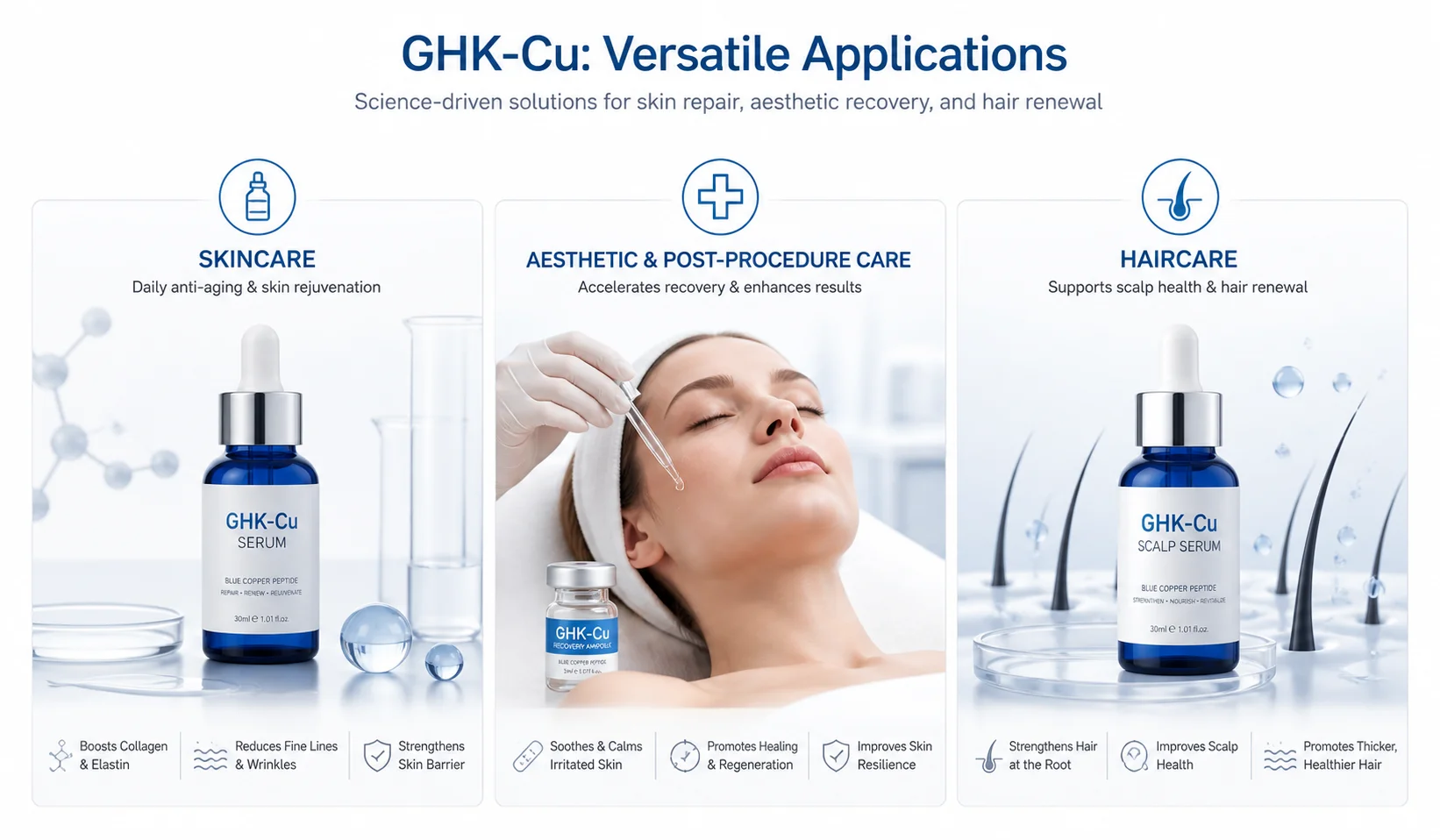
GHK-Cu's anti-aging activity is not a single mechanism but a coordinated biological cascade. A landmark 2018 review in Biomolecules found that GHK-Cu can modulate the expression of over 4,000 human genes, spanning wound repair, inflammation, antioxidant defense, and tumor suppression pathways. Here is how each pathway translates to visible skin benefits:
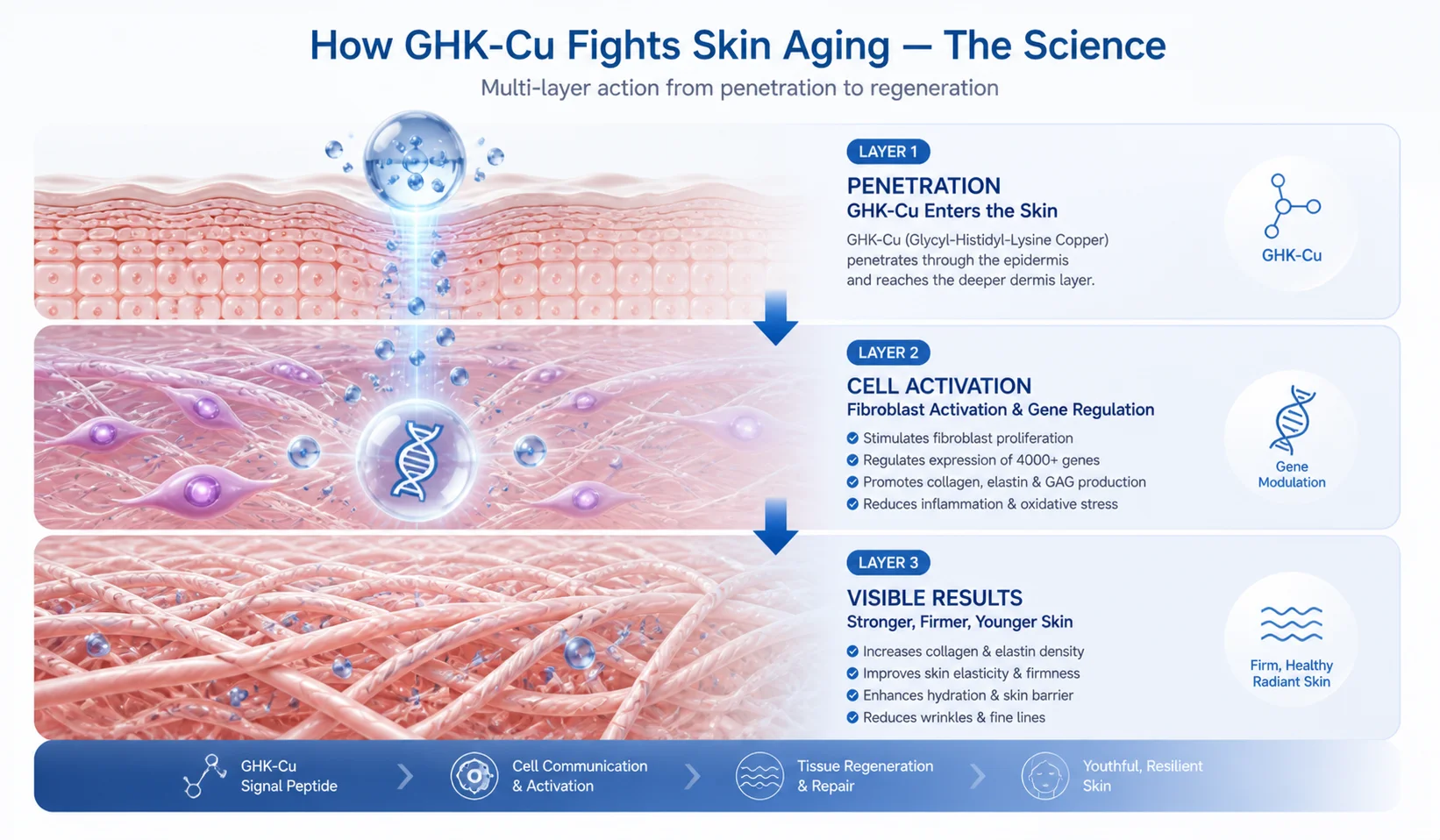
01 · Collagen synthesis (Rebuilds dermal scaffolding): Upregulates Type I and III collagen gene expression in fibroblasts, improving skin firmness and reducing fine lines over 6–8 weeks of use.
02 · Wound repair (Accelerates barrier recovery): Promotes TGF-β secretion and keratinocyte migration, shortening the skin barrier rebuilding cycle — relevant for post-procedure recovery products.
03 · Antioxidant defense (Neutralizes free radicals): Copper ions activate superoxide dismutase (SOD) and catalase, reducing oxidative stress that accelerates structural protein degradation.
04 · Anti-inflammation (Calms inflammaging): Downregulates pro-inflammatory cytokines (TNF-α, IL-6), addressing the low-grade chronic inflammation now recognized as a core driver of skin aging.
05 · Angiogenesis(Improves microcirculation): Upregulates VEGF expression in the dermis, supporting nutrient and oxygen delivery to skin cells — improving tone and radiance.
06 · Proteasome activation(Clears damaged proteins): Activates the ubiquitin-proteasome system to remove misfolded and aggregated proteins, improving skin texture uniformity over time.
These three ingredients dominate the anti-aging actives market. Each has a distinct mechanism, tolerability profile, and formulation complexity. Understanding their differences is essential for brand positioning and target consumer alignment.
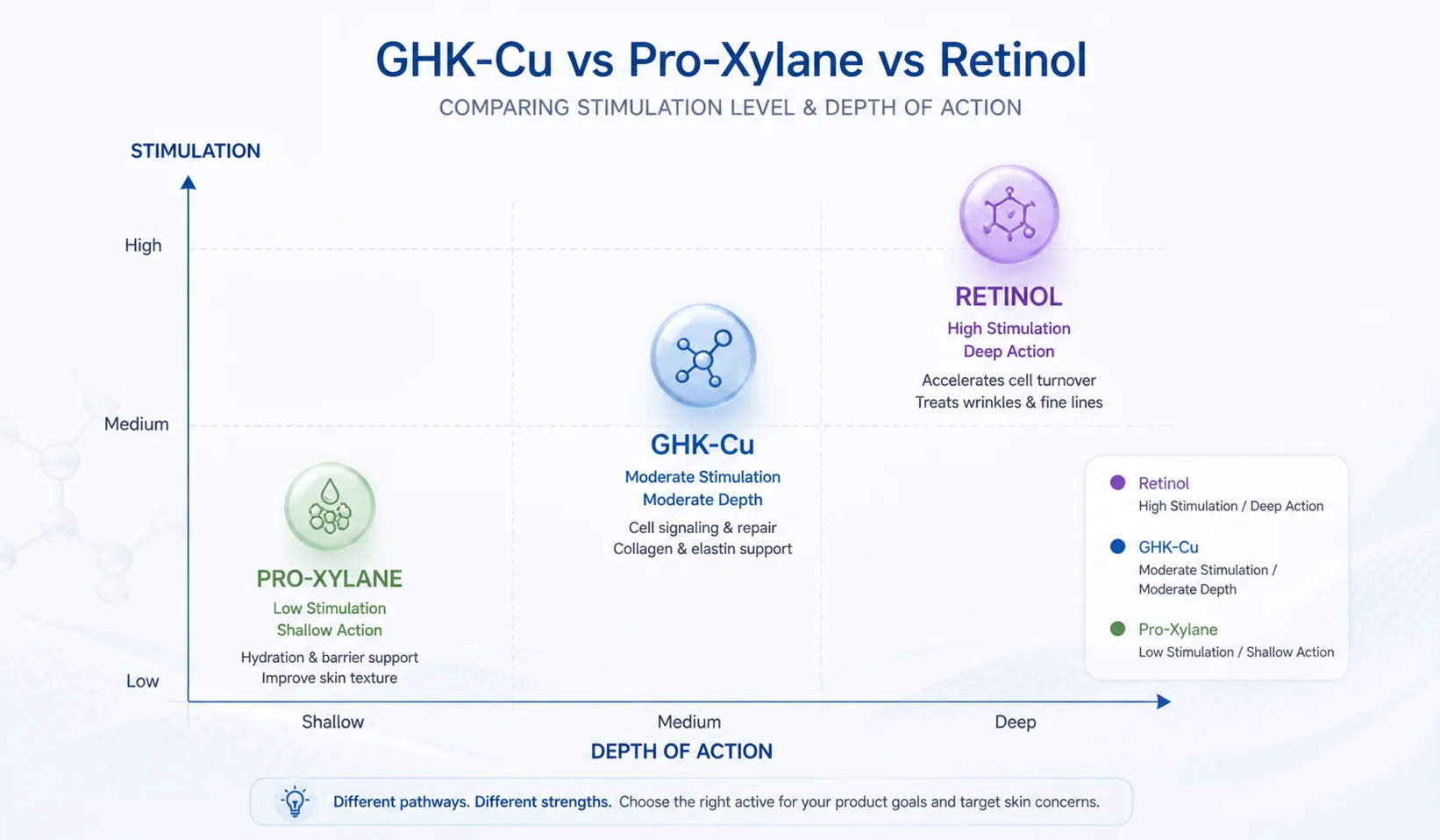
| Dimension | Blue copper peptide (GHK-Cu) | Pro-Xylane (C-Xyloside) | Retinol (Vitamin A) |
|---|---|---|---|
| Primary mechanism | Multi-target: collagen synthesis, repair, anti-inflammation, antioxidant | Activates hyaluronic acid synthesis; reinforces extracellular matrix glycosaminoglycans | Accelerates cell turnover; binds retinoic acid receptors to regulate gene expression |
| Onset of visible results | 4–8 weeks | 2–4 weeks | 4–12 weeks |
| Irritation risk | Very low — sensitive skin compatible | Low | Moderate to high (initial purging common) |
| Stability | Requires pH 5–7 and light protection; stable with good formulation | High inherent stability | Very unstable — requires encapsulation or stabilized derivatives |
| Best consumer fit | Sensitive, mature, post-procedure skin; repair-positioned products | Dehydrated, early-aging skin; hydration-first positioning | Visible lines, acne-prone, hyperpigmentation; efficacy-first positioning |
| Formulation complexity | Medium (copper ion compatibility checks needed) | Low | High (delivery system, photostability, pH control) |
| IP / sourcing | Multiple suppliers; some manufacturers hold process patents | L'Oréal patent (Pro-Xylane®) — license required for trademark use | Commodity ingredient; multiple derivatives available (retinaldehyde, retinyl esters) |
Yes — with care. GHK-Cu pairs well with Pro-Xylane as a hydration layer, and can be combined with low-concentration retinol (0.025–0.05%) to deliver both cell-turnover and repair benefits.
The key constraint: high-concentration L-ascorbic acid (Vitamin C) should not be used in the same formula as GHK-Cu, as its reducing properties can disrupt the copper-peptide bond. Split application (AM/PM) or use of a stable vitamin C derivative is recommended.
Copper peptide formulation is significantly more demanding than standard peptide work. Brands sourcing from inexperienced manufacturers frequently encounter inactive or irritating products. Key parameters to control:
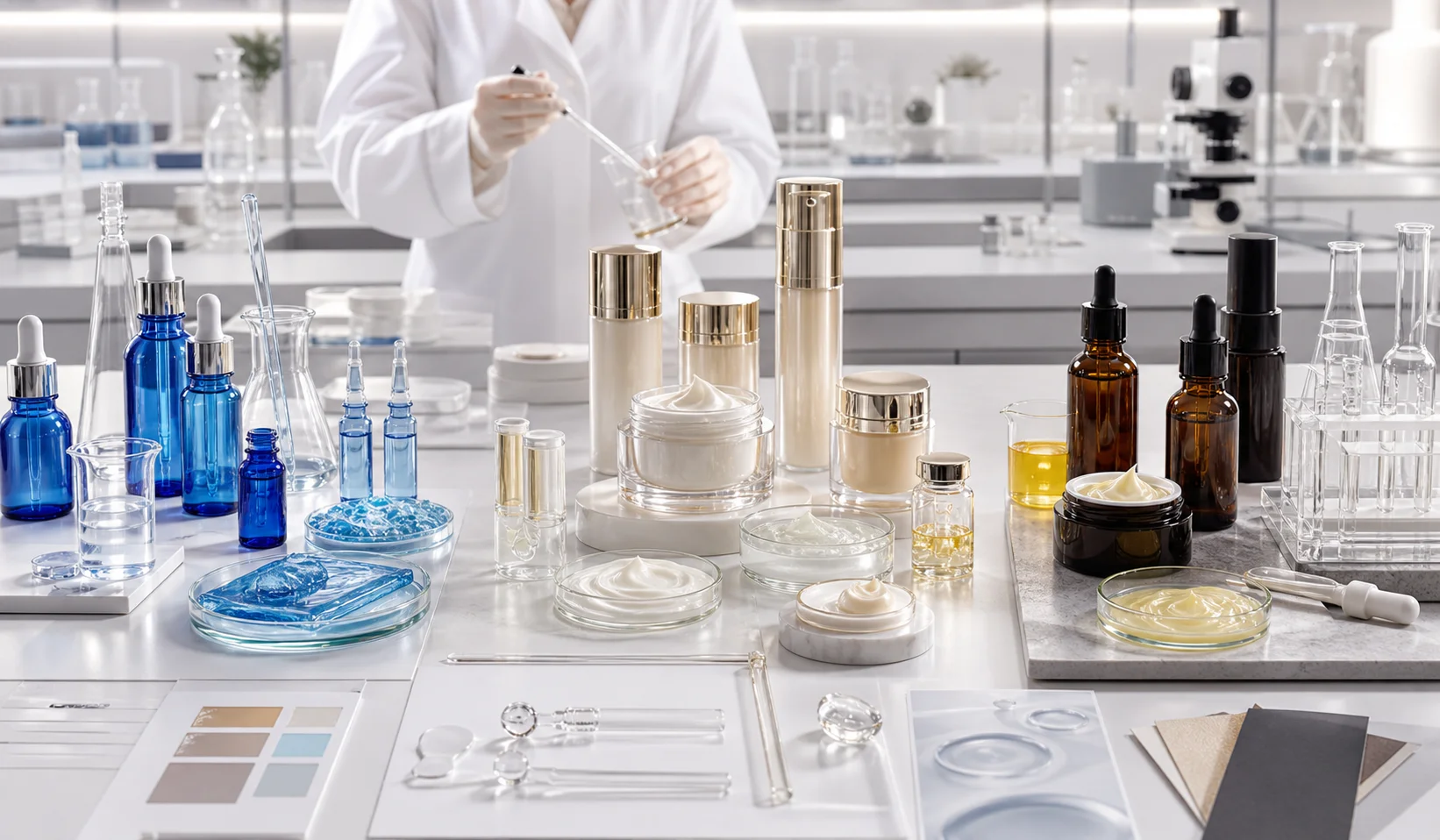
Not all contract manufacturers are equipped to handle copper peptide formulations. The technical requirements above — pH control, stability testing, raw material verification, and incompatibility screening — demand both specialized knowledge and quality infrastructure. Evaluating a potential partner against these five criteria reduces risk significantly:
Xiran is a GMP-certified cosmetics manufacturer with dedicated expertise in copper peptide, biofermentation, and multi-peptide complex formulations. We work with indie brands, professional skincare lines, and private-label buyers across North America, Europe, and Asia-Pacific.
Copper Peptide is a technically demanding ingredient. The difference between an effective and ineffective CP product often comes down to formulation details that only emerge through rigorous R&D: pH optimization, chelation stability, penetration enhancement, and preservation against oxidation.

Xiran's 50 patents include proprietary formulation technologies specifically developed for peptide delivery. Key patents include:
Xiran offers the following Copper Peptide product formats for private label and OEM orders:
| Product Type | CP Concentration | Key Claims |
| Copper Peptide Serum | 0.5% - 2.0% GHK-Cu | Anti-aging, skin firming, fine line reduction |
| CP Eye Treatment Cream | 0.2% - 1.0% GHK-Cu | Eye contour firming, dark circle reduction |
| CP Moisturizing Cream | 0.5% GHK-Cu | Barrier repair, mature skin hydration |
| CP Ampoule / Booster | 2.0% GHK-Cu | Intensive repair, post-procedure care |
| CP Sheet Mask | 1.0% GHK-Cu (essence) | Quick hydration, skin revitalization |
| CP Night Cream | 1.0% GHK-Cu + Retinol alternative | Overnight collagen stimulation |
Copper Peptide (GHK-Cu) is no longer an emerging ingredient — it is a clinically validated, regulatory-friendly, consumer-differentiated anti-aging active that addresses real gaps left by Retinol. Its multi-pathway mechanism, low irritation profile, and growing body of evidence make it the single most compelling new hero ingredient for skincare brands launching or expanding in 2026.
For brands, the strategic case is clear:
If you are ready to explore Copper Peptide formulations for your brand, Xiran's R&D team offers complimentary product concept consultations for qualified inquiries. We support brands at every stage — from initial formula selection to final regulatory documentation.