If I were to launch a beauty brand today, the first thing I’d think about isn’t just the formula or the packaging. I’d be thinking about creating risk.
This is where small batch cosmetic manufacturing can help.
A major mistake for many early-stage beauty brands, independent skincare founders, salons, spas and e-commerce sellers is over-committing before the market has been tested. A long production run may look efficient on paper, but can leave a brand with too much stock, too much cash tied up in inventory and not enough flexibility to change.
“Starting with small batch production is more pragmatic. It allows brands to start small, to test demand for product, to experiment with packaging and positioning, and to grow more thoughtfully when traction is real.
So I think small batch manufacturing has become such an important model in private label cosmetics, skincare OEM and startup beauty development.
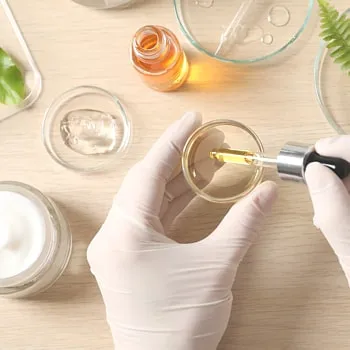
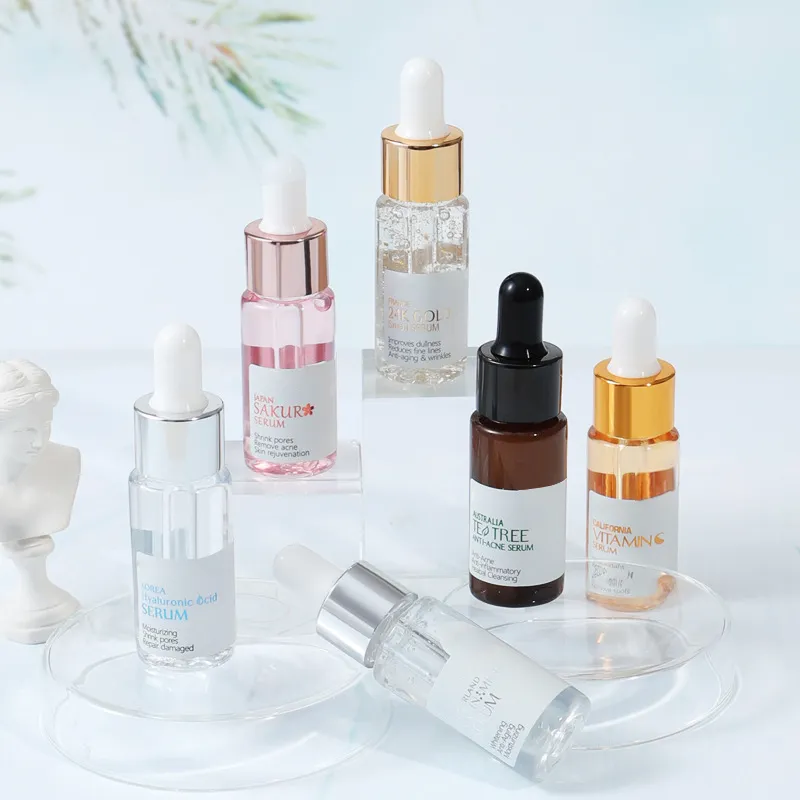
Small batch cosmetic manufacturing is the process of producing cosmetics, skincare or personal care products in smaller quantities than traditional high volume manufacturing .
That sounds easy enough, but there’s one thing I always like to clarify. There is no one definition of “small batch.”
For one manufacturer, small batch may be 50 units or maybe it’s 200 pieces.
If the lab is more formulation led this might mean production in litres or gallons rather than numbers of finished units.
And for some export-oriented OEM/ODM factories, 500 to 1000 pieces are still considered as a relatively small initial run.
So when I evaluate whether a manufacturer really fits the small-batch category, I do not look at MOQ alone. I look at how realistic the whole production model is for a newer or growing brand.
I usually look at five things:
That combination matters more than the label.

The biggest advantage is simple: you keep more room to learn.
Small-batch production is good for minimizing the financial risk of a first launch. Instead of ordering deep across a lot of SKUs, a brand can opt for a tighter assortment, test the real customer response and scale the winners. Some manufacturers in this space promote their small batch, or low MOQ production as a way for startups to test the market before scaling.
I also see four very practical benefits:
Less chance to sit on aging stock, especially if your formulas are trend-sensitive, season-sensitive or still being validated.
You can test the formula, packaging, price point, audience fit, bundle logic and marketing angle.
If you’re building a brand and not getting institutional funding, a smaller first run usually means less investment up front.
If your first cleanser, body oil or serum is a hit but the packaging isn’t, small-batch production gives you the ability to tweak the next round much more easily without being stuck with excess inventory.
That’s one of the reasons some manufacturers tie low minimums directly to accessibility for startups, faster launch routes or support for phased growth.
10 manufacturers I would go to if I were helping a beauty brand find lower volume production, private label flexibility or a more startup-friendly manufacturing path.
| Manufacturer | Location | Positioning | Best For | Cosmetics Category |
|---|---|---|---|---|
| Pravada Private Label | USA | Low MOQ private label manufacturing | Startups, quick product launch, pilot runs | Skincare, hair care, bath and body |
| DLAB Custom Cosmetics | Portugal | Low MOQ EU private label cosmetics | Europe-focused brands, skincare startups | Skincare, lip care, beauty products |
| RainShadow Labs | USA | Formula-led private label and custom development | Ingredient-driven brands, sample-first validation | Skincare, personal care |
| Trilogy Laboratories | USA | Startup-friendly beauty manufacturing | Medspa brands, emerging skincare lines | Skincare, custom beauty products |
| Vitelle Labs | Canada | Professional and treatment-led skincare manufacturing | Spa, clinic, premium skincare brands | Skincare, body care, hair care |
| Lady Burd | USA | Flexible low-entry private label beauty | Easy-entry branded launches, broad categories | Skincare, makeup, body care, lip, face, eye |
| IRIS Private Label | South Africa | Small-batch white label personal care | Salons, small retailers, boutique launches | Cleansers, serums, oils, masks, toners |
| Beauty Branding Lab | USA | Small-batch skincare with branding support | Emerging skincare and medspa brands | Private label skincare |
| Awilke Branding | USA / China-linked | Low-entry branded beauty manufacturing | Small projects, simple launch models | Skincare, body care, personal care |
| Xiran Skincare | China | Export-oriented OEM/ODM skincare manufacturing | Brands needing one-stop development and scale-up support | Facial care, body care, functional skincare |
Location: United States
Best for: very low MOQ private label launches, startup beauty brands, quick testing
Pravada is one of the more obvious names to review if the priority is launching quickly without a heavy initial production commitment. It is especially suitable for founders who want a practical first run, a simpler private label path, and room to test market response before investing more deeply.

What makes this type of manufacturer attractive is that it supports a leaner brand-building process. A founder can start with a focused product range, validate demand, and then decide whether more customization is worth the next step.
Cosmetics Category: skincare, hair care, bath and body, specialty beauty products.
Location: Portugal
Best for: EU-focused brands, lower MOQ skincare and cosmetics, polished private label launches
DLAB is a useful option for brands that want lower-volume production in a more European compliance-oriented environment. I see it as a good fit for buyers who want something more refined than a very basic stock private label program, but still do not want to jump into large-scale factory quantities.

For a brand targeting Europe, this kind of manufacturing setup can be particularly appealing because it combines manageable production with a cleaner regional fit.
Cosmetics Category: skincare, lip care, cosmetics, private label beauty products.
Location: United States
Best for: formula-led brands, ingredient-conscious projects, sample-first product testing
RainShadow Labs makes sense for brands that think beyond simple finished-unit counts and care more about product development logic, samples, and formulation routes. It is a better match for founders who want to evaluate the product experience carefully before scaling into larger production.

This kind of partner is especially useful when the formula itself is central to the brand story.
Cosmetics Category: skincare and personal care with private label and custom formulation options.
Location: United States
Best for: startups, medspa beauty brands, founders testing the market
Trilogy Laboratories stands out as a practical option for emerging brands that want smaller-scale production without overcommitting. I would look at this type of manufacturer for projects where the main goal is to launch, test, gather feedback, and refine the range over time.

That approach tends to suit smaller beauty brands much better than jumping directly into bigger-volume production.
Cosmetics Category: private label skincare and custom beauty manufacturing.
Location: Toronto, ON, Canada
Suitable for: professional skin care, spa, clinic, treatment based product lines
Vitelle seems particularly relevant for brands seeking a more professional skincare positioning, rather than a purely trend-led retail approach. If the idea was to have a line that felt more treatment-driven, more premium or more spa-like, I’d look here.

This type of manufacturing fit can be more important for clinic or esthetician channels than just going for the lowest MOQ.
Location United States
Best for: private label beauty, low barriers, categories, easier first launches flexibility
For brands looking for a relatively accessible private label route, a more familiar name is Lady Burd. It’s good for founders who want to get into branded products but don’t want to make the first project too complicated.

I would classify this kind of manufacturer in the pragmatic launch partner category: good for getting the first range out there, seeing what sells and then building on that.
Category: cosmetics, skincare, body care, oils, lip care, face care, eye care, makeup, men's care
South Africa (further)
Best for: salons, small retailers, white label projects, easy entry.
IRIS is a great option for brands looking for a lower friction launch path. This type of partner can be very logical if the goal is to develop a smaller branded line for salon use, boutique retail or a pared down personal care line.

This is particularly appealing to buyers who want to avoid a long and complicated development process for the first launch.
Cosmetics Category: cleansers, serums, oils, moisturisers, balms, toners, masks, exfoliants, haircare.
Location: United States
Best For: New Skincare Brands, Medspa Projects, Launch Support (Non-Manufacturing)
What’s interesting about Beauty Branding Lab is that it’s more like a brand-building partner than a factory option. If I was looking for help with the product itself, packaging options, presentation, and a more complete launch process, I would look for a manufacturer like this one.

This makes it perfect for younger brands that still need some help with various steps.
Cosmetics Category: private label skin care and beauty products, clinically positioned.
Location: US / China linked sourcing model
Best for: low-entry branded skin care, body care, simple first production runs,
If I were a founder looking for a lower barrier to entry and a simplified path to branded product, I would be looking for a maker like Awilke. It is a good choice when speed, simplicity and lower first run pressure are more important than complex custom development.

And for some brands that’s just the right place to start.
Cosmetics Category: Private label skin care, body care and personal care products.
Country: China
Best for: export-focused skincare brands, OEM/ODM development, scale up potential
Xiran Skincare is not like the private label manufacturers, which have very low minimum order quantities. It is considered “structured small-batch production” so is a good fit for brands looking for more support in the OEM/ODM space.

This partner is a perfect partner for export-oriented skincare brands looking for support in formulation, packaging coordination, documentation and one-stop development. Its minimum order quantity of 500 units may be higher than that of the smallest contract manufacturing labs, but is still a manageable initial production scale for many skincare projects.
Cosmetics facial skin care, body care, functional skin care, anti-aging skin care, repair care, private label skin care.
To summarize, small-batch cosmetics makers offer unique advantages to the beauty, skin care and personal care industries. “They let brands get around high minimum order quantities and complicated production cycles. Used correctly, this method allows R&D and packaging validation and helps brands to optimize product quality before going into mass production. The method reduces the operational risk and is ready for future scale-up production.
Let Xiran Skincare support you with trusted, compliant, ready-for-production assistance for your product launches and expansions.