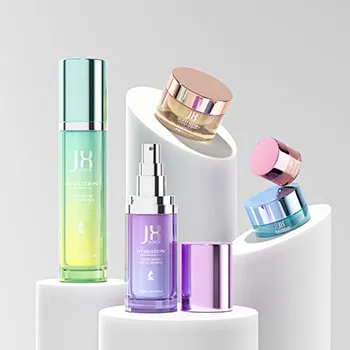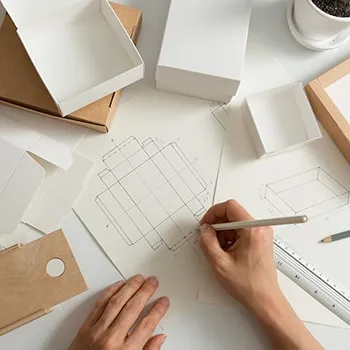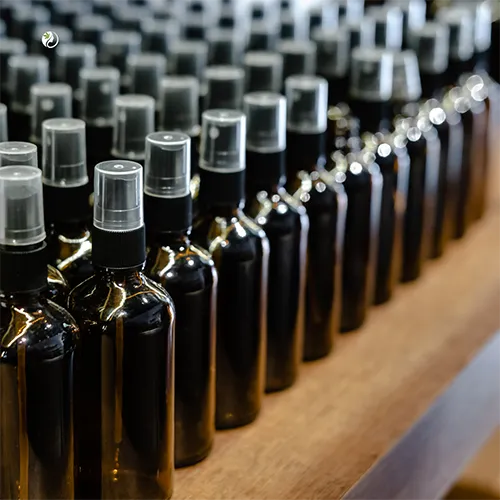
If you want to start a personal care product brand, it's a good idea to find a personal care manufacturer in the US. These companies have a lot of experience in the US and offer services like private label brands, custom formulations, contract manufacturing, or a mix of these for skincare, haircare, body care, and other personal care categories.
The cosmetic factories here can help you with both starting a new brand and developing natural formulations, as well as with more in-depth research and development and larger-scale production.

It's important to look at local market trends before looking into the right manufacturers. This is especially important in the US market, where sales of beauty products are still rising and the rules for compliance are stricter than they were a few years ago.
By 2025, sales of high-end beauty products in the US are expected to reach $36 billion, while sales of beauty products for the general public will reach $72.7 billion. The FDA is also constantly raising the standards for registering and filing cosmetic manufacturing facilities under the Cosmetic Compliance Reform Act (MoCRA).
| Manufacturer | Main Strength | Service Model | Best For |
|---|---|---|---|
| Nutrix | Broad personal care coverage | Private label + custom + contract manufacturing | Brands needing skincare, haircare, body care, and oral care under one roof |
| Cosmetic Solutions | Innovation-driven skincare development | Private label + formulation + manufacturing | Premium skincare and turnkey launches |
| Pravada | Flexible order range | Private label + custom development | Startups and growing indie brands |
| RainShadow Labs | Natural / clean-leaning formulas | Private label + semi-custom + custom | Natural personal care brands |
| Tropical Labs | Wide category range | Contract manufacturing + private label + co-packing | Brands expanding across multiple personal care categories |
| Dynamic Blending | Turnkey support | Custom + private label + manufacturing | Brands wanting development plus launch support |
| The Cosmetic Factory | U.S.-based operational simplicity | Custom + white/private label + contract manufacturing | Founders wanting a straightforward U.S. production setup |
| AURA Manufacturing | Low-MOQ flexibility | Private label + white label + custom formulation | Newer brands and smaller launches |
| Prime Matter Labs | Development depth and scale | End-to-end product development and production | Established or more ambitious brands |
| Lady Burd | Broad beauty line potential | Private label + custom + contract manufacturing | Brands combining cosmetics, skincare, and personal care |
Nutrix would be one of the first names I would look at if I wanted a lot of coverage in the personal care category. It has an FDA-registered facility and is based in Salt Lake City, Utah. It calls itself an NSF ISO-certified contract manufacturer.

The range of products it offers is what makes it appealing. It includes skincare, hair care, body care, oral care, hand soaps, sanitizers, and other personal care items. It also supports both private label and custom formulations. Brands that don't want to switch manufacturers as their line grows can use that kind of breadth.
Best for: brands that want to cover a lot of categories and work with a partner who can help with both ready-to-launch and custom programs.
Cosmetic Solutions seems more like an innovative product than just a basic filler. It has a 100,000-square-foot innovation campus in Boca Raton, Florida, and it does private label, custom formulation, and contract manufacturing. It also talks about GMP standards, ISO 22716 certification, and FDA registration.

I would take it more seriously for personal care brands that focus on skincare and want a more premium or developed turnkey path instead of just using a stock formula.
Best for: high-end skincare and body care projects that need help with formulation and a more complete feel.
Pravada is different because it lets brands grow at their own pace. It includes skin care, hair care, and bath and body, and it makes it clear that it is for both small and large production runs. I think that's important because a lot of founders don't need a factory built just for big runs on the first day.
They need a partner who will let them try out different positions, packages, and customer reactions without making too many commitments too soon.

Best for: new businesses, salon-led brands, and indie labels that are getting bigger and want to be able to choose the size of their launch.
RainShadow Labs is a great place for personal care brands that are natural or clean-leaning. It is based in Oregon and focuses on private label, bulk, and custom development. It also has GMP certification, ISO 22716:2007, low MOQs, and manufacturing in Oregon.

I would put it high on the list for brands that want a U.S.-made story and a product range that fits in naturally, especially if they want to launch without the hassle of a fully custom program from the start.
Best for: founders who want easy-to-find private label options, natural personal care brands, and early-stage launches.
Tropical Labs is bigger than most private label factories. It is based in Tampa, Florida, and works in contract manufacturing, private label, and co-packing.

Its product categories include beauty, skincare, personal care, over-the-counter (OTC), and plant-based products. I like it for brands that want to grow in more than one area instead of just one hero product. It also has stock formulas that make it easier to launch private labels faster, which adds another level of flexibility.
Best for: brands that want to be able to work in more than one product category and have room to grow.
People often think of lip products when they hear the name "Dynamic Blending," but it can be used for more than just that. Its larger range of products includes skincare, body care, hair care, essential oils, and other beauty categories. It also focuses on providing turnkey support.

That makes it more appealing to brands that need help not only with making things, but also with launching them and building their brand around the product line.
Best for: brands that want to work with a manufacturer that does everything for them.
The Cosmetic Factory, which is based in Nevada, seems like a good operational fit for founders who want to keep manufacturing simple and in the US. It offers private label, white label, and contract manufacturing, as well as custom formulation.

Its Nevada production setup can source, mix, fill, seal, label, box, and ship products. That kind of end-to-end physical workflow isn't very exciting, but it's exactly what makes projects easier to handle in real life.
Best for: founders who want a simple U.S.-based production process with clear steps for making things.
AURA Manufacturing is one of the newer brands that I would keep on my short list because they still need to be flexible. It is based in Texas and offers low-MOQ private label, white label, custom formulation, and contract co-packing for skincare, haircare, body care, and men's grooming.

That mix makes it appealing to founders who want to get into the market quickly but still want to be able to make changes later.
Best for: new businesses and brands that are still growing and want to make it easier to get in.
This list has Prime Matter Labs as the option that can handle more scale. It focuses on full-spectrum development and production for skin, hair, body, and sun care, and its capabilities page backs up that end-to-end product development model.

If I were giving advice to a well-known brand or a founder who wanted to build a more ambitious line that would last for a long time, I would tell them to look at Prime Matter Labs first.
Best for: brands that have been around for a while, product lines that are more complicated, and teams that need more development and production.
Lady Burd is one of the American beauty companies on this short list that has been around for a long time. It is based in New York and offers private label, custom formulation, and contract manufacturing for cosmetics, skincare, and personal care products.

I wouldn't put it first as a skincare-only specialist, but it could be a good fit for brands that want to grow in more than one beauty category instead of just staying in the personal care lane.
Best for: brands that have a line of products that includes skincare, color cosmetics, and personal care.
If you can't find a good US manufacturer to do a project, it's often better to look for a partner who can help with more than just finding a manufacturer. This partner should be able to help with formulation development, packaging coordination, documentation, and large-scale production. Xiran Skincare is great at this.
Xiran is not a US-based manufacturer, but it is a great choice for brands looking for export-oriented OEM/ODM partners who know how to make personal care products. For brands that want custom formulas, flexible packaging, and help coordinating everything from the idea to the finished product, working with an experienced overseas manufacturer may be more practical.
This is especially true when the range of products and customization are more important than where the factory is located.
building a high-quality personal care brand requires partnering with an excellent manufacturer. The manufacturers mentioned above possess extensive experience in the personal care field, enabling founders to successfully enter the market and ensuring product supply through mass production.
Private label usually means selecting from pre-developed formulas that can be branded as your own, while custom formulation means developing a more unique product around your target texture, ingredients, positioning, or performance goals. Several manufacturers in this list support both models, including Nutrix, RainShadow Labs, AURA Manufacturing, and Lady Burd.
It matters because cosmetic facility registration is now part of a more formal compliance environment, and FDA states that facilities need to renew registration every two years. In practice, that means operational maturity and documentation discipline should be part of any manufacturer screening process.
Not always. U.S. manufacturing can be a strong choice for domestic speed, communication, and supply chain simplicity, but the best fit still depends on the product type, launch budget, formulation needs, packaging requirements, and long-term brand strategy. That conclusion is an editorial judgment, not a direct claim from any one company.