If I were starting a skincare brand today, I would use the term "third-party skincare manufacturer" as a useful growth term instead of a generic one.
In the beauty industry, it usually means a manufacturing partner that helps a brand create, formulate, make, fill, package, and grow products under its name. For brands that are owned by the same person, that model is often the most realistic way to get from an idea to a line of products that are ready for sale without having to build production facilities from scratch.
That is why this group is so important.
Some brands want to launch their own private label quickly. Some people want more help from OEMs/ODMs. Some people want to start with just one skincare product and then add more for their face, body, or personal care. The best third-party manufacturers are the ones that make that process easier, clearer, and more scalable.
I listed 15 third-party skincare companies that I think are especially good for private label brands in this guide.

Before we talk about the manufacturers, let's look at some important data. Fortune Business Insights says that the global skincare market was worth $122.11 billion in 2025 and will be worth $129.11 billion in 2026.
I think this data is another reason why brand owners are looking for manufacturing partners who can handle formulation, packaging, compliance, speed, and future product line expansion all in one workflow.
| Manufacturer | Strongest angle | Better for | Brand stage |
|---|---|---|---|
| Xiran Skincare | One-stop export-focused support | Brands wanting skincare plus broader personal care expansion | Startup to growth-stage |
| Cosmetic Solutions | Premium launch support | Clinics, spas, online brands | Startup to established |
| Urist Cosmetics | Flexible North American support | U.S./Canada skincare brands | Early growth to established |
| Cosmewax | Export scale | Global and retail-led programs | Growth-stage to large brands |
| Pravada Private Label | Product plus design help | Founder-led skincare launches | Startup to growth-stage |
| Vitelle Labs | Treatment-led positioning | Clinics and esthetic brands | Startup to established |
| kdc/one | Infrastructure and scale | Large beauty systems | Growth-stage to enterprise |
| Hankook Cosmo | Technical K-beauty manufacturing | Brands wanting Korean development depth | Growth-stage to enterprise |
| COSMEDIQUE | Early-stage brand help | Emerging skincare brands | Startup to growth-stage |
| Delia Cosmetics | Expansion flexibility | Brands growing beyond skincare | Growth-stage |
| Cosmetize | Development + presentation | Premium beauty concepts | Startup to growth-stage |
| Cosmiko | Ready-made UK ranges | Independent retailers and pros | Startup to small established |
| Velvety | Niche product formats | Solid-care and soap-led brands | Startup to niche growth |
| Sky Resources | One-stop APAC production | Halal-oriented and wider beauty brands | Startup to growth-stage |
| Aurora Global Brands | Scale + logistics | Startups and scaling brands | Startup to enterprise |
If I needed a manufacturing partner that could help with skincare as part of a larger private label beauty line and also ship goods, I would keep Xiran Skincare on my list. The company says it is a professional maker of skincare and cosmetics that offers OEM and ODM private label solutions for skincare, body care, hair care, baby care, and mother care.
If you own your brand, having a wider range of categories can help you build a bigger brand system over time, not just launch one product.
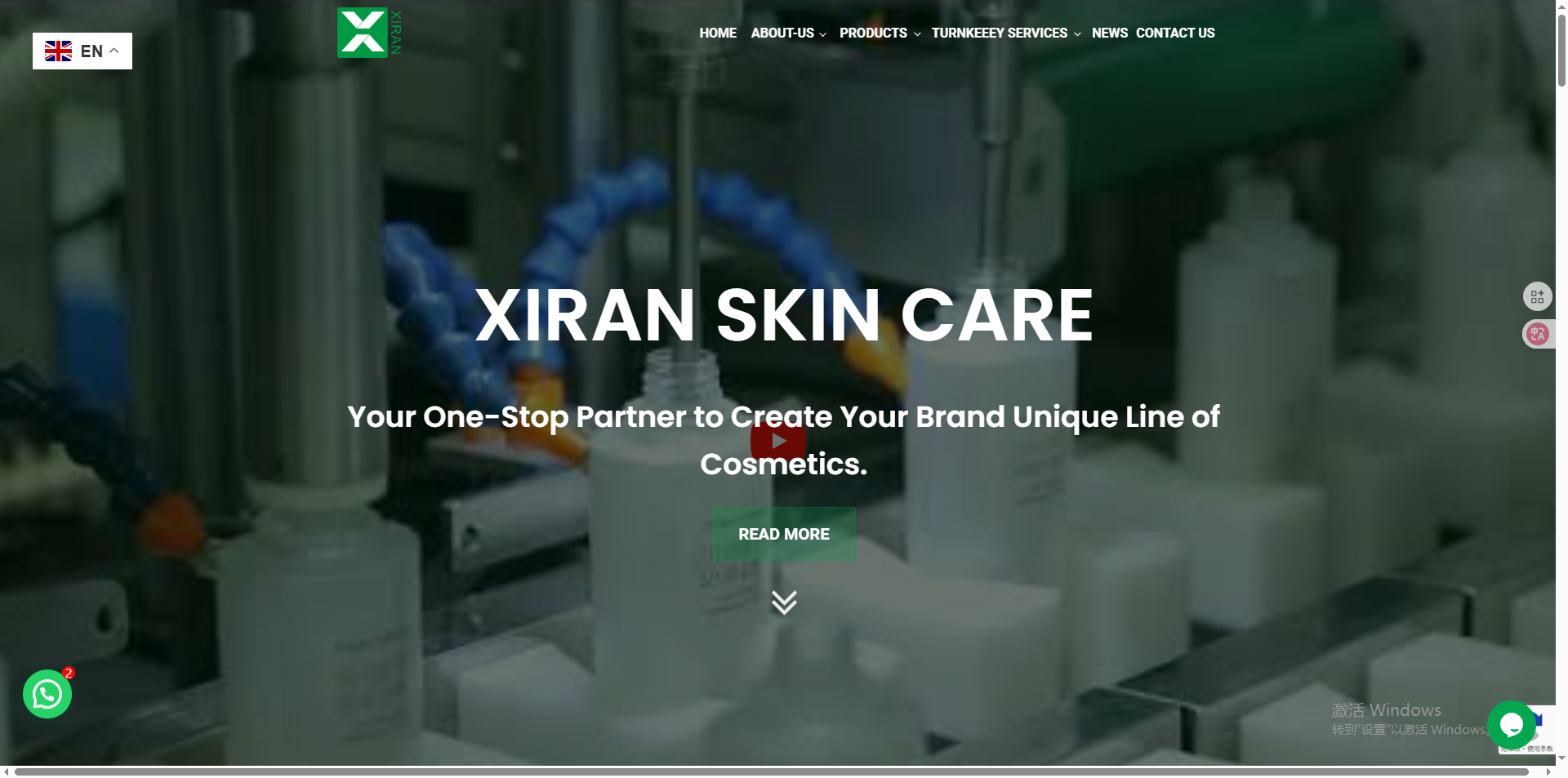
Main products made: skin care, body care, hair care, baby care, and mother care.
Services offered to brands include support for OEM (Original Equipment Manufacturer) and ODM (Original Design Manufacturer) private labels, developing new formulations, making a wider range of products, and helping with export-oriented projects.
Best for: founders and brands that are growing and want all-in-one OEM/ODM help and the chance to grow beyond just facial skincare.
Cosmetic Solutions is a wonderful example of a turnkey skincare company that focuses on brands instead of just making products. According to its website, it offers full turnkey private label skincare services to both new and established brands, as well as medical professionals, spas, salons, and online stores.
Brands that want a smooth, ready-to-launch process instead of a broken one usually like that kind of positioning.

Principal manufacturing: Private label skin care, treatment-led skin care, and high-end facial care products are the main things they make.
Services offered to brands include full-service private label support, formulation, innovation, production, and brand-ready manufacturing.
Best for: This company is best suited for launching high-end skincare lines, supporting brands run by clinics, developing spa lines, and partnering with U.S.-based brands that seek full-service support.
It's clear that Urist is all about private label skincare for modern brands. The site says it makes custom formulations for brands in the U.S. and Canada and offers flexible minimums, packaging support, and compliance with regulations.
It also stresses line extensions, seasonal launches, and scalable production. I like that the language used for the brand is clear and makes sense in a business setting.

Principal manufacturing: Private label skincare, custom formulations, line extensions, and seasonal launches are the main things they make.
Brands can get help with custom formulas, packaging, making sure they obey the rules, and scaling up production.
Best for: North American skincare brands that are growing and need help with packaging, new formulations, and flexibility in how they do things.
Compared to many small manufacturers, Cosmewax feels like a bigger company. The company claims to be a leading private label cosmetics maker with more than 60 years of experience in the field.
It also says that it makes and sells private label skincare and hair removal products for retailers and brand owners all over the world. It also says it sells to more than 50 countries, which means it has a strong model for doing business across borders.

Principal manufacturing: skincare, hair removal, and other private label beauty products
Private label, contract manufacturing, custom formulation, and help with exporting on a large scale are some of the services we offer to brands.
This service is best suited for brands looking to create products for global sales, retailers, and private label programmes with growth potential.
Pravada says it is a full-service manufacturing partner and talks openly about both standard private label and more advanced custom development. One thing I like about its site is that it says full custom product development can take six to twelve months. This gives a better idea of what deeper formulation work really means.
Principal manufacturing: Private label skincare and skincare products made just for you are the main things they make.

Services provided to brands: Brands can get private label production, custom product development, design-related help, and brand launch services from us.
Principal manufacturing: making private label and custom-made skincare products.
Services offered to brands include making private label products, developing custom products, helping with design, and launching the brand.
Best for: founders who need help with design, product development, and a manufacturer that can handle both faster and more customised routes.
Compared to some of the others, Vitelle is more focused on treatment and sounds more professional. The company says it provides high-end private label and contract manufacturing services to the professional skincare market. Its website features collections of natural skincare, advanced skincare, and cosmeceuticals.
It also says that the minimum amount of custom manufacturing for most products is 40 litres, which helps brands better understand how it works.

The main things they make are natural skincare, advanced skincare, and cosmetics-style products.
Brands can get help with private label, contract manufacturing, and developing skincare products for the professional market.
Best for: This service is best suited for clinics, skincare brands that focus on treatments, and aesthetic professionals.
KDC/One is not a small skincare lab. It is a platform for making things all over the world. The company says it works with customers through ideation, formulation, design, packaging, and manufacturing. Many of the world's top beauty and personal care brands see it as a reliable global provider. That makes it less of a small launch partner and more of a real platform for big brand systems.
The company primarily produces beauty, skincare, personal care, and other multi-category programmes.

Services offered to brands include coming up with ideas, making them, designing them, packaging them, and helping with manufacturing.
Best for: big brands, programmes that work in more than one country, and companies that need more infrastructure and scale.
Hankook Cosmo exemplifies the Korean OEM/ODM model. According to its website, it is a top Korean OEM and ODM cosmetics company that offers unique services based on years of technical knowledge. It also mentions CGMP and ISO 9001. This organisation is the kind of company I would carefully compare if I wanted K-beauty development depth without focusing on just one trendy ingredient.
Main products made: Korean OEM/ODM development of skincare and cosmetics.

Services provided to brands: OEM/ODM services, help with product development, and help with technical manufacturing are some of the services we offer to brands.
Best for: brands that want to be able to do Korean OEM/ODM and have the technical know-how to develop skincare.
COSMEDIQUE is also a good fit for the Korean OEM/ODM model. Its public materials focus on OEM/ODM and help with planning, marketing, and design, which is helpful for brands that want a manufacturer to know more than just how to make a lot of formula. That extra support can be vital when the brand is still figuring out its look and sales.
Principal manufacturing: making skincare and makeup products in Korea through OEM/ODM production.

Services offered to brands include planning, marketing help, design, and production.
Best for: new brands that want to make things in Korea and get help with planning and design.
Delia's factory is clear about what it does: it makes private label and contract products for skincare, makeup, hair care, face care, and body care. It's a good choice for brands that might start with skincare but want to be able to expand their line later without having to change manufacturing partners.
The main things they make are skincare, makeup, haircare, face care, and body care.

Services offered to brands include private label and contract manufacturing for a wide range of products.
Best for: brands that want skincare now and more options in the beauty category later.
Cosmetize calls itself a high-end private label production house that focuses on product development and formulation. The service model still fits well in the third-party beauty manufacturing category, even though some of its public-facing presentation is broader than just skincare, as it also includes haircare and makeup products that appeal to a wider audience. If you care about how your brand looks and how it works, Cosmetize is a name you should look into.
Private label beauty and skincare product development is the main thing we do.

Brands can get help with formulation, product development, and private label production from us.
Best for: high-end beauty brands that want help with product development and private label presentation.
Cosmiko is a UK manufacturer that only sells to businesses. It claims to create, make, and package a wide range of private label skincare and cosmetics. Its skincare lines are marketed as natural, hypoallergenic, and high-performance, which makes them seem like a good fit for smaller beauty businesses or businesses that are close to retail.
Main products: private label skincare lines that are natural, hypoallergenic, and work well.

Brands can get help with developing, making, and packaging private label skincare and cosmetics.
Best for: skincare brands that only sell in the UK, independent stores, and beauty businesses that want ready-made private label lines.
Velvety is a contract cosmetics manufacturer that can make products tailored to each customer. It also says it helps brands, stores, new businesses, and private label or white label projects. People think of it as a brand that makes solid products and soap-style formats, but that can be a good thing for brands that want something different from the usual liquid skincare lineup.
The main things they make are solid personal care products, soap-based products, and custom cosmetic ideas.

Brands can get help with contract manufacturing, private labelling, white labelling, and co-branding.
Best for: brands that want to try out solid care, soap-led ideas, or smaller, custom-made partnerships.
Sky Resources is a positive example of a one-stop Asian OEM/ODM partner with a Halal angle. The company claims to be the best Halal OEM skincare maker in Malaysia with GMP. It focuses on OEM, ODM, and private label services for skincare, cosmetics, personal care, hair care, oral care, and baby care. It also says that it has been in business since 1991.
The main things they make are skincare, cosmetics, personal care, hair care, oral care, and baby care.

OEM (Original Equipment Manufacturer), ODM (Original Design Manufacturer), private label, and one-stop product development support are some of the services offered to brands.
Best for: brands that want to make things that are Halal-friendly, have a wider range of personal care products, and get all their support from Asia.
Aurora is a full-service OEM/ODM cosmetic manufacturer that offers custom formulation, GMPC production, global logistics, and scalable manufacturing. It also says on its website that it helps startups, growing brands, and OEM/ODM clients, and it mentions ISO 22716 quality control. I like that the company focuses on execution, scaling, and support instead of just factory output.
Main products: skincare and makeup for both new and growing brands.

Services offered to brands include making custom formulations, helping with production and packaging, and managing global logistics.
Best for: new businesses that need help, brands that want to grow, and companies that require help with logistics and packaging as well as formulation.
I didn't just put Xiran Skincare here for fun; it fits the category perfectly. The company makes it clear that it focuses on OEM and ODM private label solutions, and its product range goes beyond basic facial care to include body care, hair care, and care for mothers and babies.
For brands that own themselves, that kind of range can be helpful because it gives them room to build their collections in the future instead of having to switch manufacturing partners too soon.
I would see that as a practical benefit if I were starting a skincare line that could later grow into a full personal care line.
A good third-party skincare company doesn't just make things. It helps a brand figure out how much customisation it really needs, how quickly it wants to launch, how complicated the packaging can be, and whether the first line should stay narrow or get wider over time. That, to me, is the real value of this group.
That's also why I would never think that all manufacturers are the same. Some are better at going fast. Some are better for skincare that is led by treatment, particularly those that specialise in formulations targeting specific skin concerns such as acne, ageing, or hydration. Some are better for Korean OEM/ODM capabilities, halal positioning, or global infrastructure. Some, like Xiran Skincare, are interesting because they offer a good balance of brand-facing OEM/ODM support, a wider range of categories, and a clear focus on exports all in one place.
A third-party skin care manufacturer is a company that develops or produces skincare products for a brand under that brand’s own name. Depending on the company, this can include private label, OEM, ODM, custom formulation, filling, packaging, and launch support.
Yes. For newer brands, the right manufacturing partner can make launch planning easier, reduce operational pressure, and help turn an idea into a real product line faster.
Private label usually means using existing or semi-custom formulas under your own branding. OEM usually means the brand brings the concept or formula direction and the manufacturer produces it. ODM usually means the manufacturer takes a bigger role in formulation and technical development.
There is no single best one for every startup. If I wanted more launch support, I would start with Xiran Skincare, Cosmetic Solutions, Pravada, or Aurora. If I wanted treatment-led positioning, I would look at Vitelle. If I wanted Korean OEM/ODM depth, I would compare Hankook Cosmo and COSMEDIQUE.